 Bug FAQ
Tropical Bed Bug
Cimex hemipterus · Order: Hemiptera · Family: Cimicidae
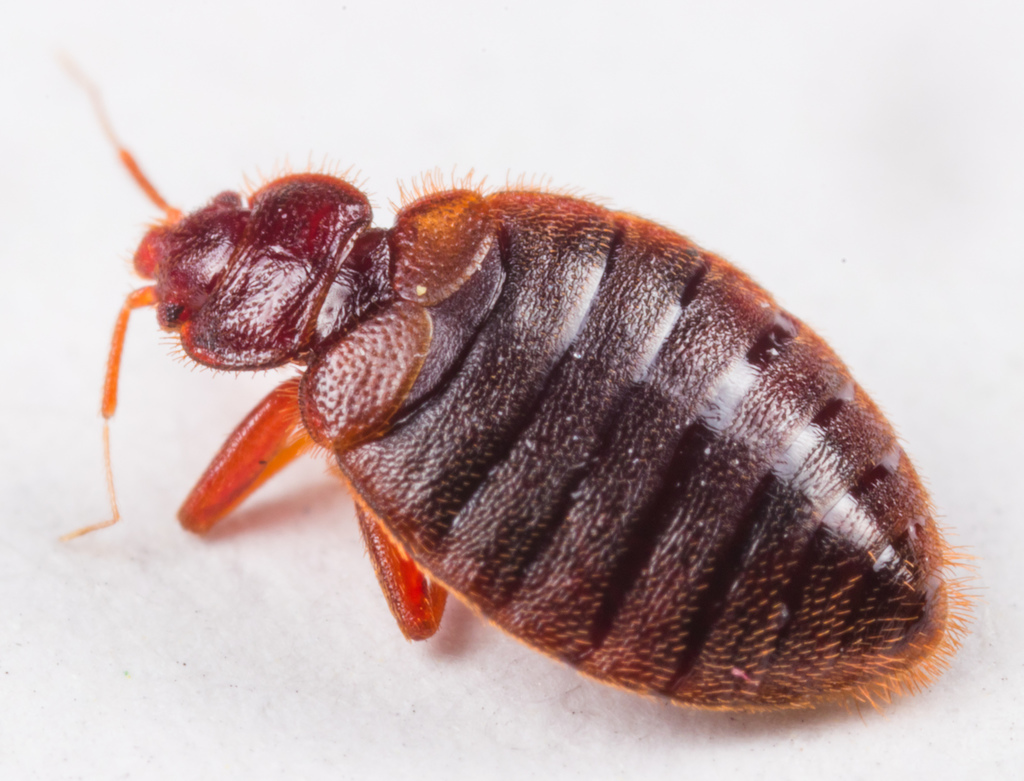
These bugs are small, flattened insects that live in cracks, crevices, and mattresses in homes. They feed exclusively on human blood, and their bites produce itchy welts.
How to recognize it
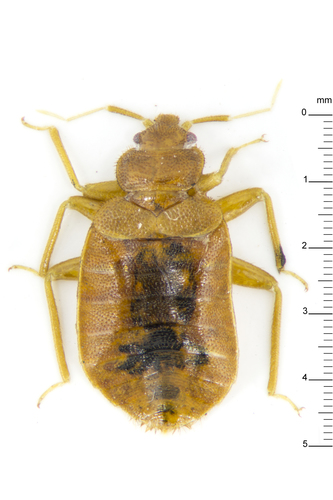
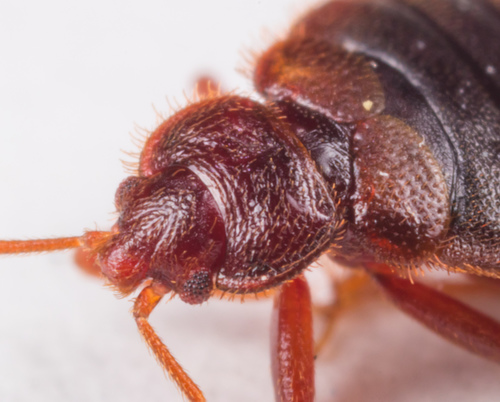
Adults have an oval, flattened body that turns reddish after a blood meal and pale brown when unfed. The sides of the pronotum bear short, stiff hairs.
Size
They are about 5.5 mm long and 2.5 mm wide.
Source: Wikipedia
Is it a pest in the house?
They thrive in human homes, bird nests, and bat caves where warmth and hosts are available. They can hitch rides on clothing, luggage, bedding, and furniture.
Source: UF/IFAS
Does it bite or sting?
Bites cause itchy welts, wheals, and skin lesions.
Source: Wikipedia
How to get rid of it
Populations have developed resistance to DDT and pyrethroid insecticides. For light infestations, use vacuuming, caulking cracks, and sealing wallpaper rather than chemicals. Severe infestations may require pesticide treatment.
Where it lives
They live inside human dwellings, hiding in cracks, crevices, and mattress seams.
Source: Wikipedia
What it eats
They are obligate blood-feeders that must bite humans to survive.
Source: Wikipedia
Life cycle
Their development is hemimetabolous, with nymphs that look like small adults and feed on blood. Eggs hatch in about 4 to 12 days.
Source: Wikipedia
When you see it
They are most active at night.
Source: Wikipedia
Where it comes from
The tropical bed bug is native to tropical climates.
Source: Wikipedia
Lookalikes
They can be confused with the common bed bug, but have a slightly narrower prothorax. Both species can occur in temperate areas alongside each other.
Where it is found in the US
Recorded in 1 of 51 states and DC. Most records: Hawaii.
Darker = more records. Counts are museum and citizen-science records, not population size.
Source: GBIF
More photos
Questions people ask
How can I tell a tropical bed bug from a common bed bug?
Look at the prothorax; the tropical species has a slightly narrower prothorax than the common bed bug.
Do tropical bed bugs bite humans?
Yes, their bites cause itchy welts and skin lesions.
Source: Wikipedia
What should I do for a small infestation?
Focus on mechanical methods like vacuuming, sealing cracks, and removing infested wallpaper.
Source: UF/IFAS
Why are my bed bugs not dying after insecticide use?
Many tropical bed bug populations are resistant to DDT and pyrethroid insecticides.
Source: Wikipedia
Same family (Cimicidae)

Sources
- Wikipedia: https://en.wikipedia.org/wiki/Cimex_hemipterus
- UF/IFAS: https://edis.ifas.ufl.edu/publication/IN297
Look it up elsewhere: GBIF · iNaturalist · BugGuide · ITIS · Wikipedia
Text written 2026-10-23 from the sources above and checked sentence by sentence against them. Data fetched 2026-10-23.