 Bug FAQ
Dukes' Skipper
Euphyes dukesi · Order: Lepidoptera · Family: Hesperiidae
Also called: Dukes's Skipper
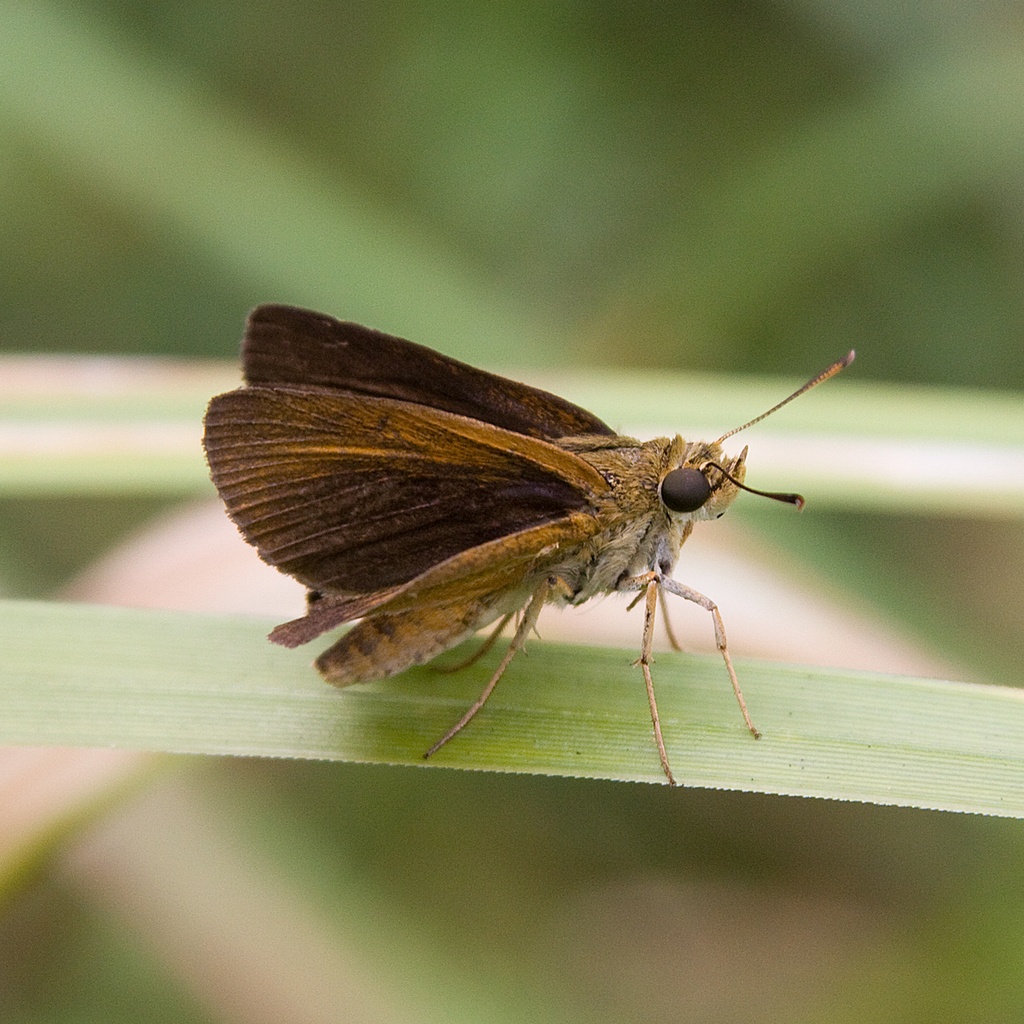
Dukes' skipper is a small butterfly with a wingspan of about 32-38 mm (1.3-1.5 in). It lives in shaded wetlands of the eastern United States and a small part of southeastern Canada, where its larvae feed on sedges and adults sip nectar from many flowers. The species has one generation per year in the north (July) and two generations farther south (June and late summer).
Source: Wikipedia
How to recognize it
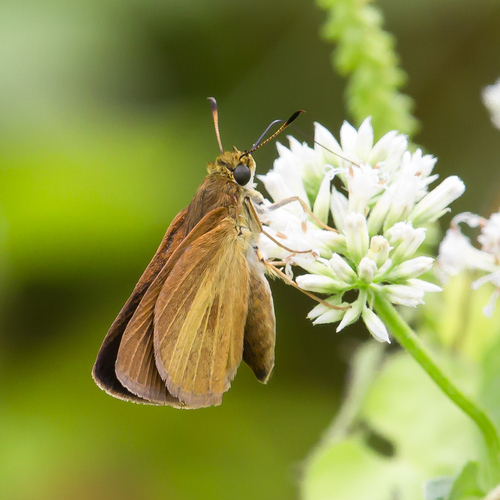
Both sexes have deep brown upper wings; the underside of the hindwing is light brown with pale yellow rays and a single unmistakable yellowish streak.
Source: Wikipedia
Size
Wings are short and rounded with a span of 32-38 mm (1.3-1.5 in).
Source: Wikipedia
Where it lives
They prefer shaded wetlands such as woodland or coastal swamps, marshes, and ditches that contain sedge plants for their larvae.
Source: Wikipedia
What it eats
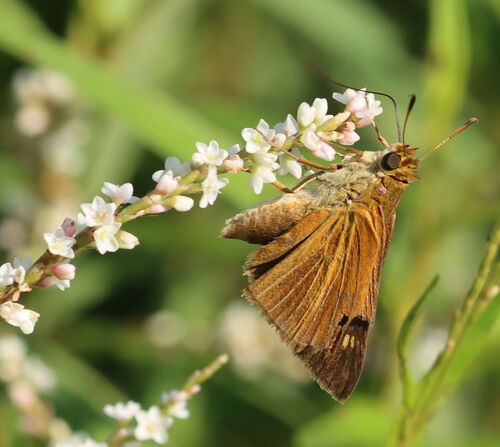
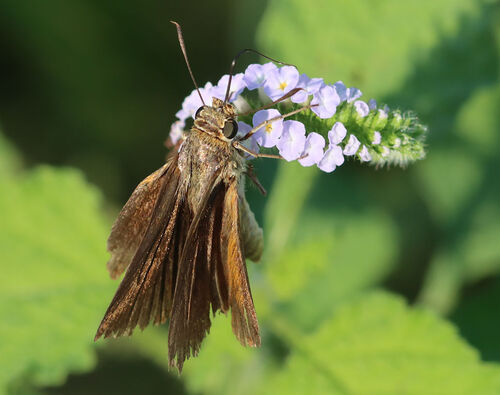
Larvae feed on sedges of the genera Carex and Rhynchospora. Adults drink nectar from flowers like buttonbush, milkweeds, Joe-Pye weed, pickerelweed, hibiscus, sneezeweed, alfalfa and red clover.
Source: Wikipedia
Life cycle
Adults live about three weeks, and the whole life from egg to death is roughly a year or less.
Source: Wikipedia
When you see it
In northern parts they usually have a single brood in July. Further south they can have two broods, one in June and another from August to September.
Source: Wikipedia
Where it is found in the US
Recorded in 19 of 51 states and DC. Most records: Ohio, Florida, Virginia, Michigan, Louisiana, North Carolina, Missouri, Arkansas.
Darker = more records. Counts are museum and citizen-science records, not population size.
Source: GBIF
Status: native in North America; native in Canada; native in United States. Source: iNaturalist
Months it is reported in the US
Source: GBIF
More photos
Questions people ask
How can I recognize Dukes' skipper?
Look for deep brown upper wings and a single yellowish streak on the underside of the hindwing.
Source: Wikipedia
When are Dukes' skippers active?
In the north they appear in July, while farther south they can be seen in June and again in late summer.
Source: Wikipedia
What plants do the larvae eat?
The caterpillars feed on sedges such as Carex and Rhynchospora.
Source: Wikipedia
What flowers do the adults visit?
Adults sip nectar from a variety of wet-land plants including buttonbush, milkweeds, Joe-Pye weed, pickerelweed, hibiscus, sneezeweed, alfalfa and red clover.
Source: Wikipedia
Same family (Hesperiidae)




Sources
- Wikipedia: https://en.wikipedia.org/wiki/Euphyes_dukesi
Look it up elsewhere: GBIF · iNaturalist · BugGuide · ITIS · Wikipedia
Text written 2026-10-24 from the sources above and checked sentence by sentence against them. Data fetched 2026-10-24.