 Bug FAQ
Downy Leather-winged Beetle
Podabrus pruinosus · Order: Coleoptera · Family: Cantharidae
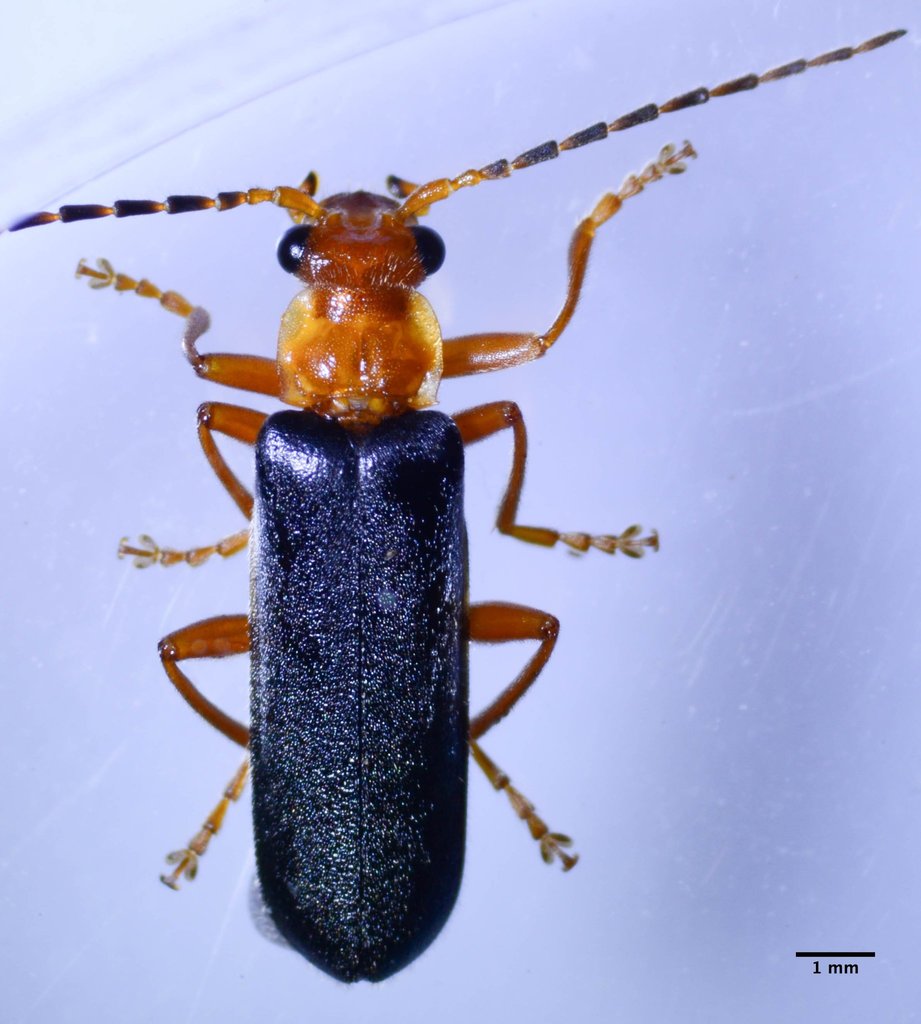
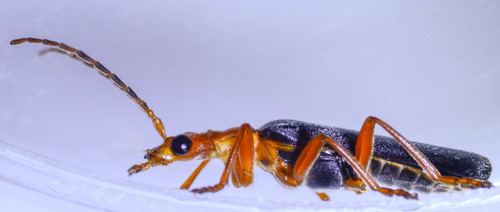
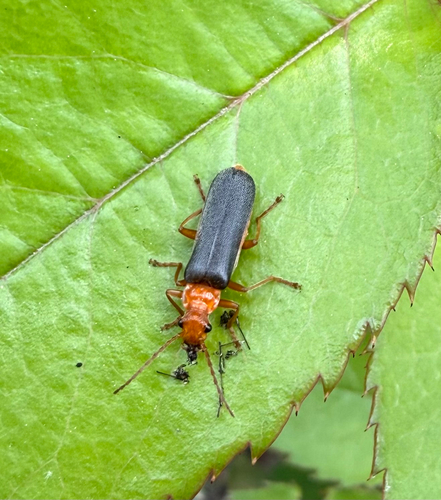
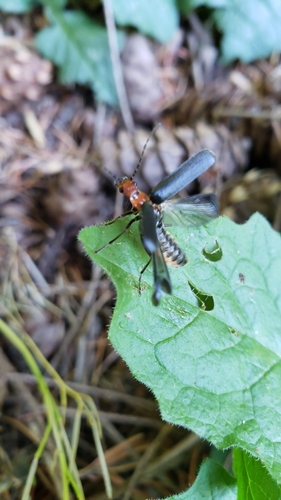
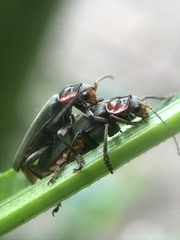
Adult Downy Leather-winged Beetles are 9 to 15 mm long, orange with black-brown, fine-hairy wing covers. They are common in North America during spring and summer, where they hunt aphids on plants.
Source: Wikipedia
How to recognize it
They are orange with black-brown wing covers that are covered in fine hair.
Source: Wikipedia
Size
Adults measure about 9 to 15 mm in length.
Source: Wikipedia
Life cycle
Larvae are pink, 15 to 20 mm long, with two dark lines on the thorax. The larvae live in the soil before becoming adults.
Source: Wikipedia
When you see it
They are most often seen in spring and summer.
Source: Wikipedia
Where it comes from
They are found across North America.
Source: Wikipedia
Where it is found in the US
Recorded in 10 of 51 states and DC. Most records: California, Oregon, Washington, Idaho, Montana, Nevada, Alaska, Wyoming.
Darker = more records. Counts are museum and citizen-science records, not population size.
Source: GBIF
Status: native in North America; native in Canada. Source: iNaturalist
Months it is reported in the US
Source: GBIF
More photos
Questions people ask
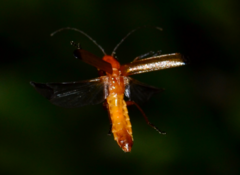
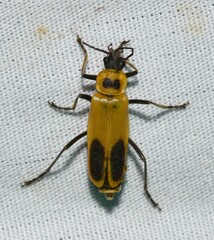
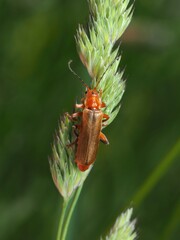
Same family (Cantharidae)


Sources
- Wikipedia: https://en.wikipedia.org/wiki/Podabrus_pruinosus
Look it up elsewhere: GBIF · iNaturalist · BugGuide · ITIS · Wikipedia
Text written 2026-10-24 from the sources above and checked sentence by sentence against them. Data fetched 2026-10-24.