 Bug FAQ
Dark Sailor Beetle
Cantharis fusca · Order: Coleoptera · Family: Cantharidae
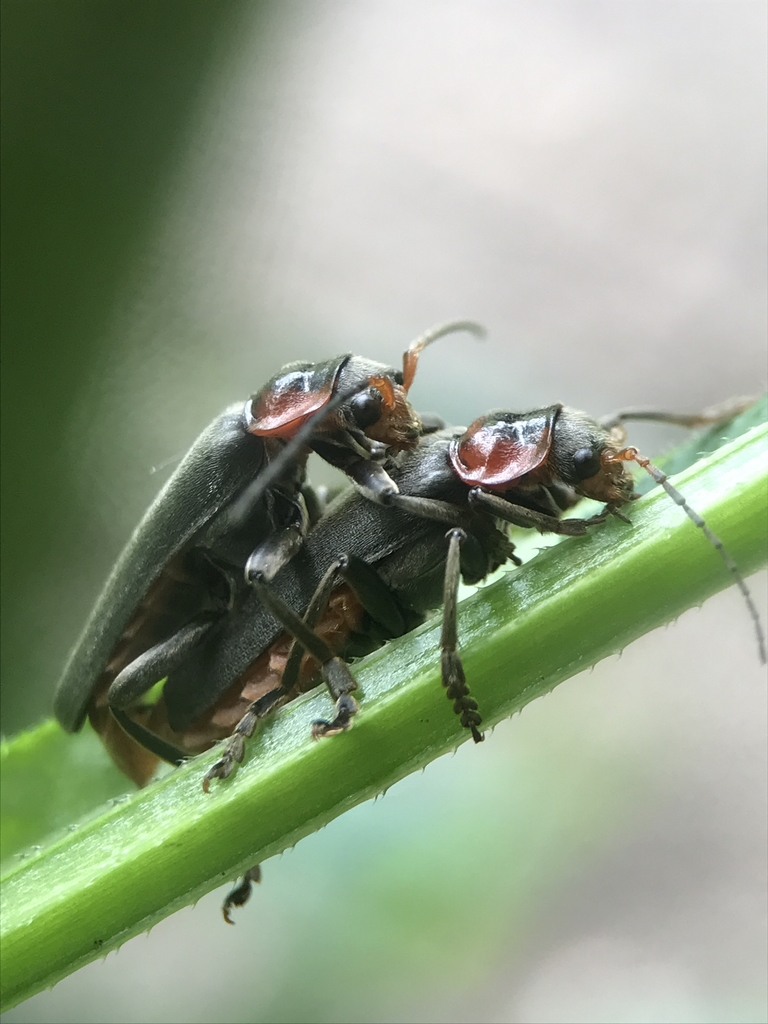
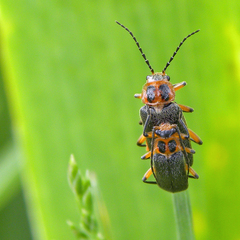
The dark sailor beetle is a 10 to 15 mm long beetle that is black except for red or orange parts on its head and thorax, and it has long feathery antennae and relatively long legs. It lives in bushes, forest edges, and meadows across much of Europe, where it hunts small insects, and its larvae, covered in black hairs, also eat small insects and can be seen on snow in winter. The species is a type of soldier beetle and may be confused with similar beetles.
Source: Wikipedia
How to recognize it
Except for red or orange parts on the head and thorax, the beetle is completely black.
Source: Wikipedia
Size
It measures 10 to 15 mm in length.
Source: Wikipedia
Where it lives
It is common in bushes, forest edges, and meadows.
Source: Wikipedia
What it eats
Adults hunt small insects, and larvae also eat small insects.
Source: Wikipedia
Life cycle
Larvae have black hairs, eat small insects, and can be seen crawling on snow in winter because they are very cold-resistant.
Source: Wikipedia
Where it comes from
The beetle is widespread across large parts of Europe.
Source: Wikipedia
Lookalikes
It is a species of soldier beetle, sometimes called the dark soldier beetle.
Source: Wikipedia
More photos

Questions people ask
Are they a garden pest?
They hunt small insects and are not reported to damage plants.
Source: Wikipedia
Same family (Cantharidae)
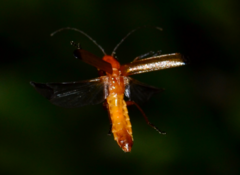
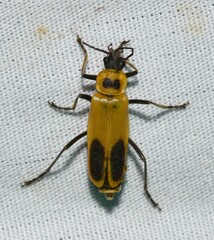


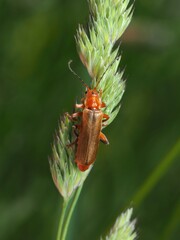
Sources
- Wikipedia: https://en.wikipedia.org/wiki/Cantharis_fusca
Look it up elsewhere: GBIF · iNaturalist · BugGuide · Wikipedia
Text written 2026-10-22 from the sources above and checked sentence by sentence against them. Data fetched 2026-10-22.