 Bug FAQ
Rustic Sailor Beetle
Cantharis rustica · Order: Coleoptera · Family: Cantharidae
Also called: soldier beetle
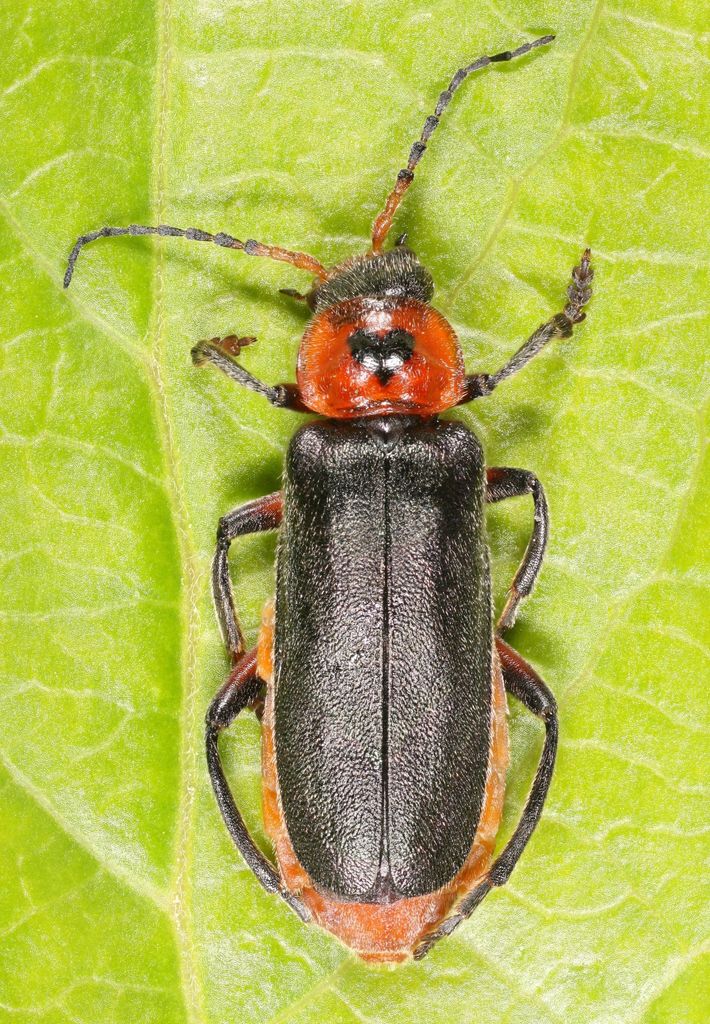
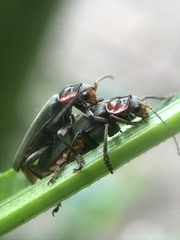
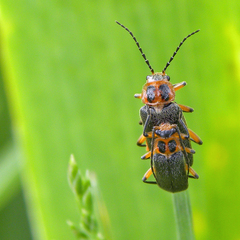
The rustic sailor beetle has black wing covers and blackish legs with a heart-shaped spot on its pronotum. It lives mainly in arable land and lowland grasslands, but can also be found in woods and other tall-grass areas, and adults are seen on flowers from mid-May to the end of June. In Europe it ranges from Scandinavia to the Mediterranean and from the Atlantic to Central Russia, and its larvae are active from late summer to early spring before pupating in March-April.
Source: Wikipedia
How to recognize it
It has black wing cases that protect its wings. Its legs are blackish and the pronotum bears a heart-shaped spot.
Source: Wikipedia
Where it lives
Prefers arable land and lowland grasslands, but also occurs in woodland and other tall-grass habitats.
Source: Wikipedia
Life cycle
Adults appear between May and July in Central Europe.
Source: Wikipedia
When you see it
Adults are present from May to July in Central Europe.
Source: Wikipedia
Where it comes from
Found across Europe from Scandinavia to the Mediterranean and from the Atlantic to Central Russia.
Source: Wikipedia
Where it is found in the US
Recorded in 1 of 51 states and DC. Most records: California.
Darker = more records. Counts are museum and citizen-science records, not population size.
Source: GBIF
Same family (Cantharidae)

Sources
- Wikipedia: https://en.wikipedia.org/wiki/Cantharis_rustica
Look it up elsewhere: GBIF · iNaturalist · BugGuide · Wikipedia
Text written 2026-10-22 from the sources above and checked sentence by sentence against them. Data fetched 2026-10-22.