 Bug FAQ
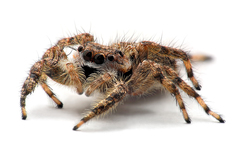
Downy jumping spider
Attulus pubescens · Order: Araneae · Family: Salticidae
Also called: Jumping spider
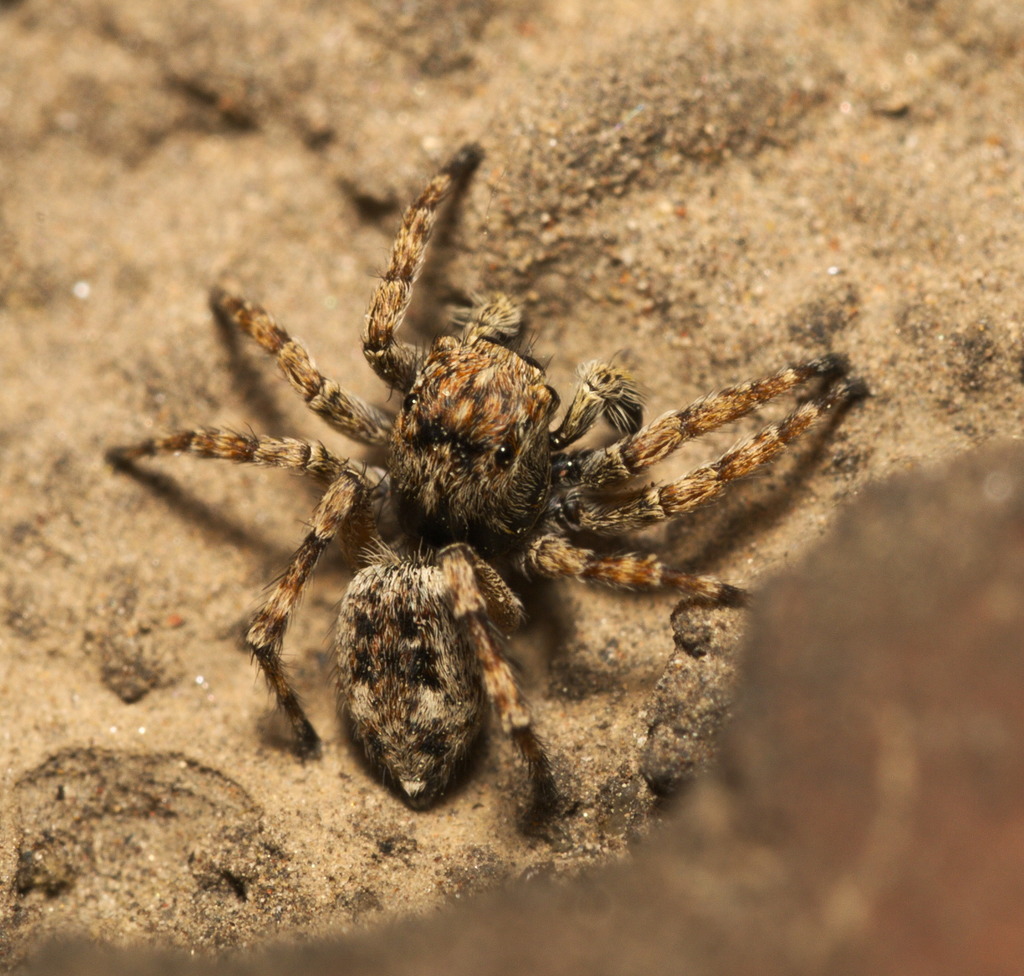
Females grow up to about 5 mm long while males are slightly smaller at around 4 mm. They are darkish spiders with variable white markings. They live away from houses, often under stones or on tree trunks, and are native to Europe, North Africa, Turkey and Afghanistan.
Source: Wikipedia
Where it lives
They are found away from dwellings, often under stones and on tree trunks.
Source: Wikipedia
Where it is found in the US
Recorded in 10 of 51 states and DC. Most records: Maine, Oregon, New Hampshire, New York, Massachusetts, Washington, Vermont, Connecticut.
Darker = more records. Counts are museum and citizen-science records, not population size.
Source: GBIF
Status: introduced in North America; introduced in United States. Source: iNaturalist
Months it is reported in the US
Source: GBIF
More photos


Questions people ask
What does the Downy jumping spider look like?
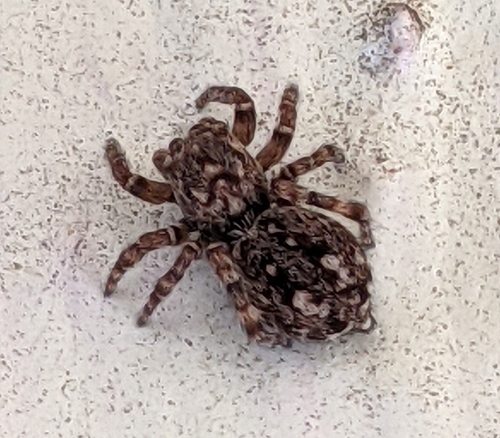
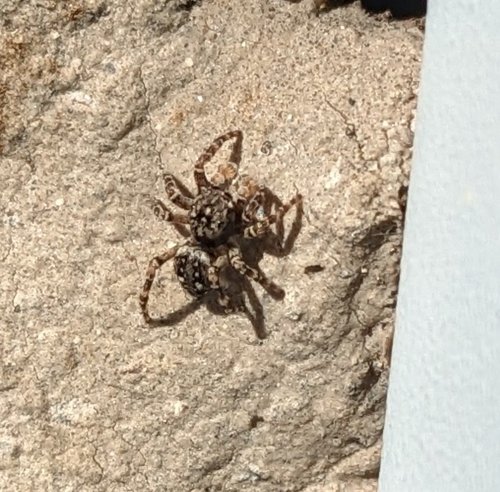
Both sexes are darkish with variable white markings.
Source: Wikipedia
How big are Downy jumping spiders?
Females grow up to about 5 mm and males are around 4 mm long.
Source: Wikipedia
Where can I find Downy jumping spiders?
They are found away from houses, under stones and on tree trunks.
Source: Wikipedia
What was the former name of Attulus pubescens?
It was known as Sitticus pubescens until 2017.
Source: Wikipedia
Same family (Salticidae)



Sources
- Wikipedia: https://en.wikipedia.org/wiki/Attulus_pubescens
Look it up elsewhere: GBIF · iNaturalist · BugGuide · Wikipedia
Text written 2026-10-28 from the sources above and checked sentence by sentence against them. Data fetched 2026-10-28.