 Bug FAQ
Downy Flower Gall Midge
Rhopalomyia anthophila · Order: Diptera · Family: Cecidomyiidae
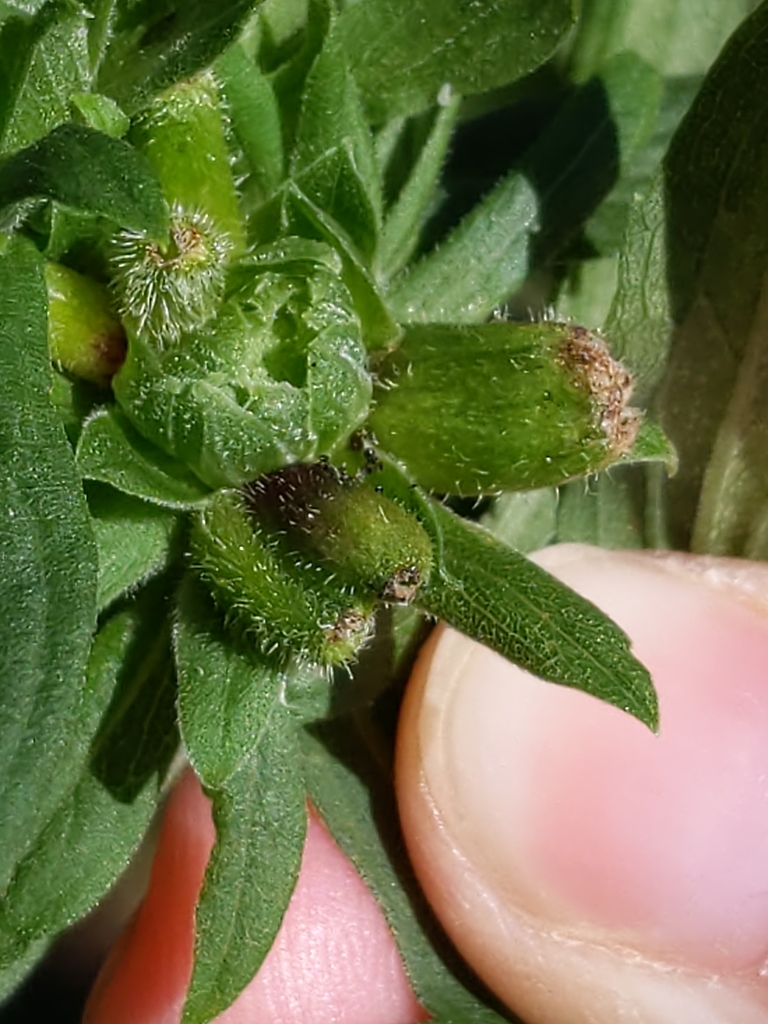
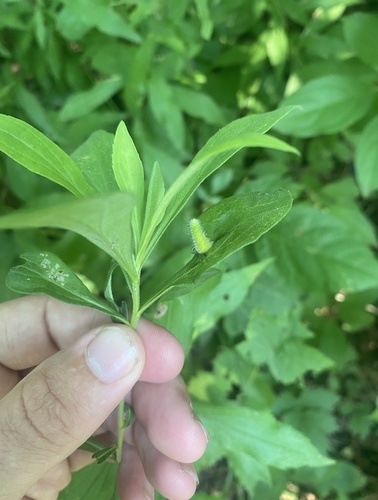
The downy flower gall midge makes cylindrical green galls on tall goldenrod (Solidago altissima) that are 5 to 10 mm long and 2 to 3.5 mm wide, covered in short white hairs. Galls become visible in mid-August, the larva feeds inside a single conical chamber, turns upward before pupating, and pupation occurs from late August to mid-September. These galls are found across much of North America wherever the host plant grows.
Source: Wikipedia
How to recognize it
It forms galls on Solidago altissima throughout much of North America.
Source: Wikipedia
Size
The gall is a modified capitulum that is cylindrical, 5 to 10 mm long and 2 to 3.5 mm wide.
Source: Wikipedia
Is it a pest in the house?
The midge is known for inducing galls on its host plant, not for damaging homes or stored goods.
Source: Wikipedia
Where it lives
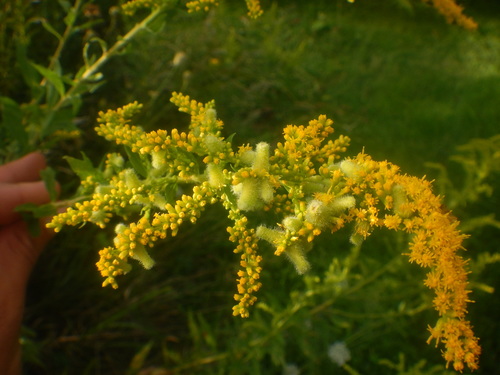
The gall appears among normal flower heads, with tiny leaves or ray florets at its base.
Source: Wikipedia
What it eats
Inside the gall is a single chamber that holds one larva facing downwards, which later turns upward before pupating.
Source: Wikipedia
Life cycle
Galls become noticeable in mid-August and the larva pupates from late August to mid-September.
Source: Wikipedia
When you see it
The visible galls appear in mid-August and persist through late August into September.
Source: Wikipedia
Where it comes from
It occurs across much of North America.
Source: Wikipedia
Where it is found in the US
Recorded in 16 of 51 states and DC. Most records: Illinois, Ohio, Pennsylvania, Minnesota, Michigan, Iowa, Indiana, New York.
Darker = more records. Counts are museum and citizen-science records, not population size.
Source: GBIF
Months it is reported in the US
Source: GBIF
More photos
Questions people ask
When do the galls appear?
The galls become apparent in mid-August and remain through late August to mid-September.
Source: Wikipedia
What does the gall look like?
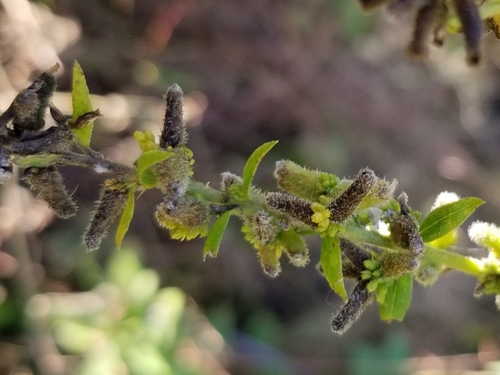
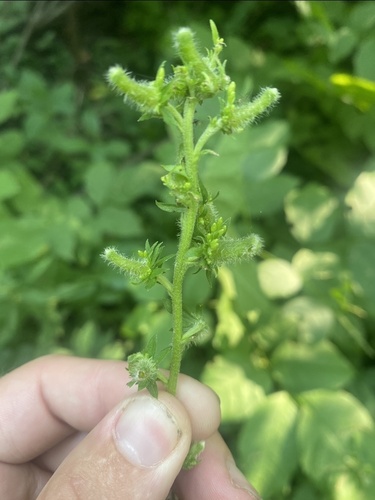
It is a green, cylindrical structure 5 to 10 mm long, 2 to 3.5 mm wide, slightly wider at the base, and covered in short white hairs.
Source: Wikipedia
Same family (Cecidomyiidae)


Sources
- Wikipedia: https://en.wikipedia.org/wiki/Rhopalomyia_anthophila
Look it up elsewhere: GBIF · iNaturalist · BugGuide · ITIS · Wikipedia
Text written 2026-10-26 from the sources above and checked sentence by sentence against them. Data fetched 2026-10-26.