 Bug FAQ
Douglas Fir Adelgid
Adelges cooleyi · Order: Hemiptera · Family: Adelgidae
Also called: Cooley spruce gall adelgid, Douglas Fir Woolly Aphid
Source: Wikipedia
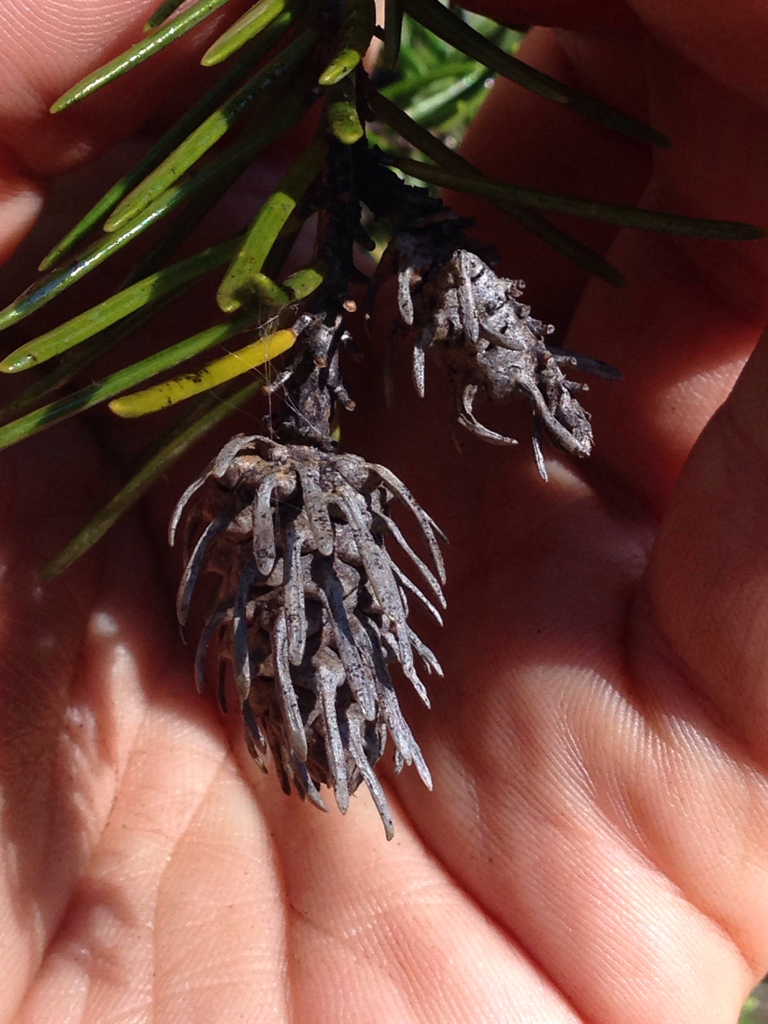
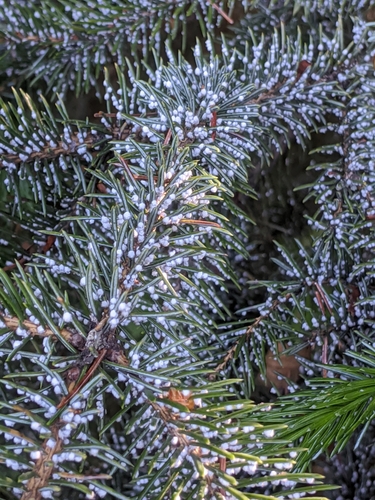
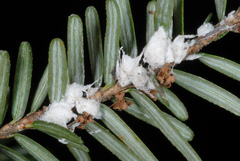
Adult Douglas fir adelgids are tiny (about 0.1 cm), oval and brown, and they become covered in white, waxy wool that looks like stationary tufts on the underside of needles. They alternate between spruce and Douglas fir, laying eggs on needles; the nymphs’ saliva triggers gall formation on spruce and the insects feed on Douglas fir needles, causing visible damage.
Source: Wikipedia
Is it a pest in the house?
On Douglas fir they feed on needles but do not form galls. Feeding creates yellow spots and bends the needles.
Source: Wikipedia
How to get rid of it
Chemical sprays can be applied in fall or early spring to reduce adelgid numbers. Horticultural oils are effective but may temporarily discolor spruce needles.
Source: Wikipedia
What it eats
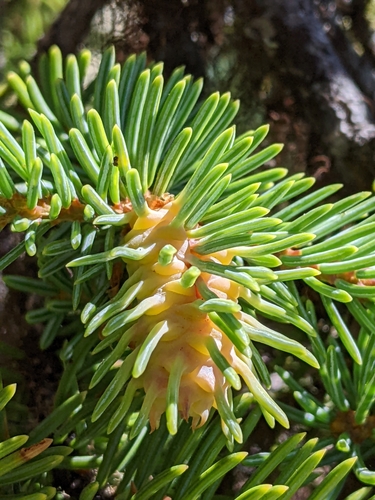
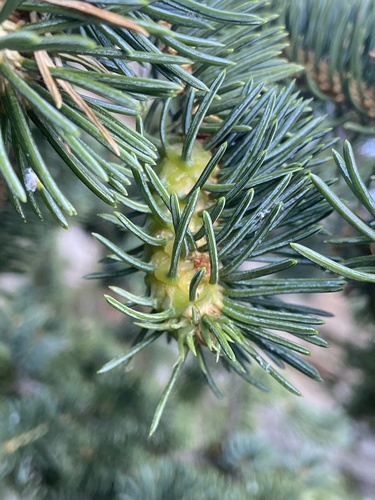
Eggs are laid on Douglas fir needles and several generations develop there. Nymph saliva triggers gall formation on spruce by thickening the needle base.
Source: Wikipedia
Life cycle
The life cycle has six stages, with two larval stages causing damage and two migrations between spruce and Douglas fir. In late summer, some develop wings, fly back to spruce, and lay eggs that overwinter.
Source: Wikipedia
When you see it
Gall infection on spruce is most noticeable in May-June of spring.
Source: Wikipedia
Where it comes from
The species is mainly western, alternating between white spruce and Douglas fir. It is rare in eastern Canada.
Source: Wikipedia
Lookalikes
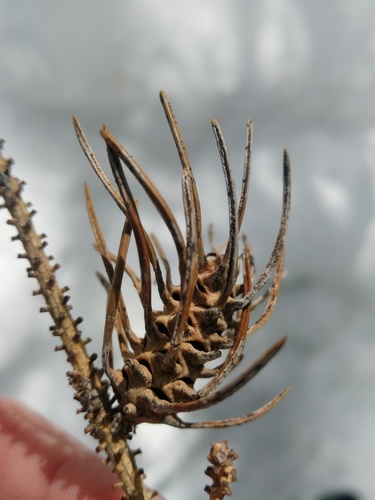
The infestation can be mistaken for worms, grubs, or even the spruce’s sex organ. Partial gall infections may die back, leaving curved, convoluted growth on the remaining needle segment.
Source: Wikipedia
Where it is found in the US
Recorded in 23 of 51 states and DC. Most records: Colorado, Washington, Utah, Idaho, Pennsylvania, Arizona, Montana, Oregon.
Darker = more records. Counts are museum and citizen-science records, not population size.
Source: GBIF
Status: native in North America; native in Canada. Source: iNaturalist
Months it is reported in the US
Source: GBIF
More photos
Questions people ask
How can I control Douglas fir adelgid?
Apply chemical sprays in fall or early spring, or use horticultural oils though they may temporarily discolor needles.
Source: Wikipedia
When will I see damage on my Douglas fir?
Feeding damage appears as yellow spots and bent needles after the insects have colonized the tree, typically following spring egg laying.
Source: Wikipedia
What does the woolly tuft on my spruce needles mean?
It is a mature adelgid covered in white waxy wool that forms stationary tufts on the needle undersides.
Source: Wikipedia
Is this pest found only in the West?
Yes, it is mainly a western species, though it is rare in eastern Canada.
Source: Wikipedia
Same family (Adelgidae)

Sources
- Wikipedia: https://en.wikipedia.org/wiki/Gall_adelgid
Look it up elsewhere: GBIF · iNaturalist · BugGuide · Wikipedia
Text written 2026-10-24 from the sources above and checked sentence by sentence against them. Data fetched 2026-10-24.