 Bug FAQ
Balsam Woolly Adelgid
Adelges piceae · Order: Hemiptera · Family: Adelgidae
Also called: Balsam Wooly Adelgid, Balsam Woolly Aphid, Eastern spruce gall aphid, gouty gall
Source: Wikipedia
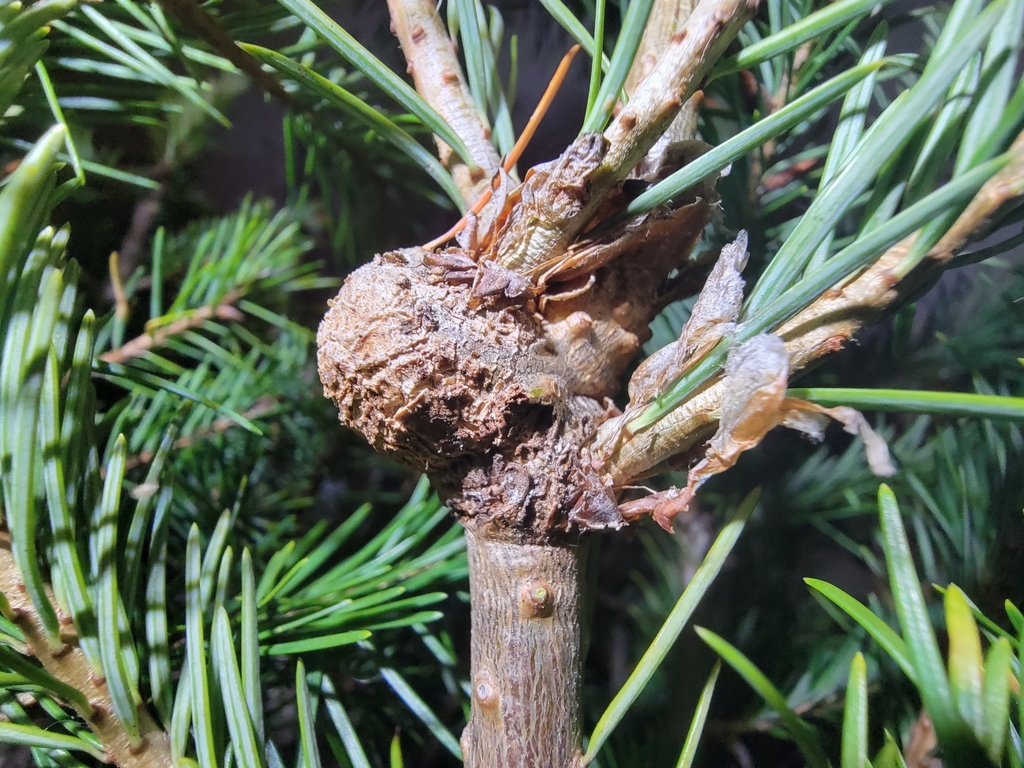
The balsam woolly adelgid is a tiny, wingless insect. It feeds inside bark fissures of fir trees larger than about four centimeters and can kill the trees.
Source: Wikipedia
How to recognize it
It is a small, wingless insect.
Source: Wikipedia
Size
The insect is very small and lacks wings.
Source: Wikipedia
Is it a pest in the house?
The adelgid infests and can kill fir trees.
Source: Wikipedia
Where it lives
In the U.S. it attacks balsam fir, Fraser fir, grand fir, silver fir and subalpine fir, especially in Washington and Oregon.
Source: Wikipedia
Life cycle
Females lay roughly one hundred eggs and the species produces three generations each year.
Source: Wikipedia
Where it is found in the US
Recorded in 19 of 51 states and DC. Most records: Idaho, New York, Montana, Washington, Massachusetts, North Carolina, Utah, West Virginia.
Darker = more records. Counts are museum and citizen-science records, not population size.
Source: GBIF
Status: introduced in United States; introduced in Canada. Source: iNaturalist
Months it is reported in the US
Source: GBIF
More photos
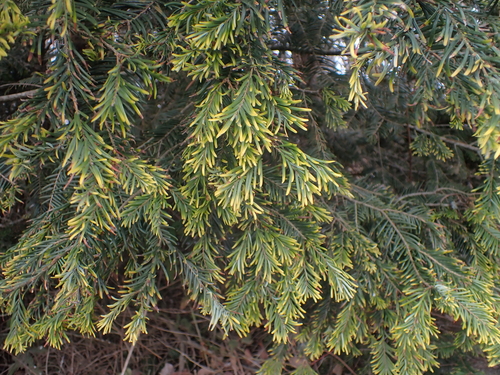

Questions people ask
Which trees are affected by the balsam woolly adelgid?
It attacks balsam fir, Fraser fir, grand fir, silver fir and subalpine fir, especially those larger than four centimeters in diameter.
Source: Wikipedia
How many generations does it have each year?
It goes through three generations per year.
Source: Wikipedia
How does it damage the trees?
It feeds inside bark fissures, which can kill the host fir trees.
Source: Wikipedia
Same family (Adelgidae)
Sources
- Wikipedia: https://en.wikipedia.org/wiki/Balsam_woolly_adelgid
Look it up elsewhere: GBIF · iNaturalist · BugGuide · Wikipedia
Text written 2026-10-24 from the sources above and checked sentence by sentence against them. Data fetched 2026-10-24.