 Bug FAQ
Dipogon sayi
Dipogon sayi · Order: Hymenoptera · Family: Pompilidae
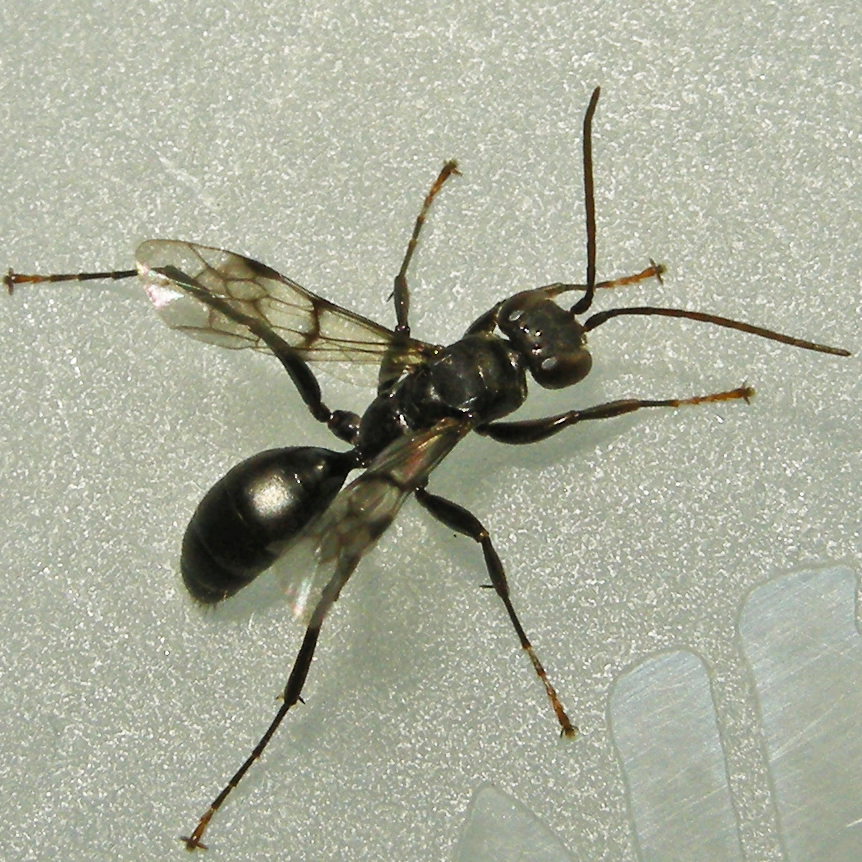
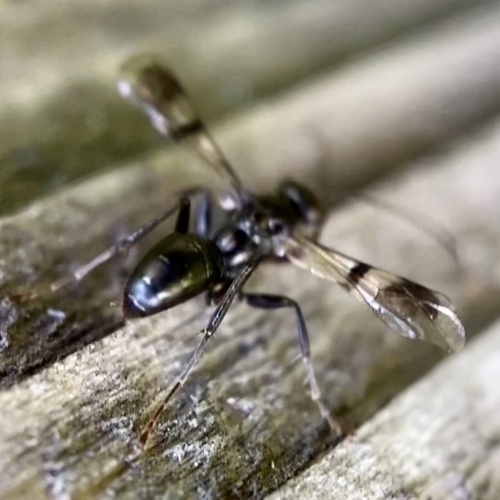
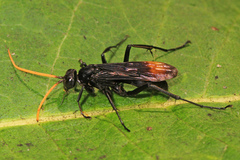
Dipogon sayi is a small spider wasp with a black, slender body and long legs. Its clear wings have two dark bands, the one near the thorax is thinner than the one near the tip. It lives in wooded areas, nesting in stems, twigs, logs, trunks and branches, and hunts common spiders for food.
Source: Wikipedia
How to recognize it
The wings are clear with two dark bands; the band closest to the thorax is thinner than the one near the wingtip.
Source: Wikipedia
Size
It is among the smaller spider wasps.
Source: Wikipedia
What it eats
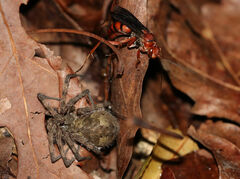
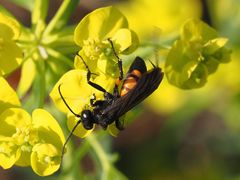
It preys on most common species of spiders. It rarely visits flowers, but has been recorded on Queen Anne's Lace.
Source: Wikipedia
Where it is found in the US
Recorded in 24 of 51 states and DC. Most records: Alaska, Ohio, Pennsylvania, West Virginia, Maine, Maryland, Michigan, Wisconsin.
Darker = more records. Counts are museum and citizen-science records, not population size.
Source: GBIF
Status: native in North America; native in Canada. Source: iNaturalist
Months it is reported in the US
Source: GBIF
More photos

Questions people ask
Where does Dipogon sayi live?
It lives in wooded areas, nesting in stems, twigs, logs, trunks and branches.
Source: Wikipedia
Same family (Pompilidae)
Sources
- Wikipedia: https://en.wikipedia.org/wiki/Deuteragenia_sayi
Look it up elsewhere: GBIF · iNaturalist · BugGuide · Wikipedia
Text written 2026-10-26 from the sources above and checked sentence by sentence against them. Data fetched 2026-10-26.