 Bug FAQ
Dingy Skipper
Erynnis tages · Order: Lepidoptera · Family: Hesperiidae
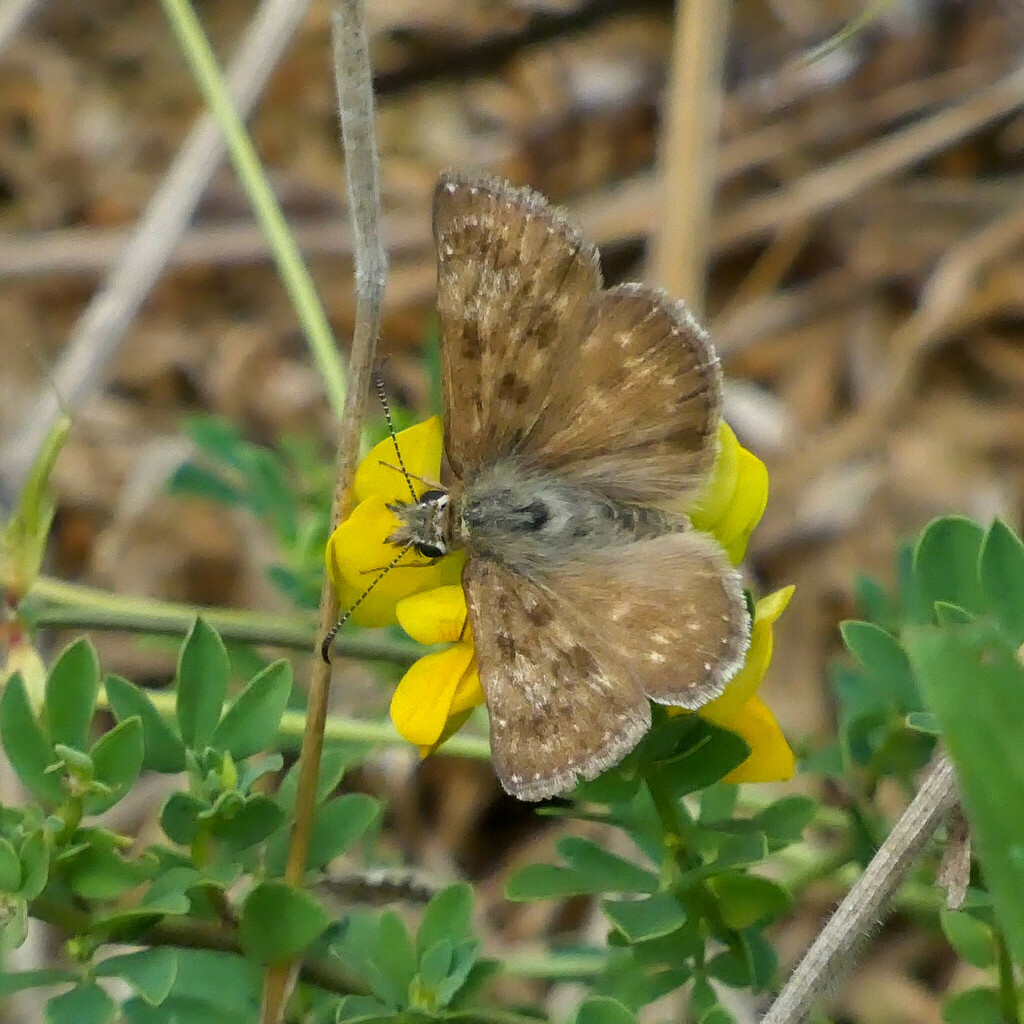
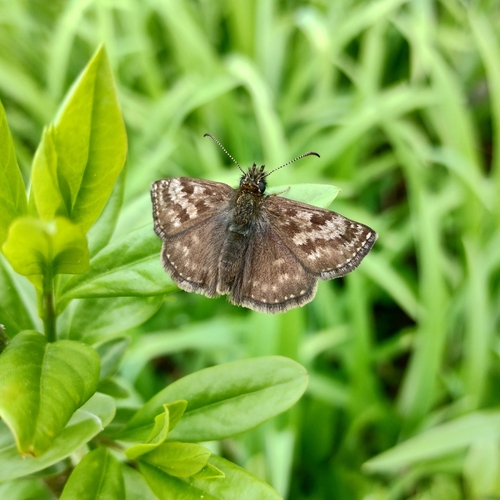
The dingy skipper has gray-brown wings with two slanted black bands, yellow-grey edges, and a row of tiny light dots along the margin; the forewing also shows two apical spots, one of which is transparent. It lives in dry, nutrient-poor grasslands up to 2,000 m altitude across Europe and northern Asia, from the Iberian Peninsula and Ireland east to the Pacific. Adults feed on moist soil, carrion and excrement, and fly in two generations from May to August, with a single generation in northern or high-altitude areas.
Source: Wikipedia
How to recognize it
The upper side of the forewings shows a marbled pattern and a series of tiny white dots along the wing edge.
Source: Wikipedia
Where it lives
Prefers open, dry, poor grasslands up to 2,000 m elevation.
Source: Wikipedia
What it eats
Adults sip moisture from soil, carrion and animal excrement.
Source: Wikipedia
When you see it
Two flight periods: May-June and July-August, but only one generation in northern or high-altitude regions. In Bavaria, adults are seen from mid-April to early September, peaking late May.
Source: Wikipedia
Lookalikes
Can be mistaken for the grizzled skipper, Mother Shipton moth or burnet companion moth. Faded Carcharodus alceae look similar but have glass spots on the forewing and a jagged hind-wing edge.
Source: Wikipedia
Where it is found in the US
Recorded in 1 of 51 states and DC. Most records: New Hampshire.
Darker = more records. Counts are museum and citizen-science records, not population size.
Source: GBIF
More photos
Questions people ask
How can I tell a dingy skipper apart from similar butterflies?
Look for gray-brown forewings with two slanted black bands edged in yellow-grey, a row of tiny light dots on the margin, and two apical spots, one of which is clear.
Source: Wikipedia
When are dingy skippers active?
They fly in two generations from May to August, but only one generation in northern or high-altitude areas.
Source: Wikipedia
What habitats do dingy skippers prefer?
Open, dry, nutrient-poor grasslands up to about 2,000 m elevation.
Source: Wikipedia
Same family (Hesperiidae)




Sources
- Wikipedia: https://en.wikipedia.org/wiki/Dingy_skipper
Look it up elsewhere: GBIF · iNaturalist · BugGuide · ITIS · Wikipedia
Text written 2026-10-22 from the sources above and checked sentence by sentence against them. Data fetched 2026-10-22.