 Bug FAQ
Dimorphic Jumping Spider
Maevia inclemens · Order: Araneae · Family: Salticidae
Also called: Dimorphic Jumper
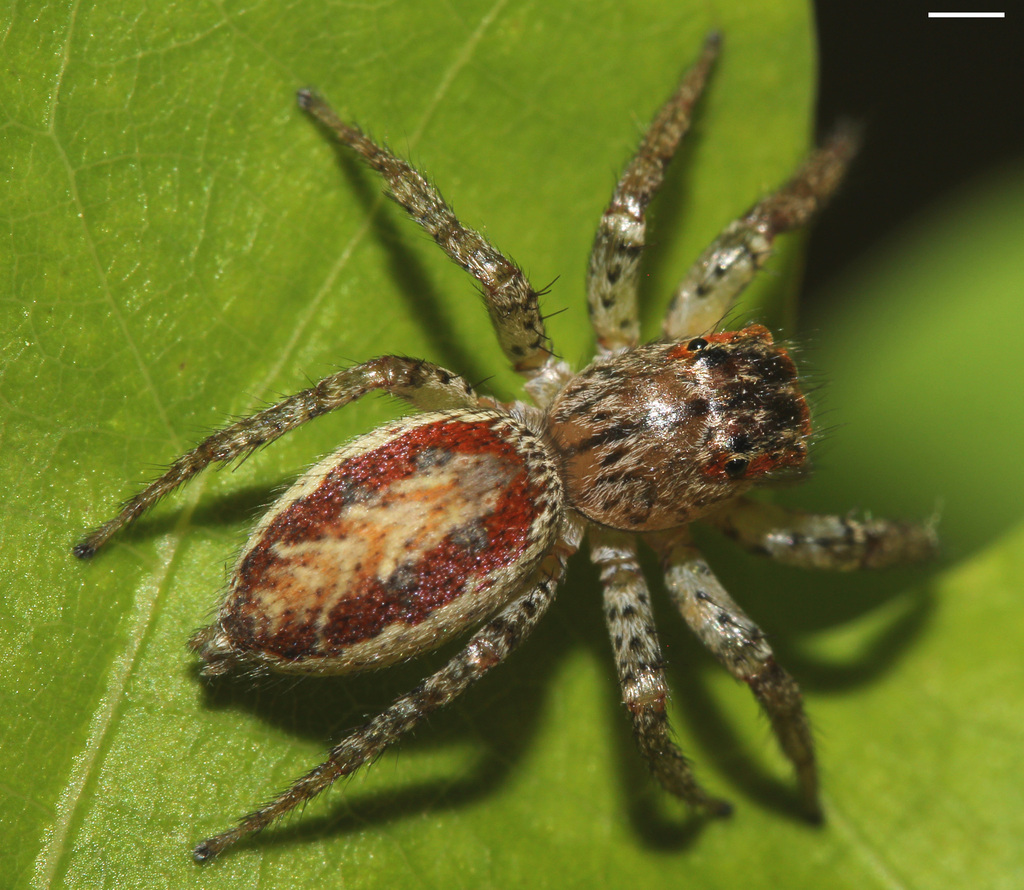
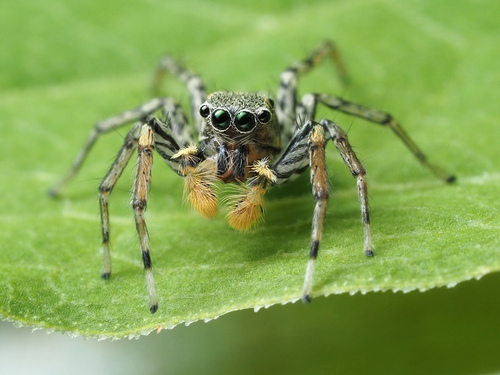
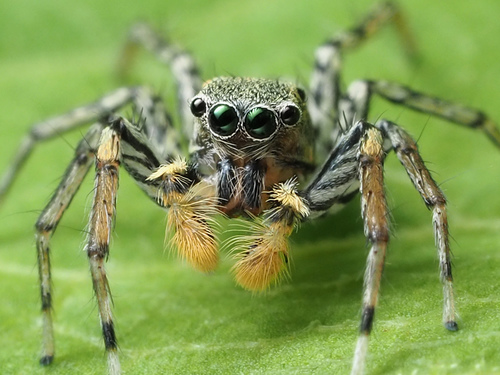
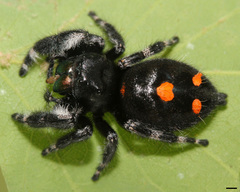
Female dimorphic jumping spiders are about 6.5 to 8 mm long with a light brown carapace and pale legs, while males are smaller at 4.75 to 6.5 mm and have carapaces ranging from light to dark brown with a dark edge. Two male colour forms exist: a “tufted” type that is all black with white legs and three bristle tufts on the front cephalothorax, and a “gray” type that shows black-white stripes, a white stripe on the front eyes, striped legs, bright orange pedipalps and no tufts. These spiders are often found on fences, outbuildings and other man-made structures throughout southeastern Canada and the eastern United States.
Source: Wikipedia
Size
Females measure 6.5 to 8 mm in length with a light brown carapace and pale, unmarked legs. Males measure 4.75 to 6.5 mm, their carapace ranges from light to dark brown and has a black edge.
Source: Wikipedia
Where it comes from
Their range includes southeastern Canada and the eastern United States.
Source: Wikipedia
Where it is found in the US
Recorded in 38 of 51 states and DC. Most records: Texas, Ohio, Massachusetts, Michigan, Oklahoma, Minnesota, New York, Pennsylvania.
Darker = more records. Counts are museum and citizen-science records, not population size.
Source: GBIF
Status: native in North America; native in Canada. Source: iNaturalist
Months it is reported in the US
Source: GBIF
More photos

Same family (Salticidae)



Sources
- Wikipedia: https://en.wikipedia.org/wiki/Maevia_inclemens
Look it up elsewhere: GBIF · iNaturalist · BugGuide · ITIS · Wikipedia
Text written 2026-10-22 from the sources above and checked sentence by sentence against them. Data fetched 2026-10-22.