 Bug FAQ
Dieunomia triangulifera
Dieunomia triangulifera · Order: Hymenoptera · Family: Halictidae
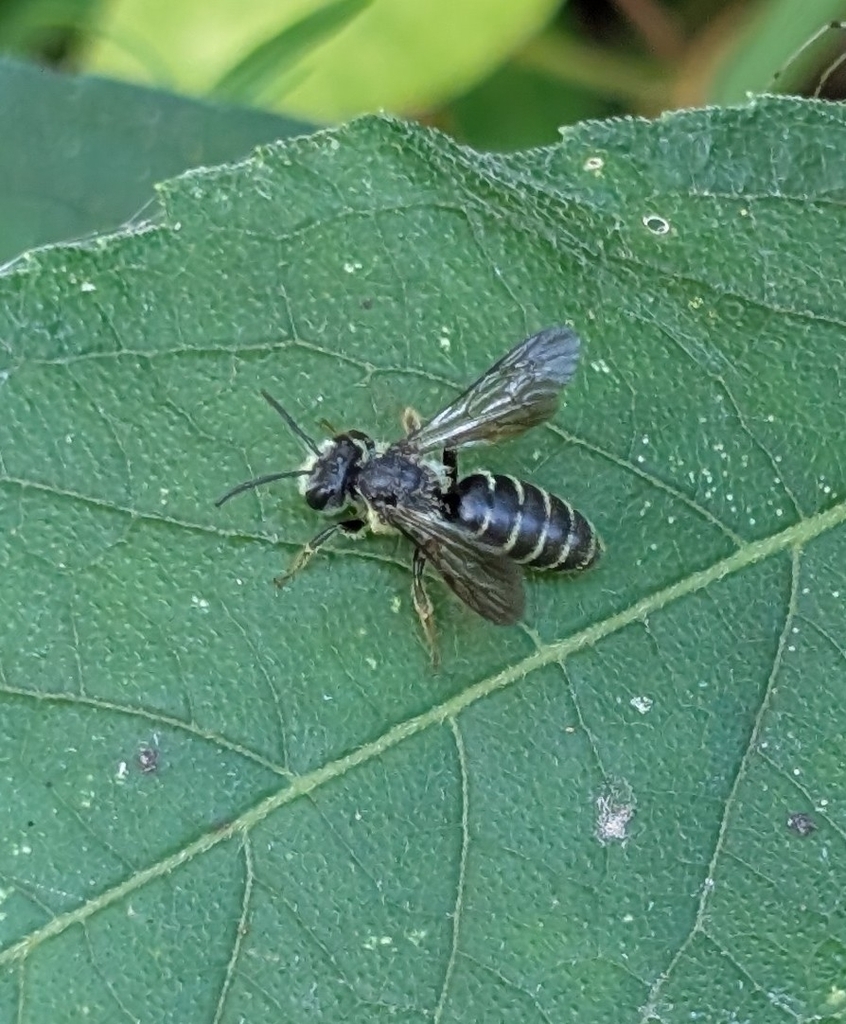
Adult Dieunomia triangulifera looks a lot like Dieunomia nevadensis arizonensis. They build thousands of nests on gentle slopes and can use soils ranging from sand to clay loam.
Source: Wikipedia
How to recognize it
Adults closely resemble Dieunomia nevadensis, especially the arizonensis form.
Source: Wikipedia
Where it lives
They often set up thousands of nests at a site, preferring knolls or gentle slopes. Nesting can occur in many soil types, from sand and sandy loam to loam, silt loam, and clay loam.
Source: Wikipedia
What it eats
Dieunomia triangulifera is a sweat bee belonging to the Halictidae family.
Source: Wikipedia
Life cycle
In winter the immature stages stay underground as prepupae in diapause to survive harsh conditions. After diapause they resume development and become pupae.
Source: Wikipedia
When you see it
Newly emerged adults have soft white wings that harden after about two days of staying motionless in their cells.
Source: Wikipedia
Lookalikes
Adults are easily confused with Dieunomia nevadensis, particularly the arizonensis subspecies.
Source: Wikipedia
Where it is found in the US
Recorded in 12 of 51 states and DC. Most records: Utah, Kansas, Nebraska, Missouri, New Mexico, Illinois, North Dakota, Iowa.
Darker = more records. Counts are museum and citizen-science records, not population size.
Source: GBIF
Status: native in North America; native in United States. Source: iNaturalist
Months it is reported in the US
Source: GBIF
Questions people ask
What does Dieunomia triangulifera look like?
Adults look very similar to Dieunomia nevadensis arizonensis.
Source: Wikipedia
Where can I find Dieunomia triangulifera?
They occur across the central United States from Illinois and Minnesota west to Utah and southern New Mexico.
Source: Wikipedia
How do they nest?
They build thousands of nests on gentle slopes and can use many soil types, from sand to clay loam.
Source: Wikipedia
What is their life cycle like?
They spend winter underground as prepupae in diapause, then develop into pupae before emerging as adults.
Source: Wikipedia
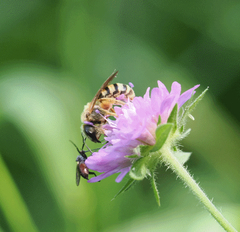
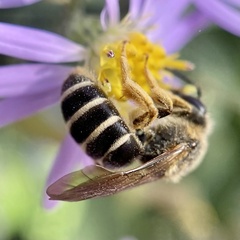
Same family (Halictidae)

Sources
- Wikipedia: https://en.wikipedia.org/wiki/Dieunomia_triangulifera
Look it up elsewhere: GBIF · iNaturalist · BugGuide · ITIS · Wikipedia
Text written 2026-10-25 from the sources above and checked sentence by sentence against them. Data fetched 2026-10-25.