 Bug FAQ
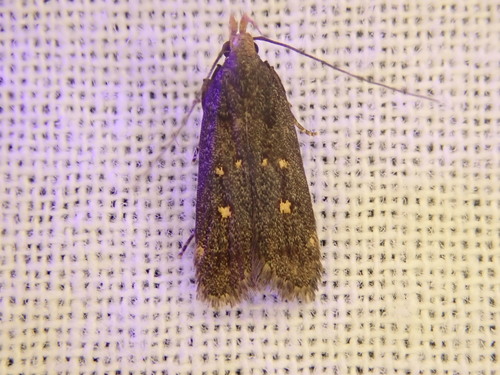
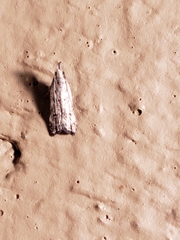
Dichomeris agonia
Dichomeris agonia · Order: Lepidoptera · Family: Gelechiidae
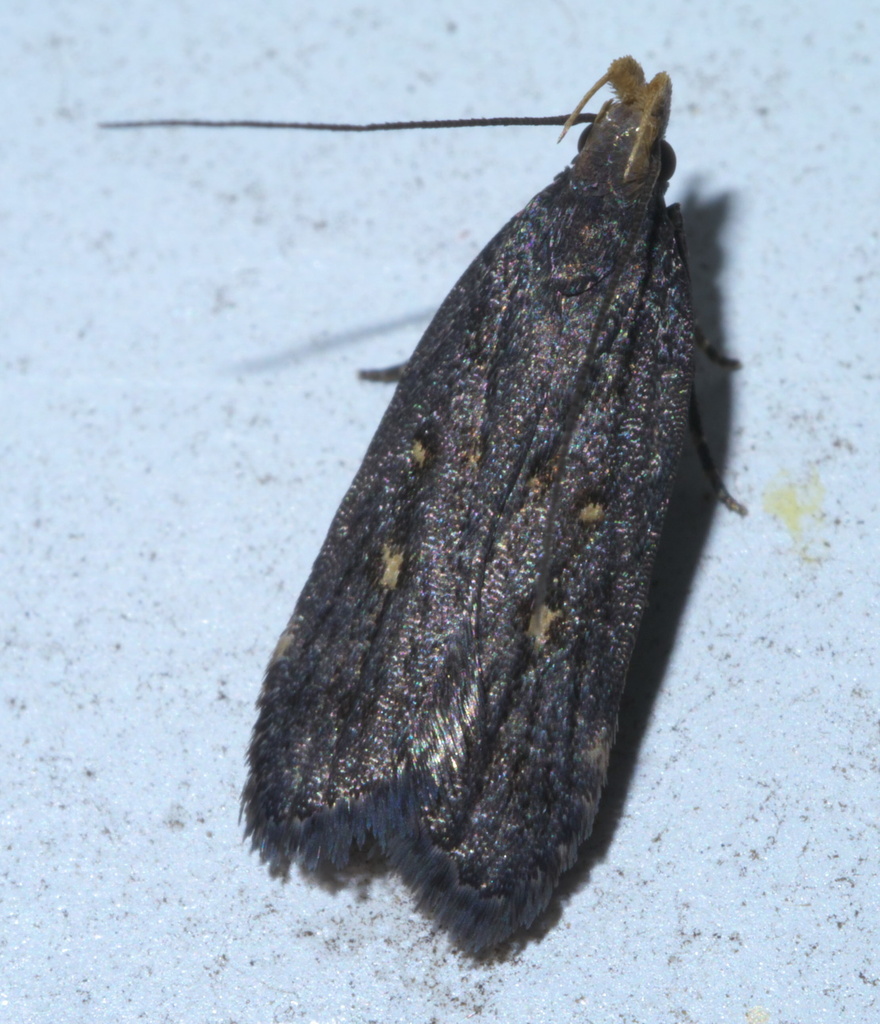
The moth has a wingspan of about 15 mm. It lives in North America, recorded from Ontario and several U.S. states from Massachusetts to Florida. Its larvae feed on plants such as Oenothera, Aster and Solidago.
Source: Wikipedia
How to recognize it
Dichomeris agonia belongs to the moth family Gelechiidae.
Source: Wikipedia
Size
The adult’s wingspan measures roughly 15 mm (0.59 in).
Source: Wikipedia
Where it lives
It has been found in Ontario, Massachusetts, Illinois, Florida, Louisiana, Arkansas and Pennsylvania.
Source: Wikipedia
What it eats
Larvae eat species of Oenothera, Aster and Solidago.
Source: Wikipedia
Life cycle
Adults have been recorded on the wing from January through November.
Source: Wikipedia
When you see it
The flight period spans most of the year, from January to November.
Source: Wikipedia
Where it comes from
Its North American range includes parts of Canada and the United States.
Source: Wikipedia
Where it is found in the US
Recorded in 21 of 51 states and DC. Most records: Mississippi, Maryland, Alabama, Kentucky, Louisiana, New Hampshire, New York, Oklahoma.
Darker = more records. Counts are museum and citizen-science records, not population size.
Source: GBIF
Status: native in North America; native in Canada; native in United States. Source: iNaturalist
Months it is reported in the US
Source: GBIF
More photos
Questions people ask
When are adult Dichomeris agonia moths active?
Adults can be seen flying from January to November.
Source: Wikipedia
What plants do the larvae of Dichomeris agonia eat?
The caterpillars feed on Oenothera, Aster and Solidago species.
Source: Wikipedia
Same family (Gelechiidae)
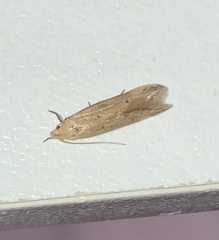 Angoumois Grain MothSitotroga cerealellaDamages trees, gardens or crops
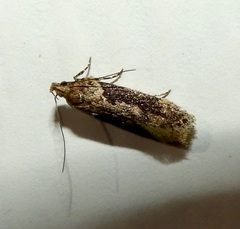 Boxelder Leafworm MothChionodes obscurusella
 Hairy, Toothed, and Shining Dichomeris Moths and AlliesDichomeris setosella
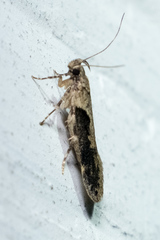 Black-smudged Chionodes Moth and AlliesChionodes occidentellaBlack-smudged Chionodes MothChionodes mediofuscella
 Inverse and Kimball's Dichomeris MothsDichomeris inversella
Sources
- Wikipedia: https://en.wikipedia.org/wiki/Dichomeris_agonia
Look it up elsewhere: GBIF · iNaturalist · BugGuide · Wikipedia
Text written 2026-10-29 from the sources above and checked sentence by sentence against them. Data fetched 2026-10-29.