 Bug FAQ
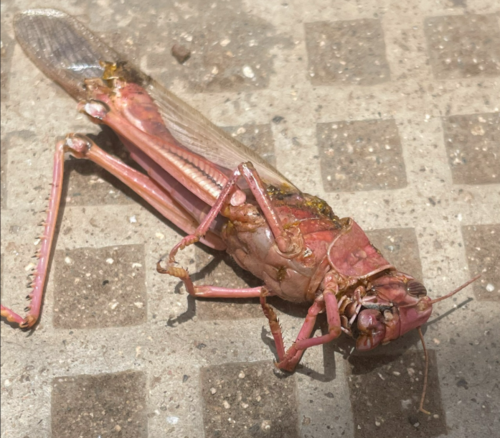
Desert Locust
Schistocerca gregaria · Order: Orthoptera · Family: Acrididae
Source: Wikipedia
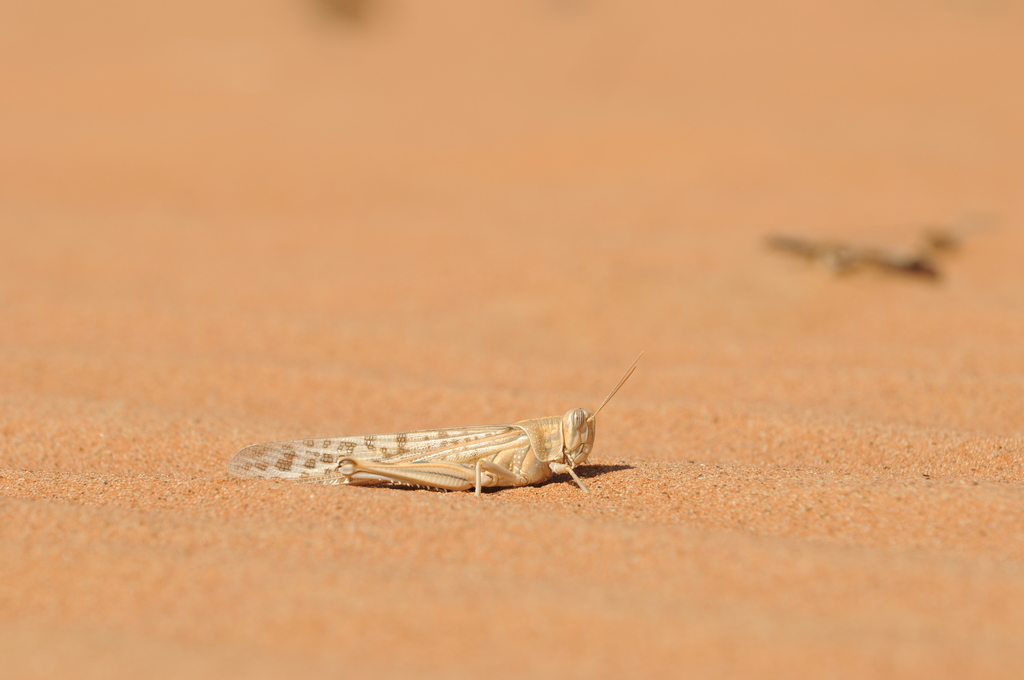
They form massive swarms that can travel up to 150 km in a day. Locusts switch from a solitary, short-winged form to a gregarious, long-winged, migratory phase when conditions trigger population surges. During surge years they can spread far north into Southern Europe, Eastern Africa, and Northern India, causing major crop losses.
Source: Wikipedia
How to recognize it
They change body form over generations in response to the environment. The species can be solitary and non-migratory or gregarious and migratory.
Source: Wikipedia
Size
A swarm may contain about 150 million locusts per square kilometre and can fly with the wind up to 150 km in a day.
Source: Wikipedia
Is it a pest in the house?
When present in low numbers they may go unnoticed, but they can eat all vegetation, including crops.
Source: Wikipedia
How to get rid of it
Control relies mainly on chemical pesticides. Early warning and preventive measures are used to stop plagues from developing. FAO coordinates surveys, control operations, and emergency assistance during upsurges. The best time to spray is early morning or late afternoon when locusts are on the ground.
What it eats
Desert locusts eat large amounts of any green vegetation. They can consume all vegetation, including valuable crops.
Source: Wikipedia
Life cycle
Their body form changes periodically over several generations in response to environmental conditions. They start as solitary, short-winged, highly fecund insects and become gregarious, long-winged, migratory adults.
Source: Wikipedia
When you see it
During population surge years they move northward into new regions. The 2004 to 05 upsurge caused major crop losses and reduced food security in West Africa.
Source: Wikipedia
Lookalikes
Locusts differ from other grasshoppers by their ability to become gregarious and form swarms as density increases.
Source: Wikipedia
More photos
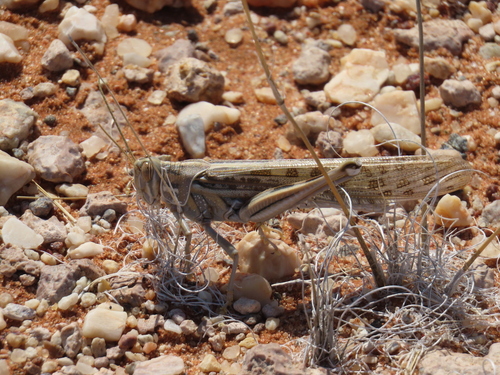
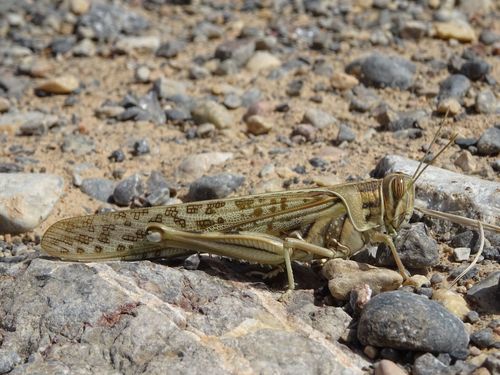
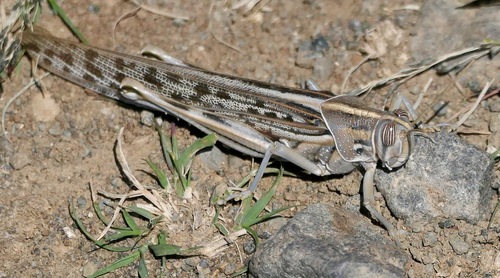
Questions people ask
How far can a desert locust swarm travel in a day?
A swarm can fly up to about 150 km (93 mi) in one day with the prevailing wind.
Source: Wikipedia
What triggers desert locusts to become gregarious?
Environmental conditions that increase population density cause solitary locusts to change into a gregarious, migratory form.
Source: Wikipedia
Do desert locusts damage crops?
Yes, they eat large amounts of green vegetation and can consume all crops, causing major losses.
Source: Wikipedia
Same family (Acrididae)
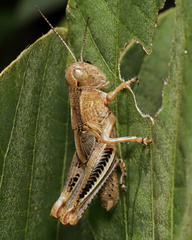 Differential GrasshopperMelanoplus differentialisDamages trees, gardens or crops
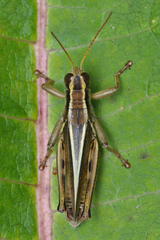 Two-striped GrasshopperMelanoplus bivittatusDamages trees, gardens or crops
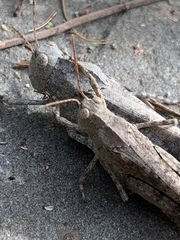 Carolina GrasshopperDissosteira carolinaDamages trees, gardens or crops
 Common Field GrasshopperChorthippus brunneus
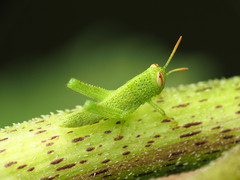 Egyptian Bird GrasshopperAnacridium aegyptium
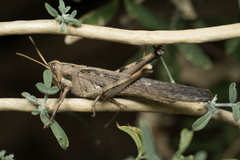 Gray Bird GrasshopperSchistocerca nitensDamages trees, gardens or crops
Sources
Look it up elsewhere: GBIF · iNaturalist · BugGuide · Wikipedia
Text written 2026-10-22 from the sources above and checked sentence by sentence against them. Data fetched 2026-10-22.