 Bug FAQ
Denki mushi
Monema flavescens · Order: Lepidoptera · Family: Limacodidae
Also called: Oriental moth
Source: Wikipedia
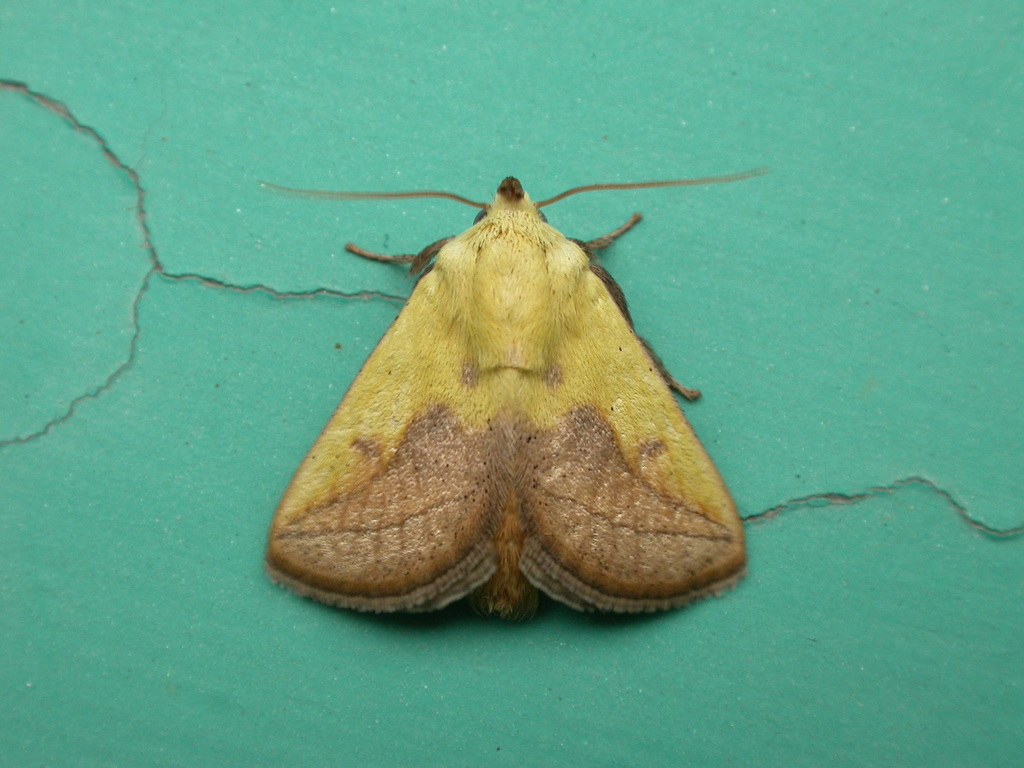
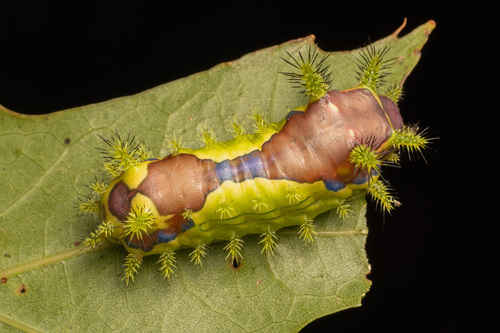
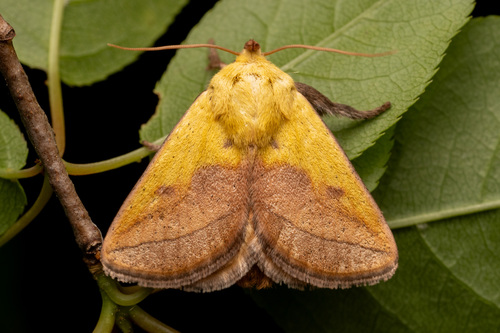
Adult males have a wingspan of about 30 to 32 mm, while females are larger at 35 to 39 mm. It is found across East Asia, including Japan, Korea, much of China, Taiwan, the Philippines, and parts of India. The caterpillars feed on many tree and shrub species and are considered a forestry pest.
Source: Wikipedia
Size
Males measure 30 to 32 mm across the wings, females 35 to 39 mm.
Source: Wikipedia
Is it a pest in the house?
The larvae are polyphagous and cause damage in forestry settings.
Source: Wikipedia
What it eats
The larvae eat a wide variety of plant leaves and are regarded as a pest in forests.
Source: Wikipedia
Where it comes from
It occurs in Japan, Korea, the Russian Far East, many provinces of China, Taiwan, the Philippines, and the Indian states of Hyderabad and Kerala.
Source: Wikipedia
Where it is found in the US
Recorded in 1 of 51 states and DC. Most records: Massachusetts.
Darker = more records. Counts are museum and citizen-science records, not population size.
Source: GBIF
Status: introduced in United States. Source: iNaturalist
Months it is reported in the US
Source: GBIF
More photos
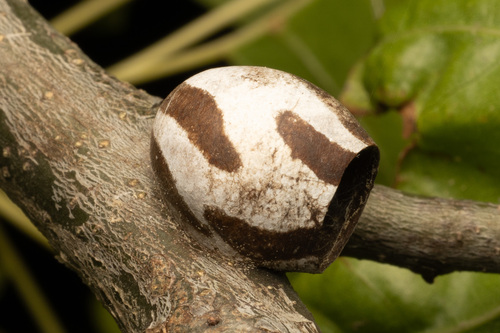
Questions people ask
What plants does this moth damage?
Its caterpillars feed on many tree and shrub species and can strip leaves, harming forests.
Source: Wikipedia
Where is this moth found?
It lives in Japan, Korea, the Russian Far East, large parts of China, Taiwan, the Philippines, and parts of India.
Source: Wikipedia
Same family (Limacodidae)
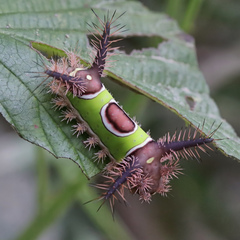 Saddleback Caterpillar MothAcharia stimuleaCan sting
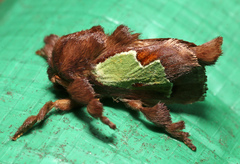 Spiny Oak-slug MothEuclea delphiniiVenomous
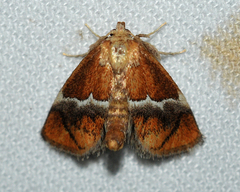 Yellow-shouldered Slug MothLithacodes fasciolaDamages trees, gardens or crops
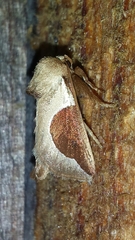 Skiff MothProlimacodes badiaDamages trees, gardens or crops
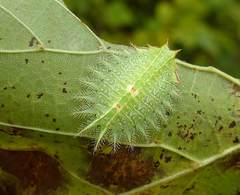 Crowned Slug MothIsa textulaDamages trees, gardens or crops
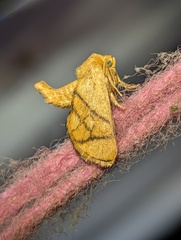 Yellow-collared Slug MothApoda y-inversaDamages trees, gardens or crops
Sources
- Wikipedia: https://en.wikipedia.org/wiki/Monema_flavescens
Look it up elsewhere: GBIF · iNaturalist · BugGuide · Wikipedia
Text written 2026-10-27 from the sources above and checked sentence by sentence against them. Data fetched 2026-10-27.