 Bug FAQ
Delaware Skipper
Anatrytone logan · Order: Lepidoptera · Family: Hesperiidae
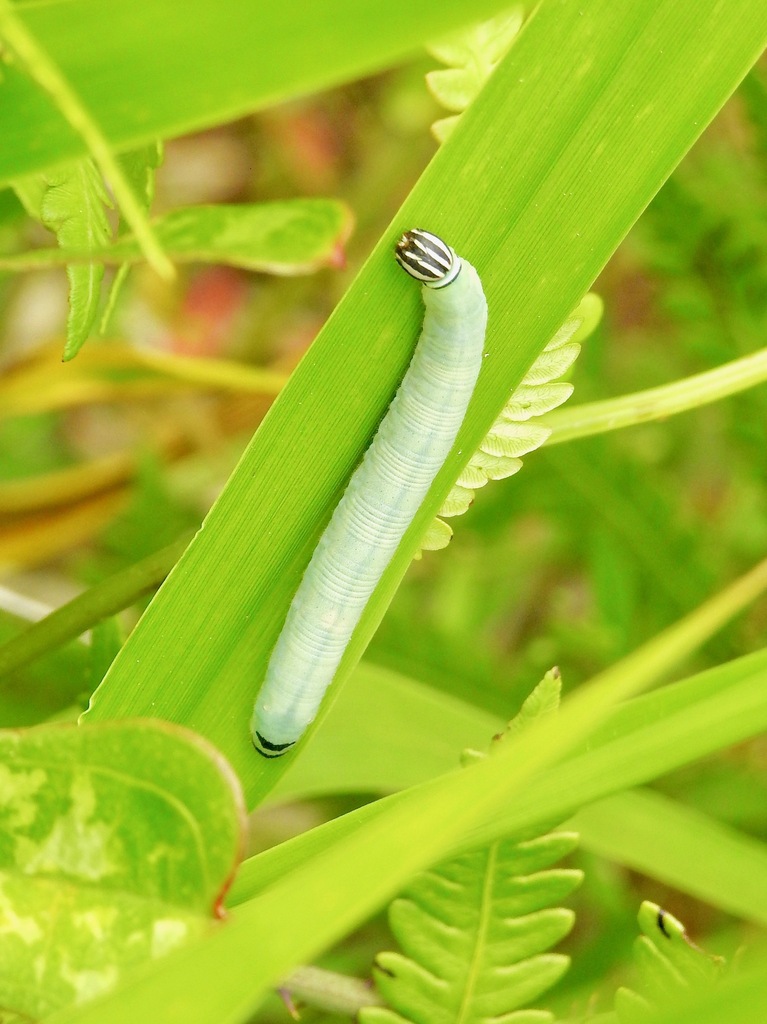
It lives in moist places like marshes and garden areas across southern Canada and much of the United States, feeding on flower nectar as an adult and on grasses as a caterpillar. Adults are active most of the year, producing several generations from February to October in warm regions and usually one generation in the summer up north.
Source: Wikipedia
How to recognize it
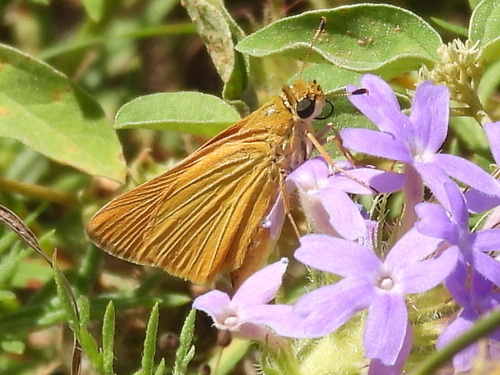
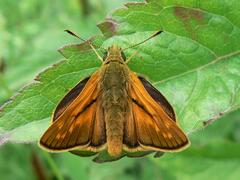
Both males and females are yellow-orange with black wing borders and dark brown veins; the hindwing borders are especially wide.
Source: Wikipedia
Size
The wingspan ranges from about 2.5 cm to 4.3 cm.
Source: Wikipedia
Where it lives
It inhabits moist environments such as marshes and residential landscaping.
Source: Wikipedia
What it eats
Adults sip nectar from pink and white flowers like milkweeds, mountain mints, and thistles.
Source: Wikipedia
When you see it
Activity spans most of the year, with several generations in warm regions and usually one in the summer up north.
Source: Wikipedia
Lookalikes
It belongs to the grass skipper subfamily Hesperiinae.
Source: Wikipedia
Where it is found in the US
Recorded in 41 of 51 states and DC. Most records: Florida, Illinois, Michigan, Ohio, Vermont, Minnesota, Texas, New York.
Darker = more records. Counts are museum and citizen-science records, not population size.
Source: GBIF
Status: native in North America; native in United States; native in Canada. Source: iNaturalist
Months it is reported in the US
Source: GBIF
More photos


Same family (Hesperiidae)




Sources
- Wikipedia: https://en.wikipedia.org/wiki/Anatrytone_logan
Look it up elsewhere: GBIF · iNaturalist · BugGuide · ITIS · Wikipedia
Text written 2026-10-22 from the sources above and checked sentence by sentence against them. Data fetched 2026-10-22.