 Bug FAQ
Death's Head Hawkmoth
Acherontia atropos · Order: Lepidoptera · Family: Sphingidae
Also called: African death head's hawkmoth, African death's head hawkmoth, deaths head hawkmoth, greater death's head hawkmoth
Source: Wikipedia
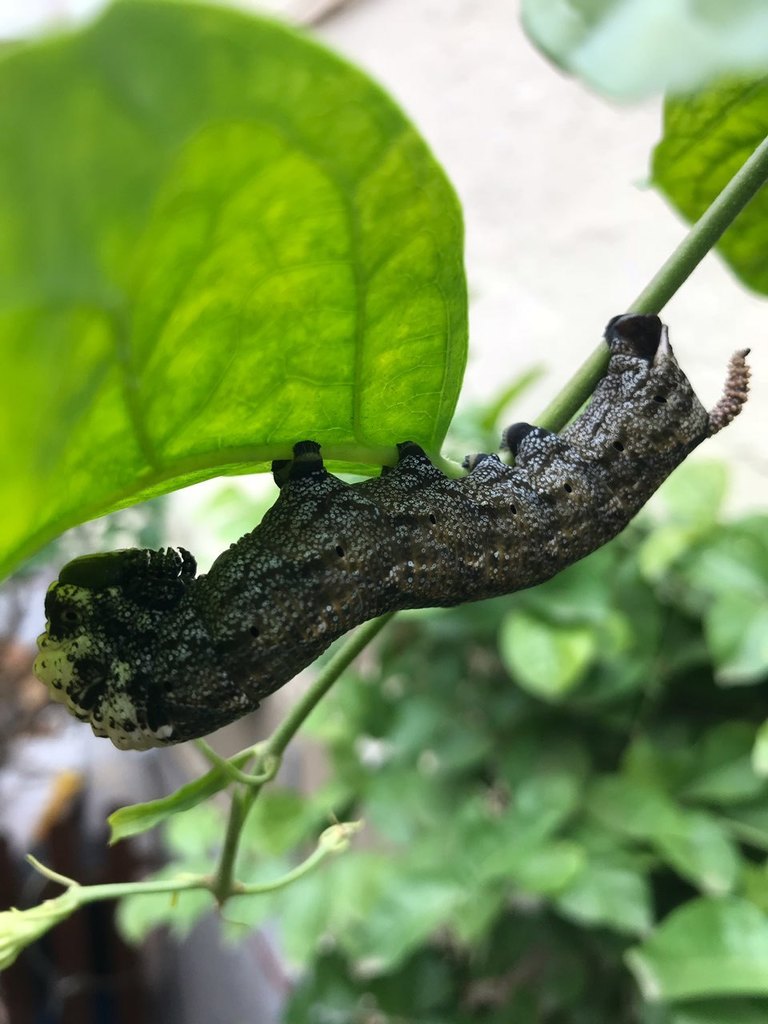
The African death's-head hawkmoth is a large moth with a wingspan of about 13 cm (5 in). It is recognized by a skull-shaped pattern on the thorax and a patch of short yellowish hairs. The caterpillars may bite if handled, but the bite does not harm human skin.
Source: Wikipedia
How to recognize it
A skull-shaped marking on the thorax gives the moth its name.
Source: Wikipedia
Size
Adults have a wingspan of about 13 cm (5 in).
Source: Wikipedia
Is it a pest in the house?
People consider it a pest because of superstitions about bad luck, not because it harms homes.
Source: Wikipedia
Does it bite or sting?
If threatened, the caterpillars may click their mandibles or bite, but the bite is harmless to human skin.
Source: Wikipedia
How to get rid of it
Although harmless, its skull pattern gives it a negative reputation.
Source: Wikipedia
Where it lives
It lives in southern Europe and much of Africa and sometimes migrates to the British Isles.
Source: Wikipedia
What it eats
The larva grows to about 12 to 13 cm and pupates underground.
Source: Wikipedia
When you see it
It flies late at night, so it is rarely seen.
Source: Wikipedia
Where it comes from
Its native range includes southern Europe and large parts of Africa.
Source: Wikipedia
Lookalikes
It is the best known of three Acherontia species; the other two also have green, brown, and yellow larval forms.
Source: Wikipedia
Where it is found in the US
Recorded in 1 of 51 states and DC. Most records: Arizona.
Darker = more records. Counts are museum and citizen-science records, not population size.
Source: GBIF
Questions people ask
Do the caterpillars bite?
They may bite if handled, but the bite does not harm human skin.
Source: Wikipedia
Is this moth a pest to crops?
Yes, it is considered a minor pest to crops and beehives.
Source: Wikipedia
Why is it called a death's-head moth?
Because of the skull-shaped pattern on its thorax.
Source: Wikipedia
Same family (Sphingidae)
 White-lined SphinxHyles lineataDamages trees, gardens or crops
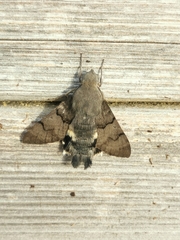 Eurasian Hummingbird HawkmothMacroglossum stellatarum
 Snowberry ClearwingHemaris diffinis
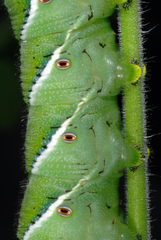 Carolina SphinxManduca sextaDamages trees, gardens or crops
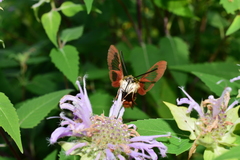 Hummingbird ClearwingHemaris thysbeDamages trees, gardens or crops
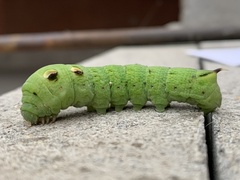 Elephant HawkmothDeilephila elpenor
Sources
- Wikipedia: https://en.wikipedia.org/wiki/Acherontia_atropos
Look it up elsewhere: GBIF · iNaturalist · BugGuide · ITIS · Wikipedia
Text written 2026-10-23 from the sources above and checked sentence by sentence against them. Data fetched 2026-10-22.