 Bug FAQ
Dakota Skipper
Hesperia dacotae · Order: Lepidoptera · Family: Hesperiidae
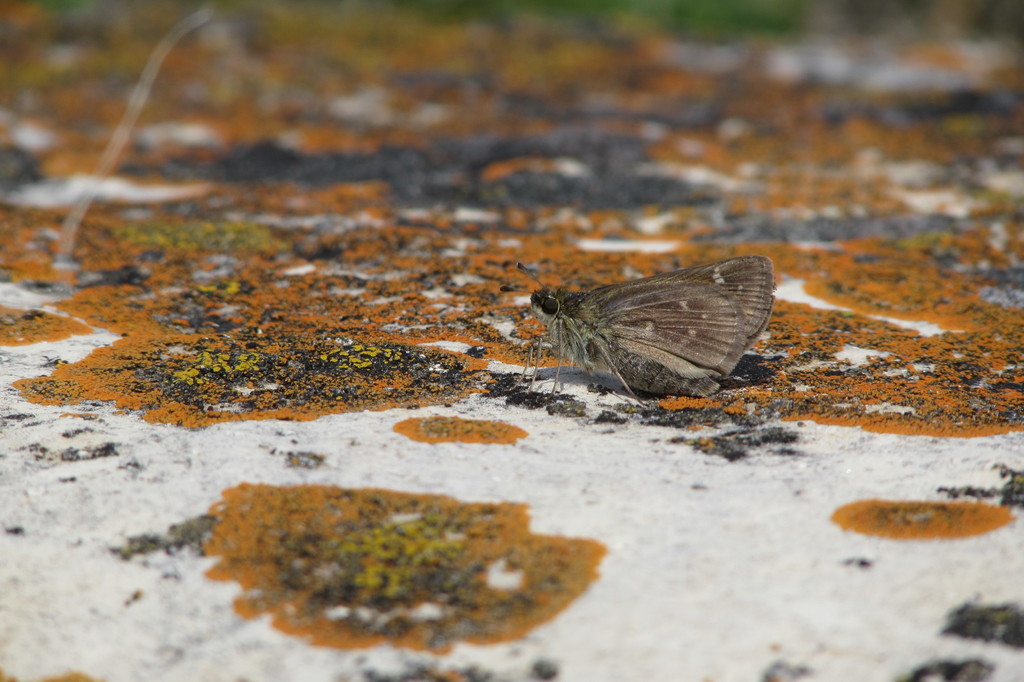
Adults are only on the wing for about three weeks in June and July, while the caterpillars feed on native grasses such as little bluestem and overwinter close to the ground.
Source: Wikipedia
How to recognize it
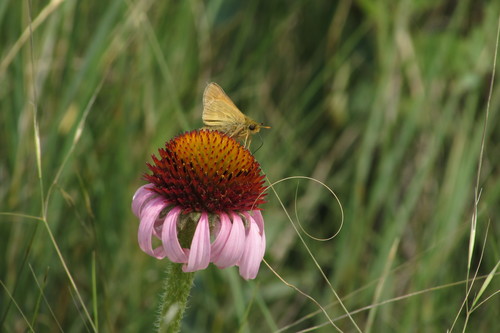
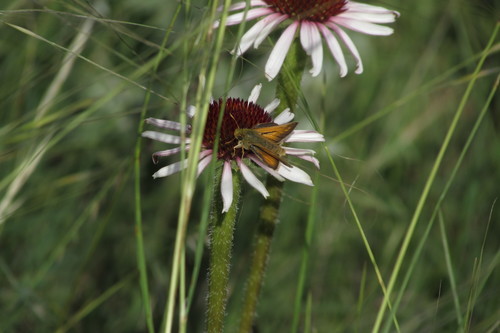
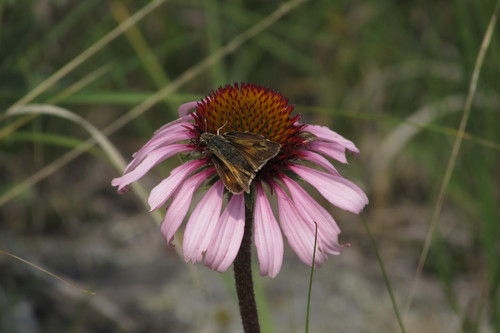
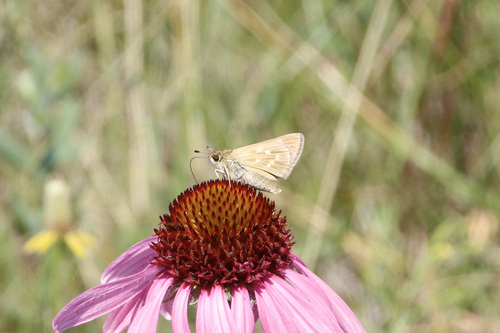
Male Dakota skippers have tawny-orange to brown forewings with a noticeable mark and dusty-yellow on the lower wing. Female wings are a darker brown-orange and show white spots along the forewing edge.
Source: Wikipedia
Where it lives
They inhabit healthy natural tall grass and prairie grass habitats across Minnesota to Saskatchewan.
Source: Wikipedia
What it eats
Caterpillars feed on native grasses, especially little bluestem (Schizachyrium scoparium). They remain on these grasses until they go dormant in late summer.
Source: Wikipedia
Life cycle
After feeding, the larvae overwinter in low-lying shelters and emerge as adults in spring.
Source: Wikipedia
When you see it
The flight period of adults is limited to a three-week span in early summer (June to July).
Source: Wikipedia
Where it comes from
It is found in tall prairie grass areas from Minnesota to Saskatchewan.
Source: Wikipedia
Where it is found in the US
Recorded in 5 of 51 states and DC. Most records: Minnesota, North Dakota, South Dakota, Iowa, Maryland.
Darker = more records. Counts are museum and citizen-science records, not population size.
Source: GBIF
Status: native in North America; native in Canada. Source: iNaturalist
Months it is reported in the US
Source: GBIF
More photos
Questions people ask
What do Dakota skipper caterpillars eat?
The caterpillars feed on native grasses, especially little bluestem.
Source: Wikipedia
Where does the Dakota skipper live?
It lives in healthy tall prairie grass from Minnesota to Saskatchewan.
Source: Wikipedia
Same family (Hesperiidae)




Sources
- Wikipedia: https://en.wikipedia.org/wiki/Hesperia_dacotae
Look it up elsewhere: GBIF · iNaturalist · BugGuide · ITIS · Wikipedia
Text written 2026-10-25 from the sources above and checked sentence by sentence against them. Data fetched 2026-10-25.