 Bug FAQ
Curved-lined Agonopterix Moth
Agonopterix curvilineella · Order: Lepidoptera · Family: Depressariidae
Also called: Curved-line Agonopterix Moth, Curved-line Agonopterix
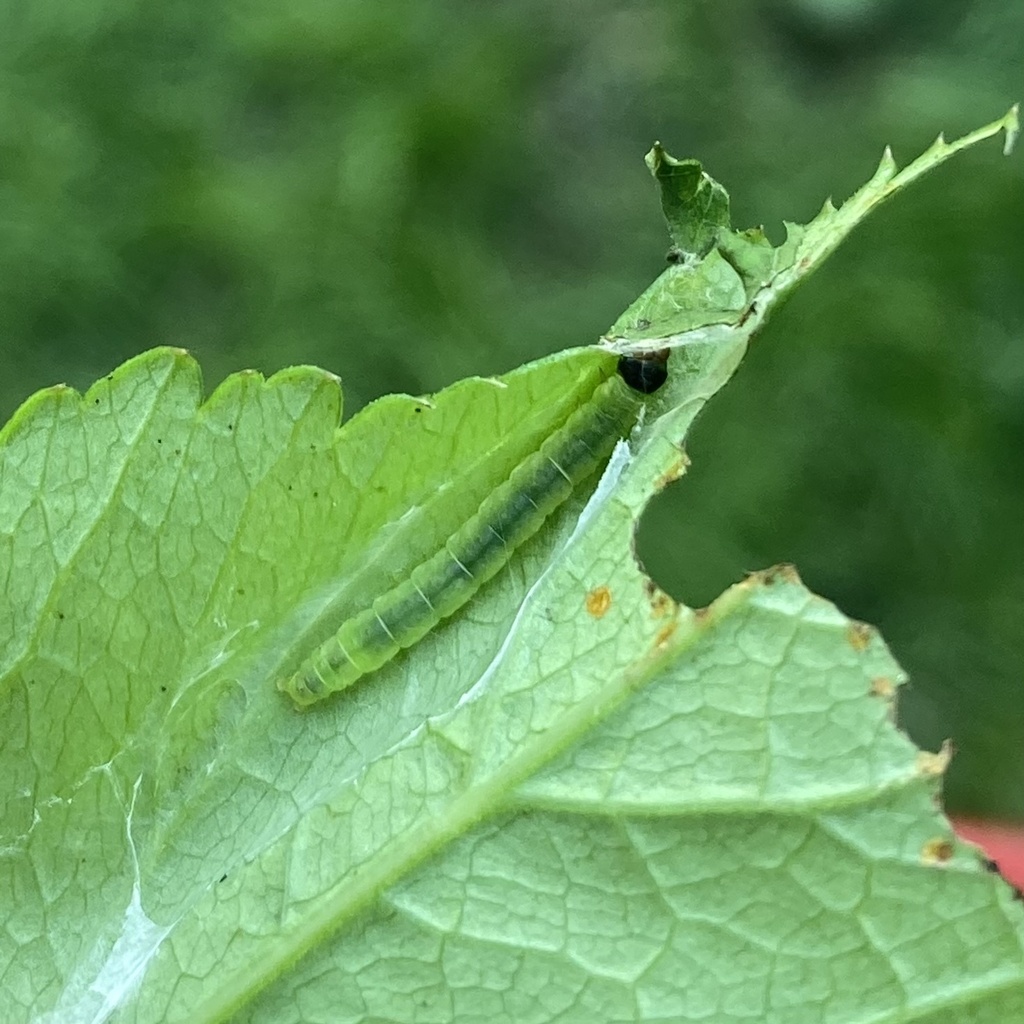
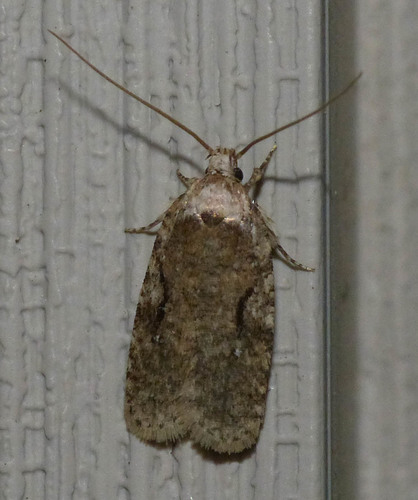
The curved-lined Agonopterix moth has a wingspan of about 18 mm. Its forewings are gray with a clouded gray-ochreous pattern, a curved black streak before the middle, a small white spot edged in black, and the costa is speckled with dark scales; the hindwings are gray-fuscous. It occurs across North America, recorded from many U.S. states and Canadian provinces such as Illinois, Maine, Ontario and Quebec. Adults can be seen from March through December.
Source: Wikipedia
How to recognize it
Forewings are gray with clouded gray-ochreous scales, a curved black streak before the middle, a small white spot edged in black, and fuscous speckles on the costa; hindwings are gray-fuscous.
Source: Wikipedia
Size
The wingspan is about 18 mm.
Source: Wikipedia
Where it comes from
It is found in North America, recorded from numerous U.S. states and Canadian provinces.
Source: Wikipedia
Where it is found in the US
Recorded in 27 of 51 states and DC. Most records: Vermont, Ohio, Pennsylvania, Maryland, New York, North Carolina, Wisconsin, Massachusetts.
Darker = more records. Counts are museum and citizen-science records, not population size.
Source: GBIF
Status: native in North America; native in Canada. Source: iNaturalist
Months it is reported in the US
Source: GBIF
More photos
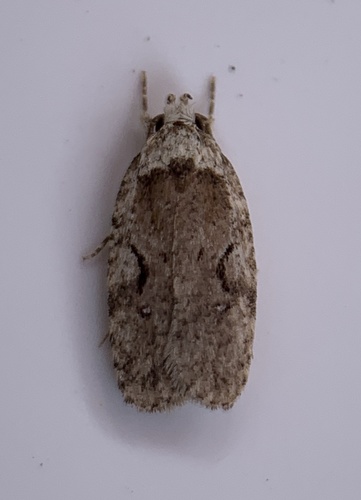
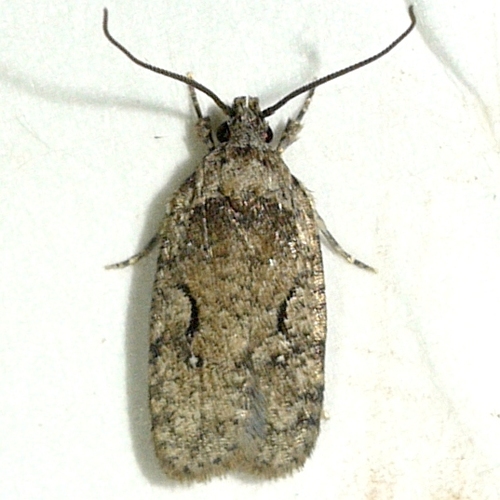
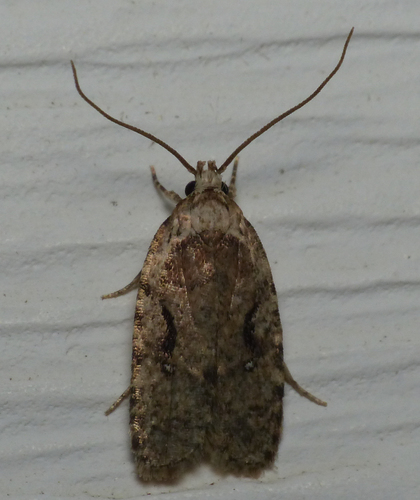
Questions people ask
When are adult curved-lined Agonopterix moths active?
Adults can be seen from March through December.
Source: Wikipedia
Same family (Depressariidae)


Sources
- Wikipedia: https://en.wikipedia.org/wiki/Agonopterix_curvilineella
Look it up elsewhere: GBIF · iNaturalist · BugGuide · Wikipedia
Text written 2026-10-25 from the sources above and checked sentence by sentence against them. Data fetched 2026-10-25.