 Bug FAQ
Cresson's Sweat Bee
Lasioglossum cressonii · Order: Hymenoptera · Family: Halictidae
Also called: Cresson's Metallic-Sweat Bee, Cresson's Dialictus

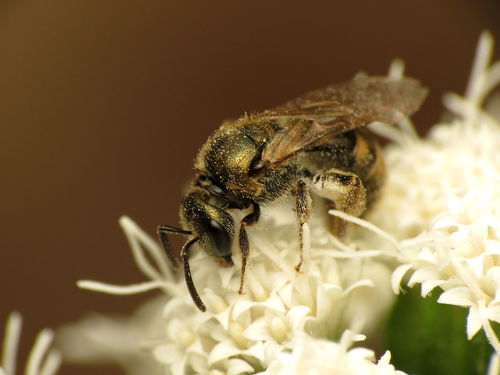
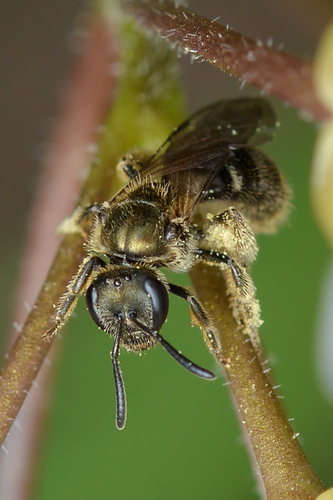
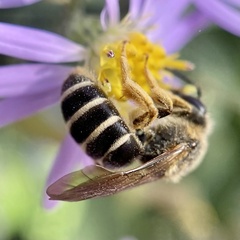
Female Cresson's sweat bees have a brassy green thorax and head with a dull area below the ocelli, and their mesoscutum is densely covered with coarse punctures. They nest in soil or wood, are eusocial, and are found across North America from Nova Scotia to British Columbia and south to Georgia and Colorado. Adults pollinate many flowers and collect nectar and pollen for their brood.
Source: Wikipedia
How to recognize it
Female bees show a brassy green thorax and head with a dull patch below the ocelli. Male bees have a dark olive-green thorax and head that can appear bluish in some areas.
Source: Wikipedia
Where it lives
Nests are usually built in soil or wood, often in low-elevation areas.
Source: Wikipedia
What it eats
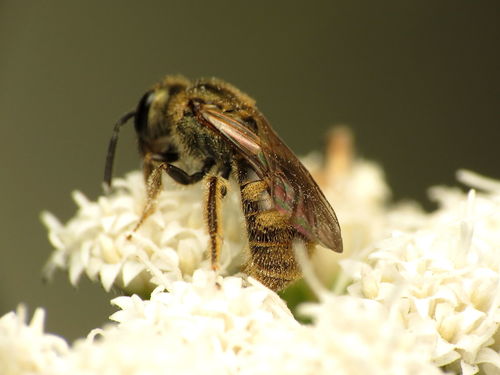
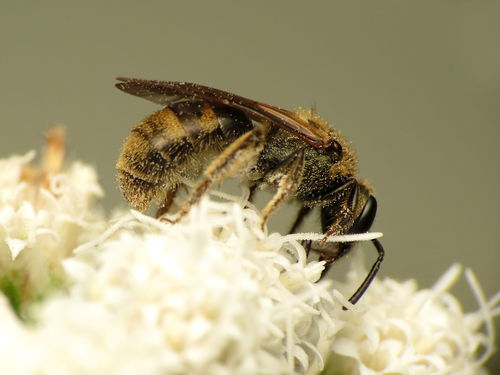
Adults pollinate flowers and gather nectar and pollen to feed their brood. Recorded flower visits include Apocynum, Azalea, Brassica, Chrysanthemum, Cirsium, Daucus, Geranium, Hydrangea, Salvia, Solidago, Taraxacum and many others.
Source: Wikipedia
Life cycle
L. cressoni is eusocial and builds nests in a manner typical of Apoidae bees. A nest is often founded by an overwintering gyne that stored sperm from the previous year.
Source: Wikipedia
When you see it
The first brood usually contains more females, while later broods have more males. Queens adjust the sex ratio, favoring females early in the season and males later.
Source: Wikipedia
Where it comes from
The species is found throughout North America.
Source: Wikipedia
Where it is found in the US
Recorded in 41 of 51 states and DC. Most records: Massachusetts, Maryland, Vermont, New York, Michigan, Pennsylvania, New Hampshire, Maine.
Darker = more records. Counts are museum and citizen-science records, not population size.
Source: GBIF
Status: native in North America; native in United States; native in Canada. Source: iNaturalist
Months it is reported in the US
Source: GBIF
More photos
Questions people ask
How can I tell a female Cresson's sweat bee from a male?
Females have a brassy green thorax and head with a dull patch below the ocelli, while males are dark olive-green and may look bluish in parts.
Source: Wikipedia
Where does Cresson's sweat bee live?
It nests in soil or wood in low-elevation areas across North America, from eastern Canada to the western United States and down to the southeastern states.
Source: Wikipedia
What plants do they visit?
They pollinate a wide range of flowers such as azalea, brassica, chrysanthemum, geranium, hydrangea, salvia, solidago and many others.
Source: Wikipedia
How do they start a new nest?
An overwintering gyne that has stored sperm from the previous year typically founds a new nest.
Source: Wikipedia
Same family (Halictidae)

Sources
- Wikipedia: https://en.wikipedia.org/wiki/Lasioglossum_cressonii
Look it up elsewhere: GBIF · iNaturalist · BugGuide · ITIS · Wikipedia
Text written 2026-10-23 from the sources above and checked sentence by sentence against them. Data fetched 2026-10-23.