 Bug FAQ
Coneflower Moth
Dichomeris costarufoella · Order: Lepidoptera · Family: Gelechiidae

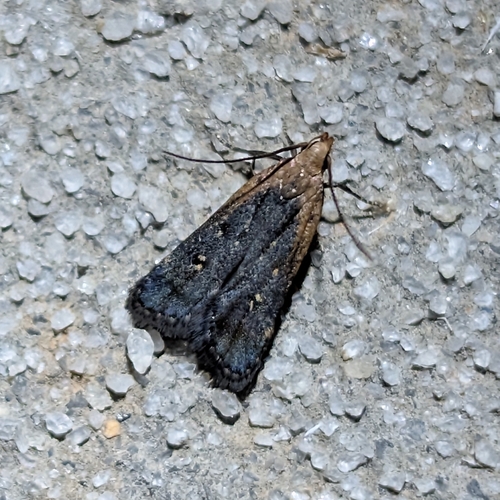
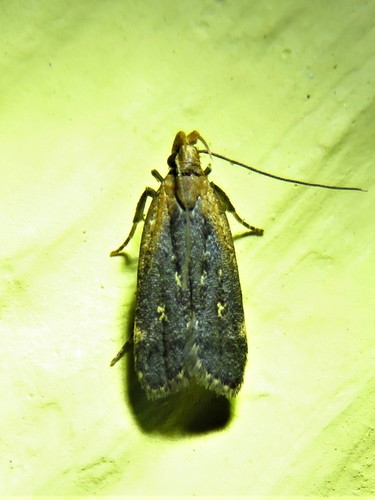
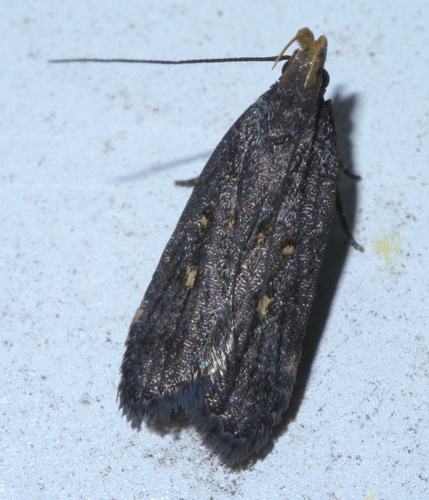
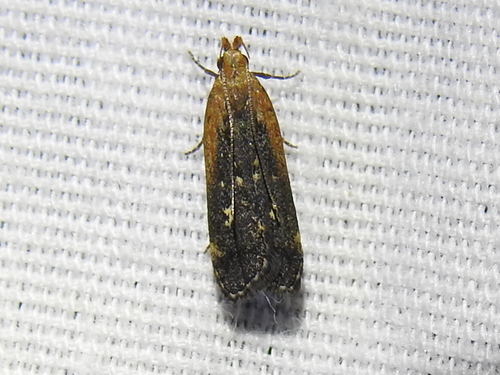
The moth has a wingspan of about 12 mm and dark forewings with a yellowish-brown basal streak and pale spots. It lives in North America, recorded from several US states and Manitoba, and adults fly from April through October.
Source: Wikipedia
How to recognize it
A faint, blackish subterminal line runs near the wing edge. Hindwings are whitish or pale gray.
Source: Wikipedia
Size
The wingspan measures about 12 mm.
Source: Wikipedia
What it eats
Larvae feed on plants of the genus Rudbeckia.
Source: Wikipedia
Life cycle
Adults are on the wing from April to October.
Source: Wikipedia
When you see it
The flight period spans spring through fall, April through October.
Source: Wikipedia
Where it comes from
The species is native to North America, with records from the listed US states and Manitoba.
Source: Wikipedia
Where it is found in the US
Recorded in 17 of 51 states and DC. Most records: Texas, Louisiana, Mississippi, Oklahoma, Alabama, Georgia, Arkansas, North Carolina.
Darker = more records. Counts are museum and citizen-science records, not population size.
Source: GBIF
Months it is reported in the US
Source: GBIF
More photos
Questions people ask
When are adult Dichomeris costarufoella active?
Adults can be seen flying from April through October.
Source: Wikipedia
Same family (Gelechiidae)
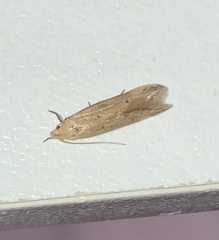 Angoumois Grain MothSitotroga cerealellaDamages trees, gardens or crops
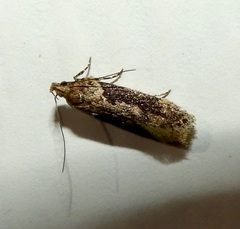 Boxelder Leafworm MothChionodes obscurusella
 Hairy, Toothed, and Shining Dichomeris Moths and AlliesDichomeris setosella
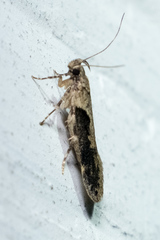 Black-smudged Chionodes Moth and AlliesChionodes occidentellaBlack-smudged Chionodes MothChionodes mediofuscella
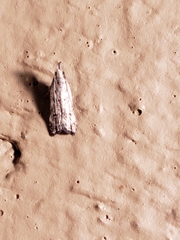 Inverse and Kimball's Dichomeris MothsDichomeris inversella
Sources
- Wikipedia: https://en.wikipedia.org/wiki/Dichomeris_costarufoella
Look it up elsewhere: GBIF · iNaturalist · BugGuide · Wikipedia
Text written 2026-10-27 from the sources above and checked sentence by sentence against them. Data fetched 2026-10-27.