 Bug FAQ
Common Threadtail
Elattoneura glauca · Order: Odonata · Family: Platycnemididae
Also called: Grey Threadtail

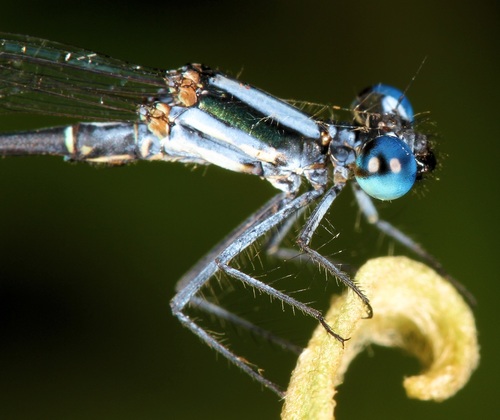
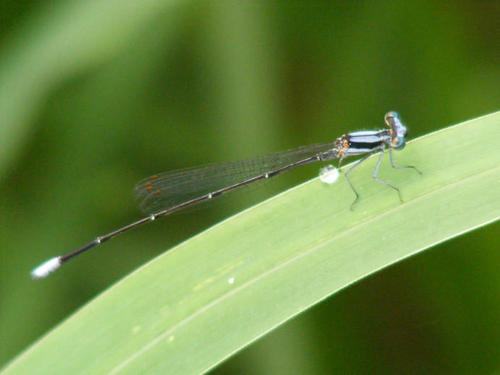
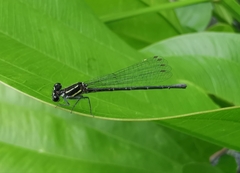
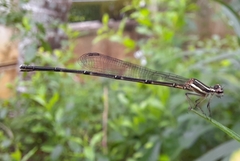
The Common Threadtail is a small damselfly with a wingspan of about 40 mm and shows strong sexual dimorphism. It lives in shady spots along rivers and streams across the southern half of Africa and is most often seen in summer.
Source: Wikipedia
Size
The species is smallish, with a wingspan of about 40 mm (1.6 in).
Source: Wikipedia
Where it lives
It prefers shady areas along rivers and streams, often among bushes and grass, and can be found on rocks or plant stems.
Source: Wikipedia
When you see it
Adults are most common in summer, perching in pairs on rocks or stems, but they are seen much less from late autumn through winter.
Source: Wikipedia
Lookalikes
Females can be confused with Elattoneura frenulata where their ranges overlap.
Source: Wikipedia
More photos
Questions people ask
When are Common Threadtails most likely to be seen?
They are most common in summer, often perched in pairs on rocks or plant stems.
Source: Wikipedia
What other species might look like a female Common Threadtail?
Females may be confused with Elattoneura frenulata where their ranges overlap.
Source: Wikipedia
Same family (Platycnemididae)


Sources
- Wikipedia: https://en.wikipedia.org/wiki/Elattoneura_glauca
Look it up elsewhere: GBIF · iNaturalist · BugGuide · Wikipedia
Text written 2026-10-23 from the sources above and checked sentence by sentence against them. Data fetched 2026-10-23.