 Bug FAQ
Blue Featherleg
Platycnemis pennipes · Order: Odonata · Family: Platycnemididae
Also called: White-Legged Damselfly
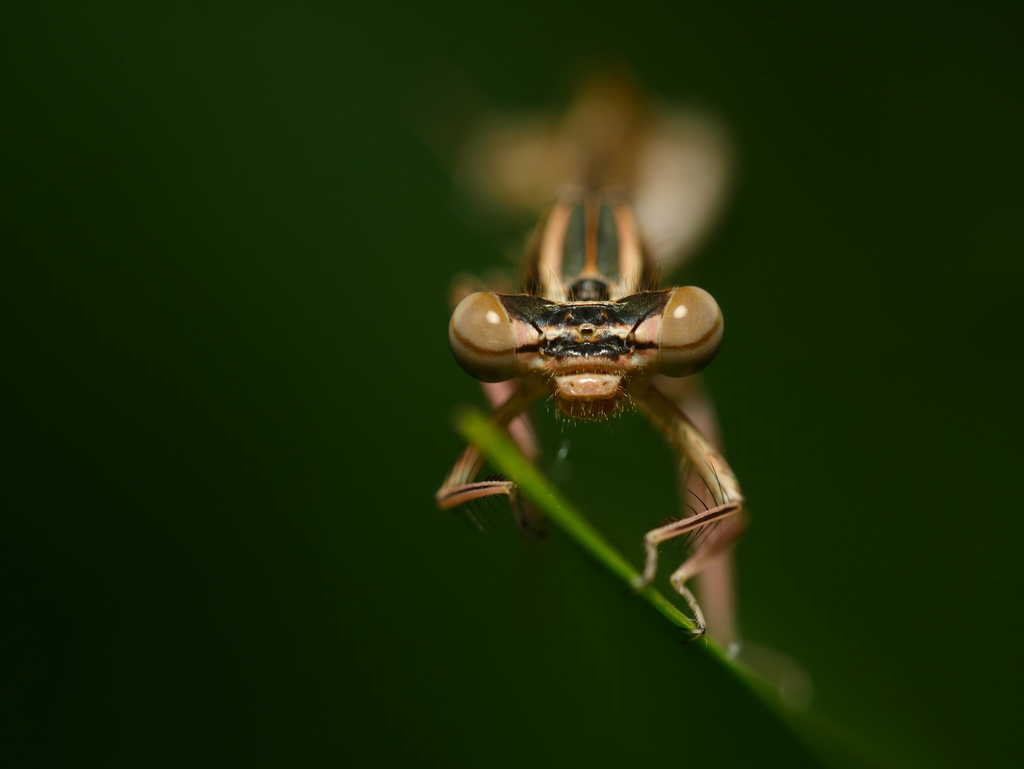
The blue featherleg damselfly is about 32 mm long (1.3 in). It lives in slow-flowing, unshaded muddy rivers with floating plants and can also be found in tidal or brackish water. Adults lay elongated eggs on emergent stems and the undersides of floating leaves; the larvae live among bottom debris for two years before emerging.
Source: Wikipedia
How to recognize it
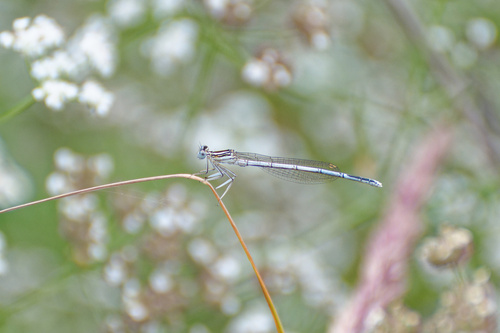
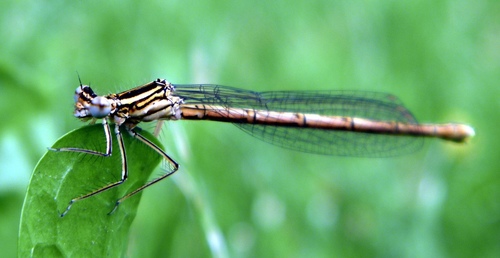
Males have a blue abdomen, often pale, with a greenish thorax; females are very pale yellow-green with black markings.
Source: Wikipedia
Size
Adults measure about 32 mm (1.3 in) in length.
Source: Wikipedia
Where it lives
It can also occur in tidal rivers and tolerates brackish water, but is rare in lakes or ponds.
Source: Wikipedia
Life cycle
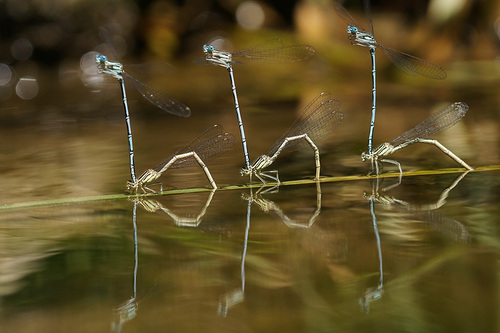
Females lay elongated eggs while in tandem on emergent stems and especially on the undersides of floating leaves. The larvae remain in the substrate for about two years before emerging as adults.
Source: Wikipedia
When you see it
After emerging, adults gather in tall vegetation near water, though some immature individuals may wander up to five kilometres away.
Source: Wikipedia
Where it comes from
Its range extends from the Atlantic coast across to Siberia, where it is often abundant.
Source: Wikipedia
More photos
Questions people ask
What do male and female blue featherlegs look like?
Males have a blue, often pale abdomen with a greenish thorax; females are very pale yellow-green with black markings.
Source: Wikipedia
Where does the blue featherleg live?
It favors unshaded, slow-flowing muddy river sections with floating vegetation and can also be found in tidal or brackish waters.
Source: Wikipedia
How long does it take for a blue featherleg to develop?
The larvae live among bottom debris for about two years before emerging as adults.
Source: Wikipedia
Same family (Platycnemididae)


Sources
- Wikipedia: https://en.wikipedia.org/wiki/White-legged_damselfly
Look it up elsewhere: GBIF · iNaturalist · BugGuide · Wikipedia
Text written 2026-10-22 from the sources above and checked sentence by sentence against them. Data fetched 2026-10-22.