 Bug FAQ
Common Straw Grasshopper
Euchorthippus declivus · Order: Orthoptera · Family: Acrididae
Also called: Jersey Grasshopper, Sharp-tailed Grasshopper
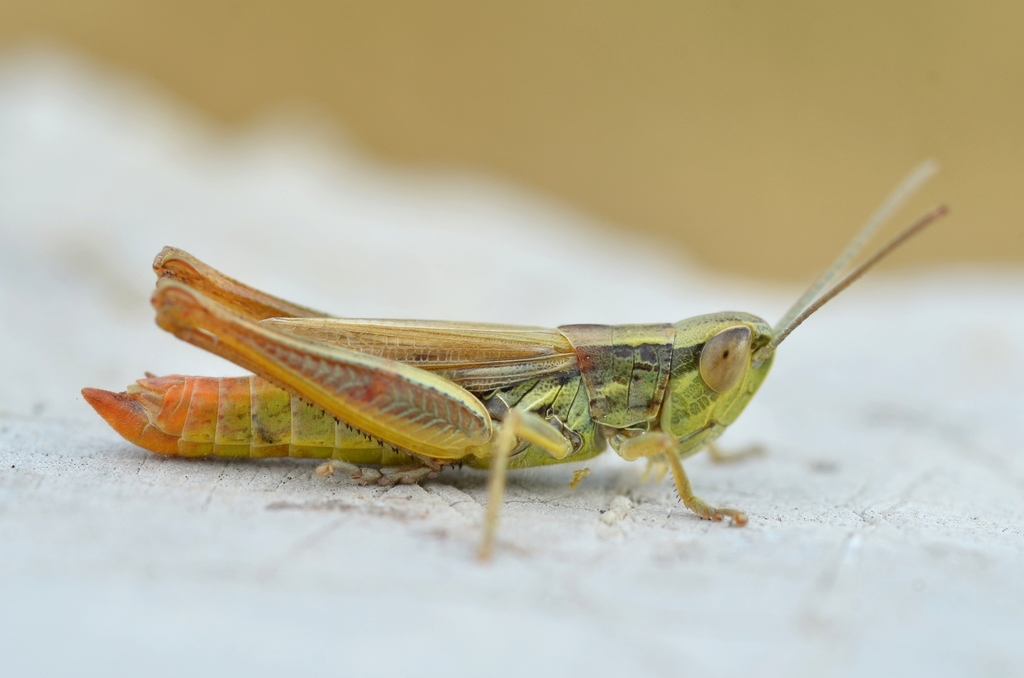
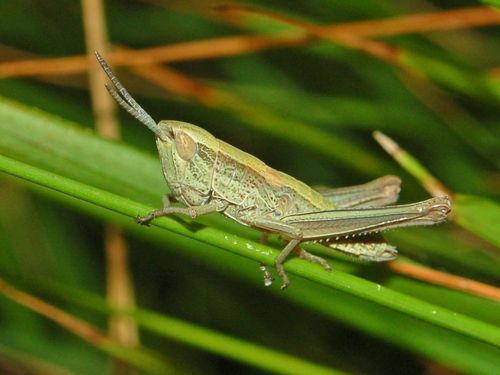
Adult males are 14 to 20 mm long and females 20 to 27 mm, with light brown to beige bodies and two or three dark longitudinal stripes from the eyes. They live in dry, sunny spots such as southern slopes, gravelly areas, and dry to moderately wet meadows across middle and southern Europe. You’ll find them from July through October feeding on grasses, and their eggs spend the winter in the soil.
Source: Wikipedia
How to recognize it
Body color ranges from light brown to beige, sometimes yellow-green, with two or three darker stripes starting at the eyes. The abdomen underside is yellow, and males often have an orange tip. Both sexes have very short, non-functional wings.
Source: Wikipedia
Size
Males grow to 14 to 20 mm and females to 20 to 27 mm in length.
Source: Wikipedia
Where it lives
They prefer arid, sunny locations like southern slopes, gravelly plots, and dry to moderately wet meadows and pastures.
Source: Wikipedia
What it eats
They feed on grasses during the warm months.
Source: Wikipedia
Life cycle
Their eggs overwinter in the soil before hatching in spring.
Source: Wikipedia
When you see it
Adults are active and visible from July through October.
Source: Wikipedia
Where it comes from
This species is common throughout middle and southern Europe.
Source: Wikipedia
More photos
Questions people ask
When can I expect to see Common Straw Grasshoppers?
They are most commonly seen from July to October.
Source: Wikipedia
Where do they live?
They inhabit dry, sunny spots such as southern slopes, gravelly areas, and meadows across middle and southern Europe.
Source: Wikipedia
Same family (Acrididae)
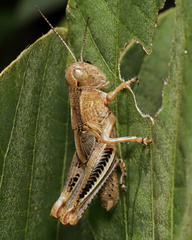 Differential GrasshopperMelanoplus differentialisDamages trees, gardens or crops
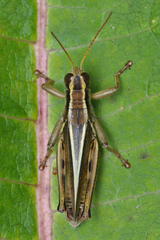 Two-striped GrasshopperMelanoplus bivittatusDamages trees, gardens or crops
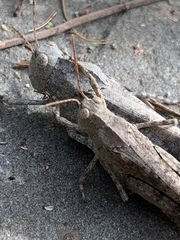 Carolina GrasshopperDissosteira carolinaDamages trees, gardens or crops
 Common Field GrasshopperChorthippus brunneus
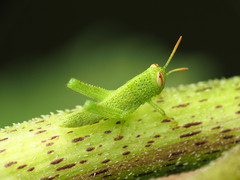 Egyptian Bird GrasshopperAnacridium aegyptium
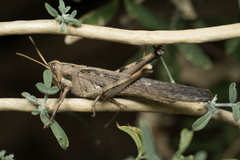 Gray Bird GrasshopperSchistocerca nitensDamages trees, gardens or crops
Sources
- Wikipedia: https://en.wikipedia.org/wiki/Euchorthippus_declivus
Look it up elsewhere: GBIF · iNaturalist · BugGuide · Wikipedia
Text written 2026-10-22 from the sources above and checked sentence by sentence against them. Data fetched 2026-10-22.