 Bug FAQ
Common Macrotona
Macrotona australis · Order: Orthoptera · Family: Acrididae
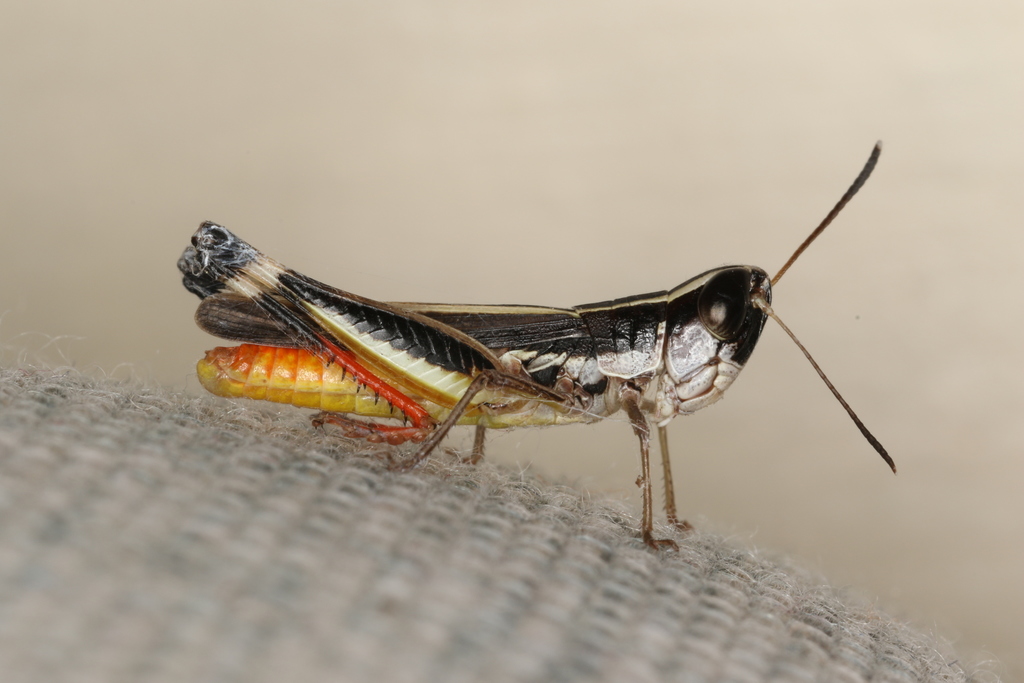
Adults are between about 1.7 and 3 cm long. Their colour ranges from red to grey, often with a bronze shade behind the rear legs. They live among spinifex grass in heath areas across southern and eastern Australia, including Tasmania and the mainland.
Source: Wikipedia
How to recognize it
Colour varies from red to grey, and most have a bronze tint behind the rear legs.
Source: Wikipedia
Size
Body length is typically 1.7 to 3.0 cm (0.67 to 1.18 in).
Source: Wikipedia
Where it lives
Found commonly with spinifex grass in heath habitats.
Source: Wikipedia
Where it comes from
Occurs in southern and eastern Australia. Its presence is confirmed across mainland Australia and Tasmania.
Source: Wikipedia
Lookalikes
First described by Francis Walker in 1870 and also known by several synonyms such as Eumacrotona bella and Heteracris australis.
Source: Wikipedia
More photos
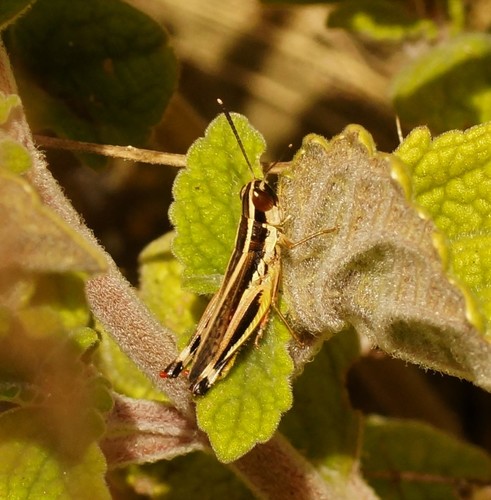
Questions people ask
What colours does the common macrotona have?
It can be red, grey, or have a bronze tint behind the rear legs.
Source: Wikipedia
Same family (Acrididae)
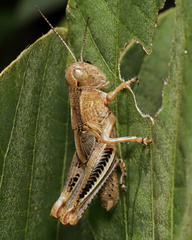 Differential GrasshopperMelanoplus differentialisDamages trees, gardens or crops
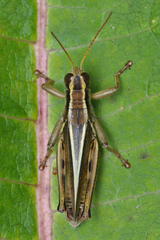 Two-striped GrasshopperMelanoplus bivittatusDamages trees, gardens or crops
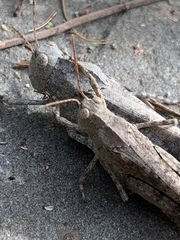 Carolina GrasshopperDissosteira carolinaDamages trees, gardens or crops
 Common Field GrasshopperChorthippus brunneus
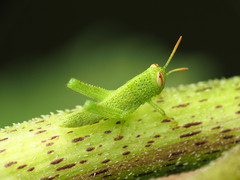 Egyptian Bird GrasshopperAnacridium aegyptium
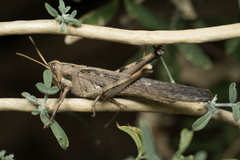 Gray Bird GrasshopperSchistocerca nitensDamages trees, gardens or crops
Sources
- Wikipedia: https://en.wikipedia.org/wiki/Common_macrotona
Look it up elsewhere: GBIF · iNaturalist · BugGuide · Wikipedia
Text written 2026-10-23 from the sources above and checked sentence by sentence against them. Data fetched 2026-10-23.