 Bug FAQ
Common Housefly Catcher
Plexippus petersi · Order: Araneae · Family: Salticidae
Also called: Jumping spider, Pantropical Jumper
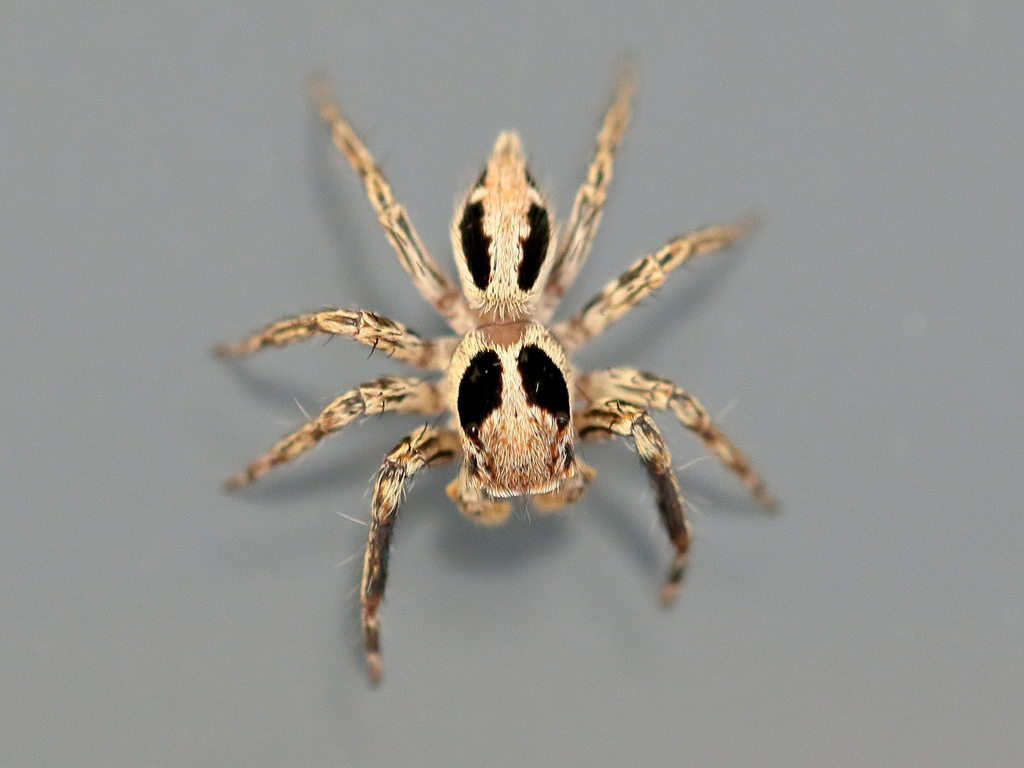
The tropical flycatcher is a small jumping spider about 6 to 10 mm long in males and slightly larger in females. It lives inside houses and can also be found in crop fields in the Philippines, where it hunts mosquitoes, flies and other small insects.
Source: Wikipedia
How to recognize it
The spider’s cephalothorax is longer than wide, brown with two darker reddish-brown dorsal bands. Its abdomen is twice as long as wide, yellowish-brown with two longitudinal dark bands that break into orange spots near the rear.
Source: Wikipedia
Size
Males measure 6 to 10 mm (0.24 to 0.39 in) and females are about 10 mm (0.39 in) long.
Source: Wikipedia
Is it a pest in the house?
It is considered a house spider and has been studied as a potential biocontrol agent for houseflies.
Source: Wikipedia
How to get rid of it
Research suggests it could help control housefly populations.
Source: Wikipedia
Where it lives
It is a house spider that lives indoors and is valued for catching mosquitoes, flies and other insects. It has also been recorded in rice and corn fields in the Philippines.
Source: Wikipedia
What it eats
It preys on mosquitoes, flies and other small invertebrates.
Source: Wikipedia
Where it comes from
Native to Southeast Asia, it has spread to Africa and Pacific islands.
Source: Wikipedia
Where it is found in the US
Recorded in 1 of 51 states and DC. Most records: Hawaii.
Darker = more records. Counts are museum and citizen-science records, not population size.
Source: GBIF
More photos

Same family (Salticidae)



Sources
- Wikipedia: https://en.wikipedia.org/wiki/Plexippus_petersi
Look it up elsewhere: GBIF · iNaturalist · BugGuide · ITIS · Wikipedia
Text written 2026-10-22 from the sources above and checked sentence by sentence against them. Data fetched 2026-10-22.