 Bug FAQ
Common Crevice-cricket
Gryllomorpha dalmatina · Order: Orthoptera · Family: Gryllidae
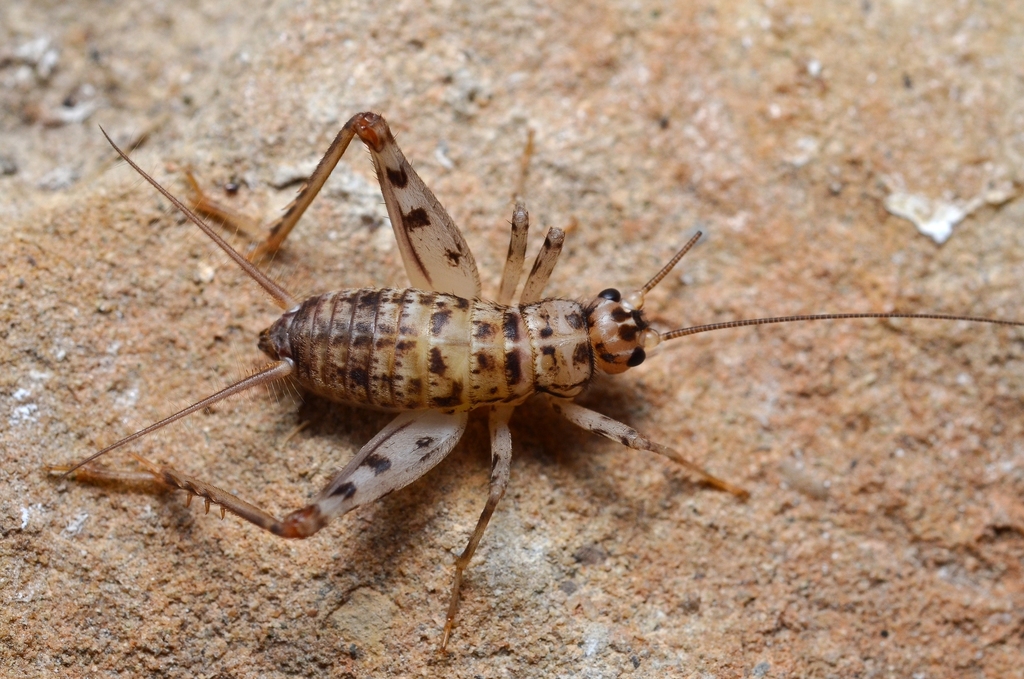
Adults are 15 to 20 mm long and females have a long ovipositor up to about 12 to 17 mm. They are pale brown with darker markings, have very long antennae and legs, and prefer dark, moist places such as cellars, basements, caves, or under stones and bark. They avoid light, feed on organic debris, are found mainly in parts of Europe, the Near East and North Africa, and can be seen from April to early autumn outdoors but are active year-round indoors.
Source: Wikipedia
Size
Adults reach 15 to 20 mm in length; females have an ovipositor 12 to 17 mm long.
Source: Wikipedia
Where it lives
They live in dark, moist habitats like caves, cellars, basements, under stones and bark. They are photophobic and feed on organic debris.
Source: Wikipedia
Life cycle
In nature they appear from April through early autumn; indoors they can be active all year.
Source: Wikipedia
When you see it
They are commonly encountered from April to early autumn outdoors, but remain active indoors year-round.
Source: Wikipedia
Where it comes from
Their range includes France, Italy, Slovenia, Spain, Switzerland, the Near East and North Africa.
Source: Wikipedia
Lookalikes
It is the largest species in the genus Gryllomorpha.
Source: Wikipedia
More photos


Questions people ask
Where might I find common crevice-crickets in my home?
They hide in dark, moist spots such as basements, cellars, caves, under stones or bark.
Source: Wikipedia
When are they active?
Outdoors they are seen from April to early autumn, while indoors they can be active throughout the year.
Source: Wikipedia
What do they look like?
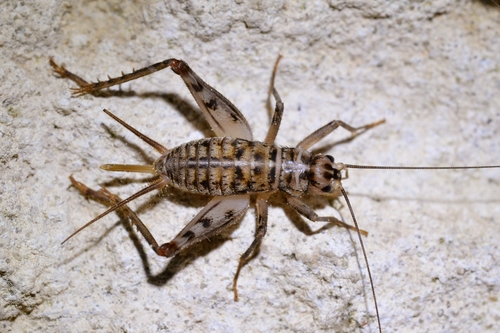
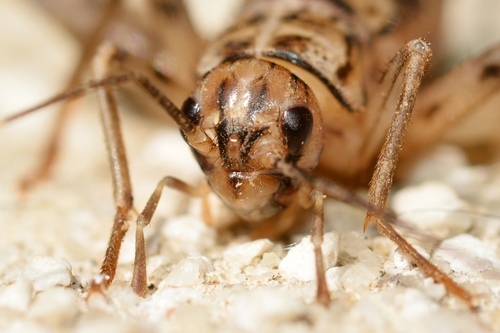
They are pale brown with dark markings, have very long antennae and legs, and adults are 15 to 20 mm long.
Source: Wikipedia
What region are they native to?
They are native to parts of Europe, the Near East and North Africa, including France, Italy, Slovenia, Spain and Switzerland.
Source: Wikipedia
Same family (Gryllidae)


Sources
- Wikipedia: https://en.wikipedia.org/wiki/Gryllomorpha_dalmatina
Look it up elsewhere: GBIF · iNaturalist · BugGuide · Wikipedia
Text written 2026-10-23 from the sources above and checked sentence by sentence against them. Data fetched 2026-10-22.