 Bug FAQ
Common Assassin Bug
Pristhesancus plagipennis · Order: Hemiptera · Family: Reduviidae
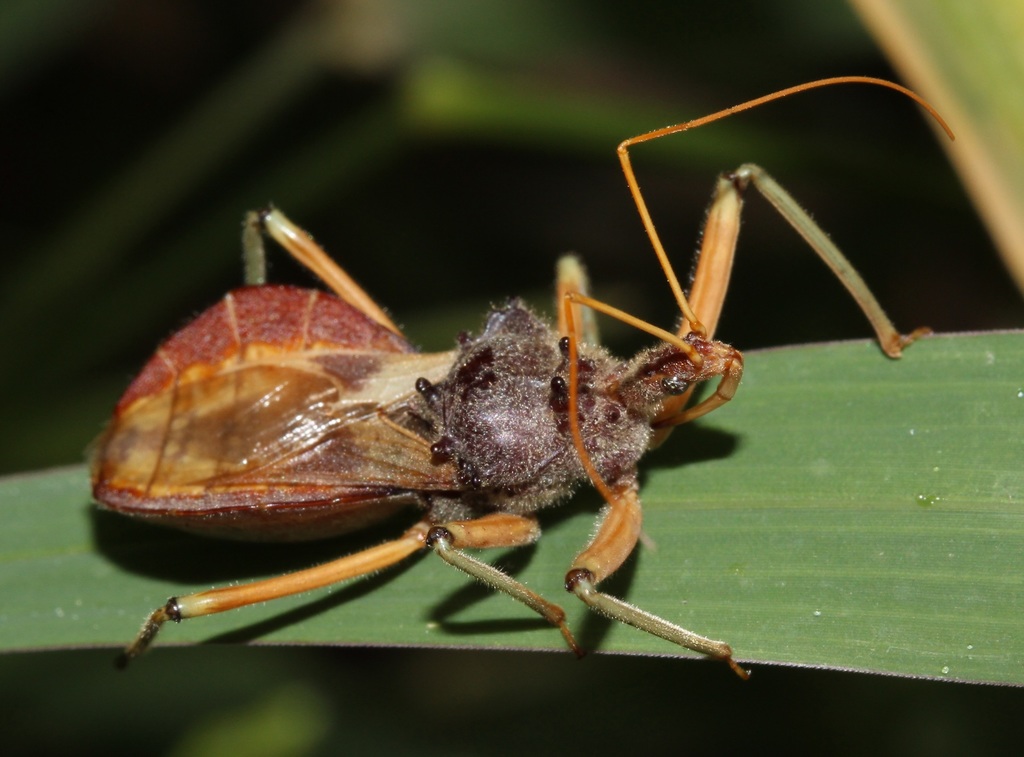
Juvenile Common Assassin Bugs have a bright orange abdomen. They are native to Australia and belong to the genus Pristhesancus. They hunt other insects, including honey bees and the bronze orange garden pest.
Source: Wikipedia
How to recognize it
Young bugs show a distinctive bright orange belly.
Source: Wikipedia
Where it lives
They are sometimes called bee-killer assassin bugs because they prey on honey bees.
Source: Wikipedia
What it eats
Their diet includes the bronze orange bug, a common garden pest. They also hunt honey bees.
Source: Wikipedia
Life cycle
Juvenile stages have a bright orange abdomen.
Source: Wikipedia
Where it comes from
This species is found in Australia and is part of the Pristhesancus genus.
Source: Wikipedia
More photos

Questions people ask
Same family (Reduviidae)
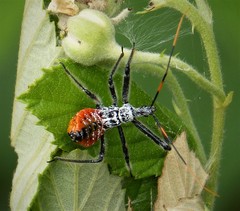 North American Wheel BugArilus cristatusCan bite
 Leafhopper Assassin BugZelus renardiiCan bite
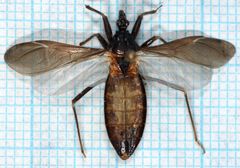 Masked HunterReduvius personatusCan bite
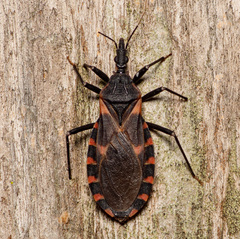 Eastern Bloodsucking ConenoseTriatoma sanguisugaCan spread germs or disease
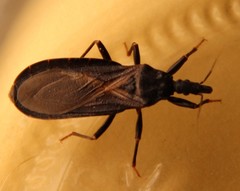 Western Bloodsucking ConenoseTriatoma protractaCan spread germs or disease
 Pale Green Assassin BugZelus luridusCan bite
Sources
- Wikipedia: https://en.wikipedia.org/wiki/Pristhesancus_plagipennis
Look it up elsewhere: GBIF · iNaturalist · BugGuide · ITIS · Wikipedia
Text written 2026-10-22 from the sources above and checked sentence by sentence against them. Data fetched 2026-10-22.