 Bug FAQ
Clouded Flat
Tagiades flesus · Order: Lepidoptera · Family: Hesperiidae
Also called: African Clouded Flat
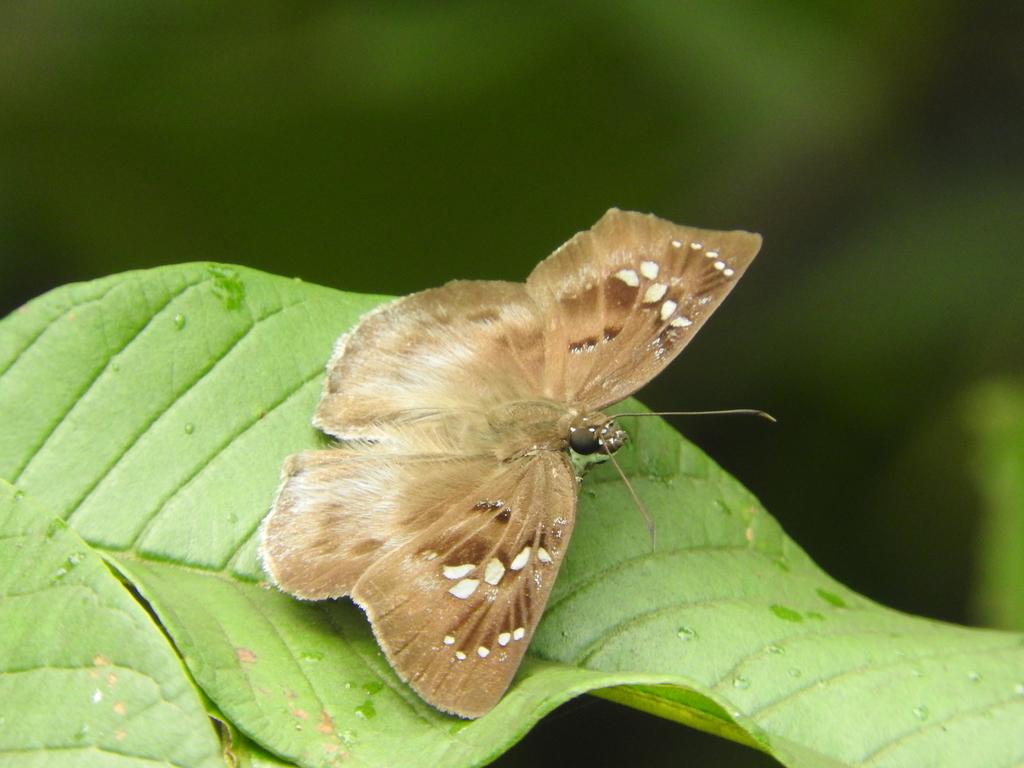
The clouded flat is a medium-sized skipper butterfly with males having a wingspan of about 35 to 47 mm and females 43 to 49 mm. It lives in forest areas across much of the Afrotropical realm, from South Africa’s Eastern Cape through Eswatini to Zimbabwe and into western Africa.
Source: Wikipedia
Where it lives
It is found in forest habitats.
Source: Wikipedia
What it eats
Adults sip nectar from flowers such as Deinbollia oblongifolia and Tabernaemontana ventricosa.
Source: Wikipedia
Life cycle
Adults are on the wing throughout the year, with higher numbers in late summer and autumn in warmer areas.
Source: Wikipedia
When you see it
Adults can be seen year-round, peaking in late summer and autumn where it is warm.
Source: Wikipedia
Questions people ask
Where can I find clouded flats?
They live in forest areas across much of the Afrotropical region, from South Africa’s Eastern Cape through Eswatini to Zimbabwe and into western Africa.
Source: Wikipedia
What do clouded flat caterpillars eat?
The larvae feed on species of Dioscorea, including D. malifolia, and on Grewia species.
Source: Wikipedia
Do adult clouded flats feed on nectar?
Yes, adults visit flowers such as Deinbollia oblongifolia and Tabernaemontana ventricosa for nectar.
Source: Wikipedia
Same family (Hesperiidae)




Sources
- Wikipedia: https://en.wikipedia.org/wiki/Tagiades_flesus
Look it up elsewhere: GBIF · iNaturalist · BugGuide · Wikipedia
Text written 2026-10-23 from the sources above and checked sentence by sentence against them. Data fetched 2026-10-23.