 Bug FAQ
Clay-colored Leaf Beetle
Anomoea laticlavia · Order: Coleoptera · Family: Chrysomelidae
Also called: Claycolored Leaf Beetle
Source: Wikipedia
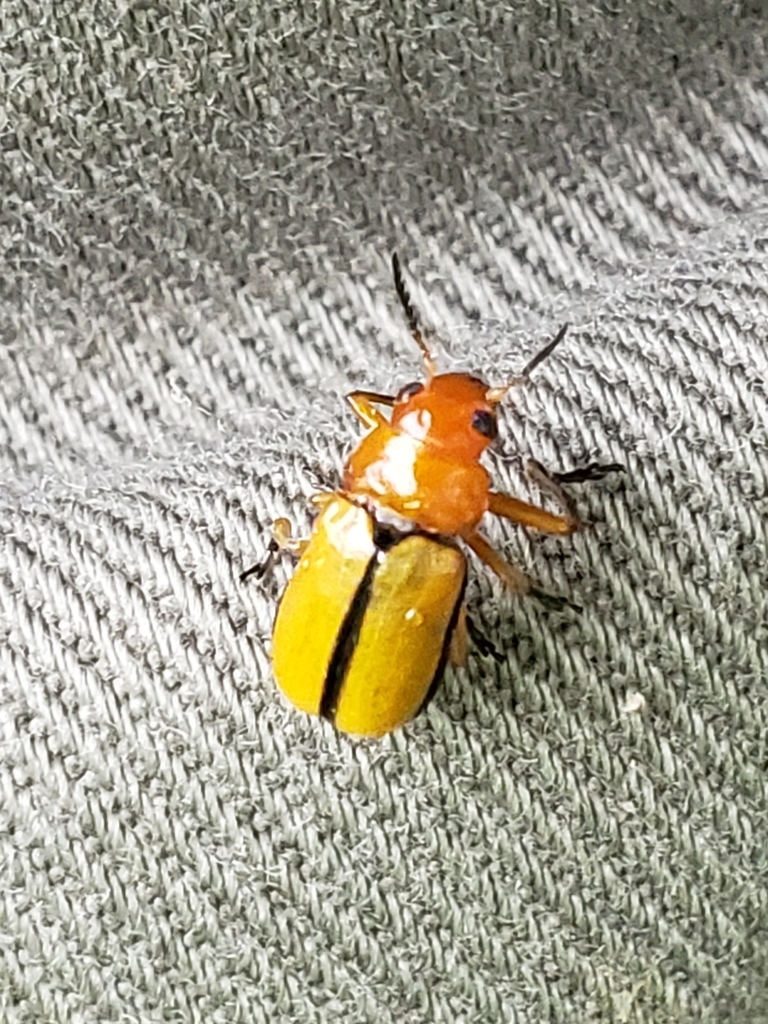
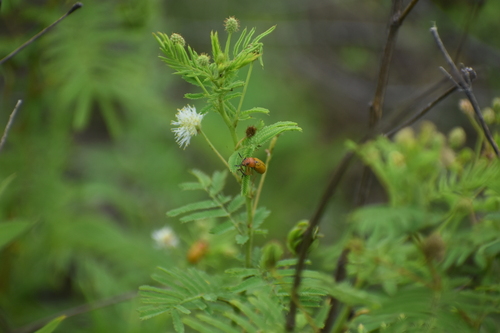
Adults are 7 to 12 mm long and show a reddish-brown wing cover with a variable black line down the middle; males have noticeably larger front legs. The beetle is native to central and eastern North America and its larvae live underground feeding on roots or leaf litter.
Source: Wikipedia
How to recognize it
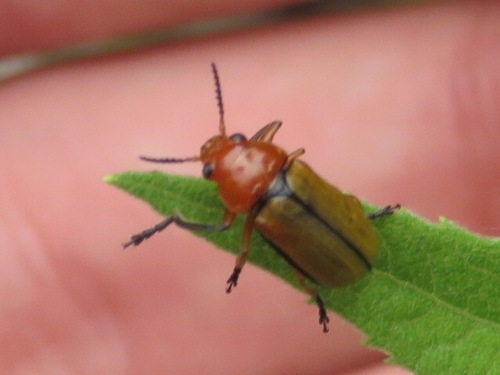
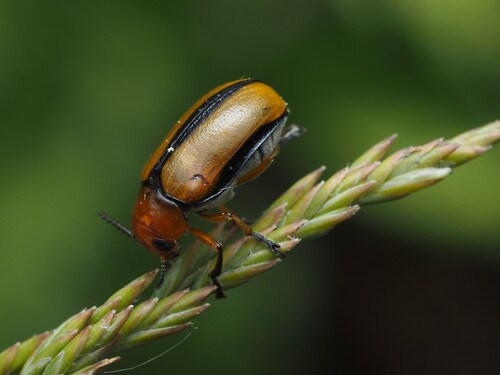
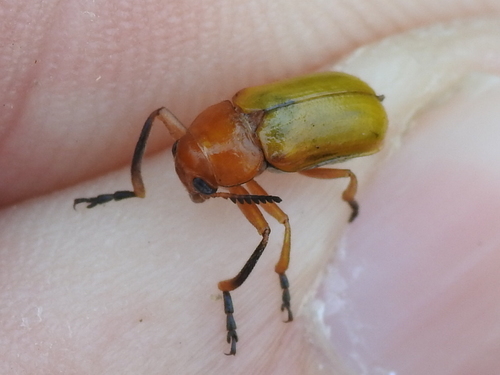
Look for a reddish-brown elytron with a black suture of varying width and, in males, relatively large front legs.
Source: Wikipedia
Size
Adults measure between 7 and 12 mm in length.
Source: Wikipedia
Where it lives
Larvae live below ground or in leaf litter where they feed on roots.
Source: Wikipedia
What it eats
Adult beetles eat the leaves of legumes, persimmon trees and other plant species. Larvae feed on subterranean roots or decaying leaf litter.
Source: Wikipedia
Life cycle
It belongs to the case-bearing leaf beetles (Camptosomata).
Source: Wikipedia
Where it comes from
It is native to central and eastern parts of North America.
Source: Wikipedia
Lookalikes
It is part of the Camptosomata group, which includes other case-bearing leaf beetles.
Source: Wikipedia
Where it is found in the US
Recorded in 37 of 51 states and DC. Most records: Texas, North Carolina, Virginia, Kentucky, Michigan, Minnesota, Florida, Wisconsin.
Darker = more records. Counts are museum and citizen-science records, not population size.
Source: GBIF
Status: native in North America; native in Canada. Source: iNaturalist
Months it is reported in the US
Source: GBIF
More photos
Questions people ask
What plants do they eat?
Adults chew the leaves of legumes, persimmon trees and various other plants, while larvae feed on roots underground.
Source: Wikipedia
Where are they originally from?
They are native to central and eastern North America.
Source: Wikipedia
How can I tell this beetle apart from others?
Look for a reddish-brown wing cover with a black line down the middle and, in males, larger front legs.
Source: Wikipedia
Same family (Chrysomelidae)
 Spotted Cucumber BeetleDiabrotica undecimpunctataDamages trees, gardens or crops
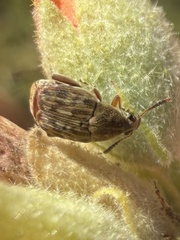 Bean WeevilAcanthoscelides obtectusDamages trees, gardens or crops
 Cowpea WeevilCallosobruchus maculatusDamages trees, gardens or crops
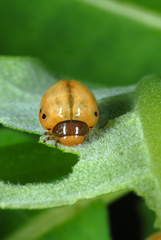 Swamp Milkweed Leaf BeetleLabidomera clivicollisDamages trees, gardens or crops
 Alder Leaf BeetleAgelastica alniDamages trees, gardens or crops
 Dogbane Leaf BeetleChrysochus auratus
Sources
- Wikipedia: https://en.wikipedia.org/wiki/Anomoea_laticlavia
Look it up elsewhere: GBIF · iNaturalist · BugGuide · ITIS · Wikipedia
Text written 2026-10-23 from the sources above and checked sentence by sentence against them. Data fetched 2026-10-23.