 Bug FAQ
Chorus Cicada
Amphipsalta zelandica · Order: Hemiptera · Family: Cicadidae
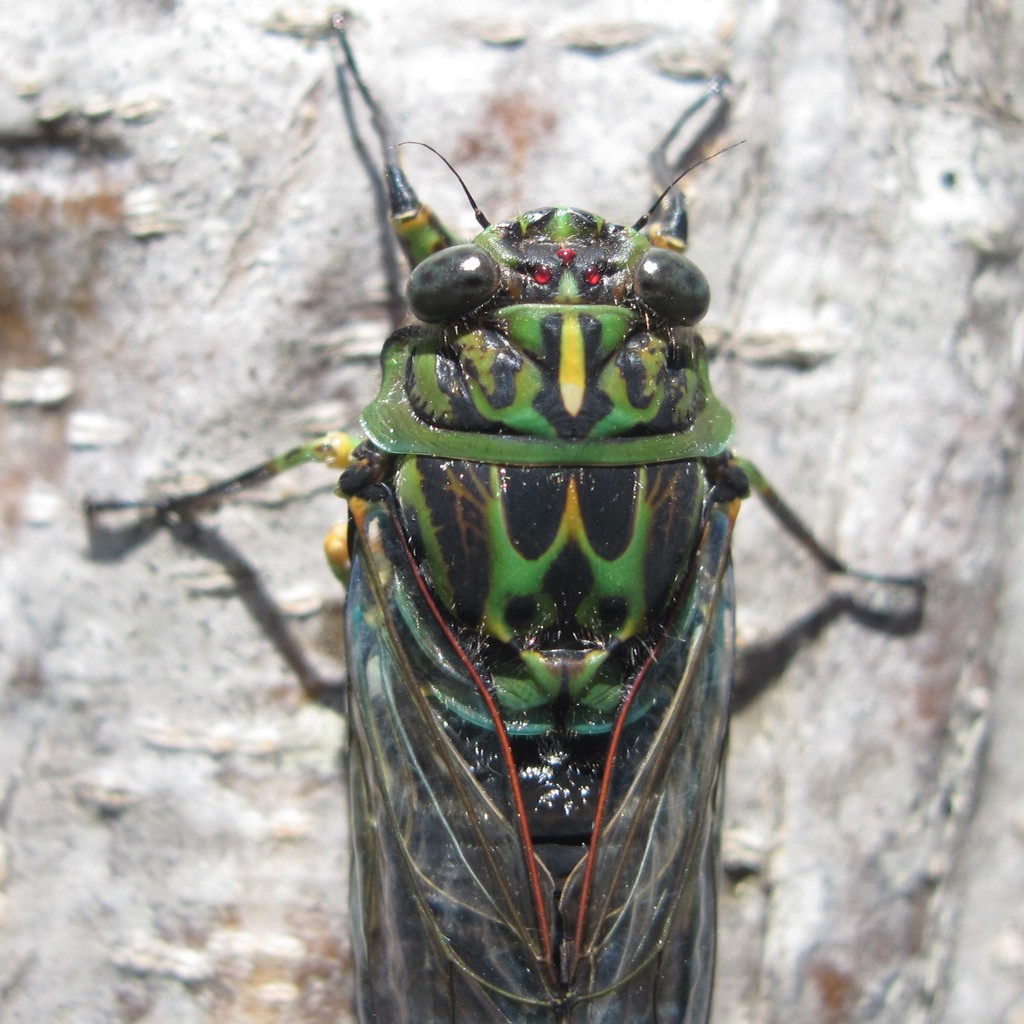
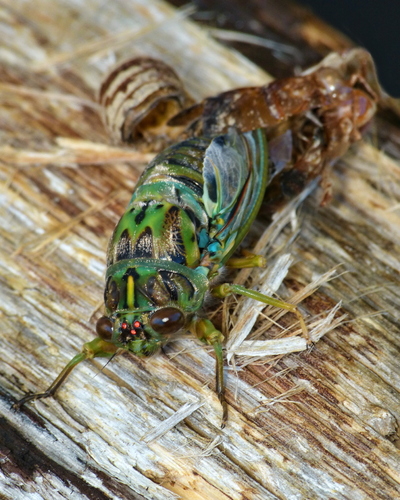
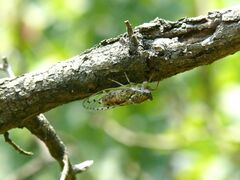
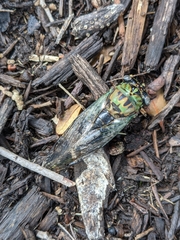
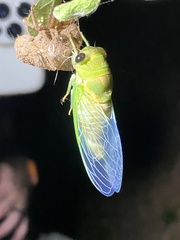
Adult chorus cicadas are about 4 cm long, including their wings. They live in forests, open bush, and even towns, where their shed nymph skins can be seen on trees in summer. Both adults and nymphs feed on plant xylem sap from a variety of host plants.
Source: Wikipedia
How to recognize it
Their bodies may be black, green or brown, often with stripes, and their antennae have seven segments with the last segment narrowed in the middle.
Source: Wikipedia
Size
Adults average about 40 mm in length, with the largest reaching up to 4 cm including wings.
Source: Wikipedia
Where it lives
They are found in forests, open bush areas, and also in towns and cities.
Source: Wikipedia
What it eats
Both adult and immature stages feed on xylem sap from plants, making them generalist feeders.
Source: Wikipedia
Life cycle
The nymph stage can last between about 2 to 3½ years.
Source: Wikipedia
When you see it
Males chorus together in loud songs that peak around February. New adults hatch from May through mid-December.
Source: Wikipedia
Where it comes from
The chorus cicada is endemic to New Zealand, while its closest relatives live in Australia, New Caledonia and Norfolk Island.
Source: Wikipedia
More photos
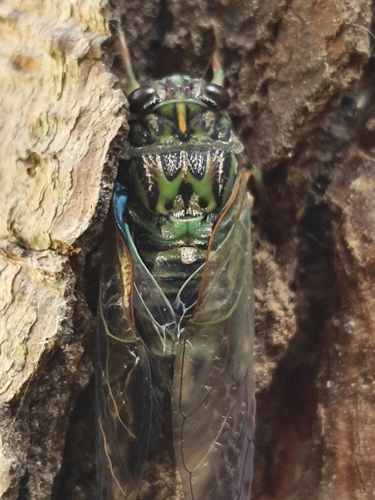
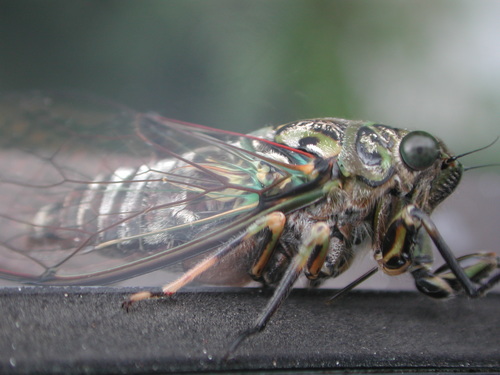
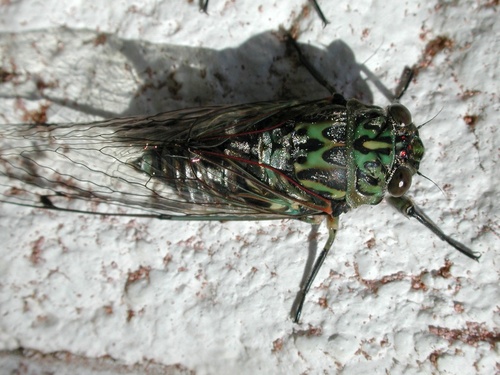
Questions people ask
When are chorus cicadas most audible?
Males produce their loud chorus in unison, reaching its peak around February.
Source: Wikipedia
What do chorus cicadas eat?
Both adults and nymphs feed on plant xylem sap from many different host plants.
Source: Wikipedia
Same family (Cicadidae)
Sources
- Wikipedia: https://en.wikipedia.org/wiki/Amphipsalta_zelandica
Look it up elsewhere: GBIF · iNaturalist · BugGuide · Wikipedia
Text written 2026-10-23 from the sources above and checked sentence by sentence against them. Data fetched 2026-10-22.