 Bug FAQ
Chokecherry Midge
Contarinia virginianiae · Order: Diptera · Family: Cecidomyiidae
Source: Wikipedia
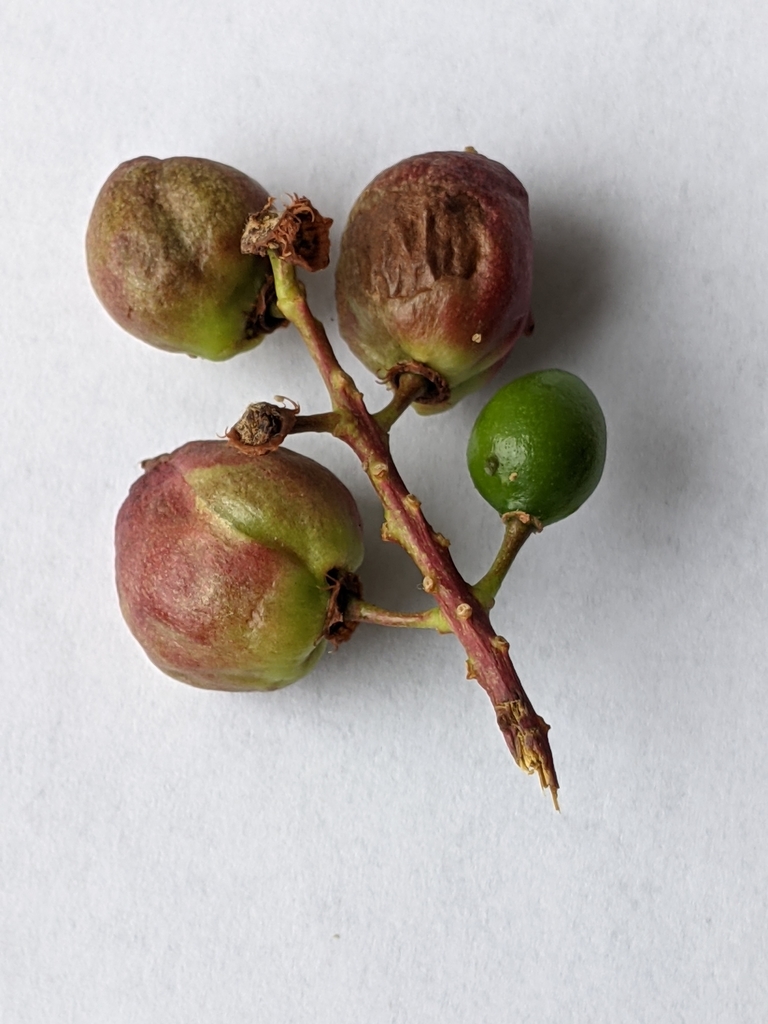
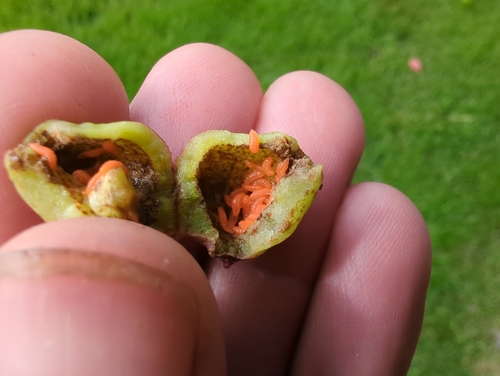
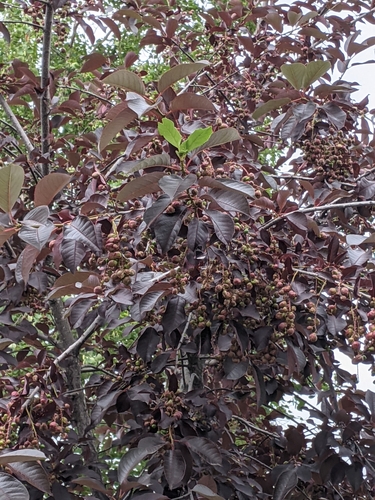
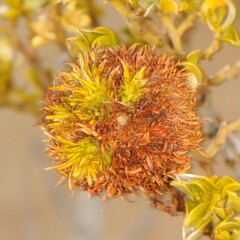
The chokecherry midge forms galls on developing chokecherry fruit that start green and turn red as they grow. Its yellow-orange maggots feed on the fruit, making the berries hollow and often causing them to fall off early.
Source: Wikipedia
How to recognize it
The gall begins green and changes to red as it develops.
Source: Wikipedia
Is it a pest in the house?
The hollow, damaged fruit often drops off before the berries are ripe.
Source: Wikipedia
Where it lives
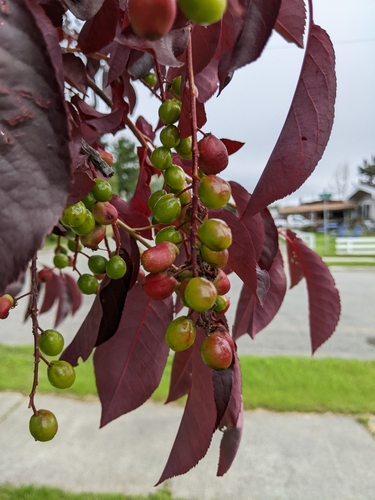
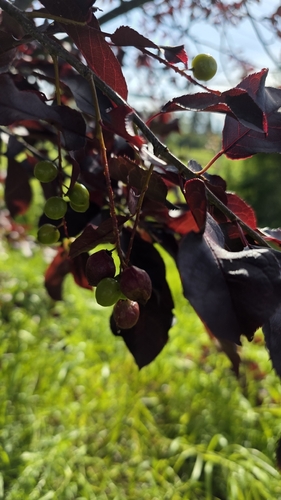
It lives on chokecherry (Prunus virginiana).
Source: Wikipedia
What it eats
Tiny yellow-orange maggots feed on the developing fruit.
Source: Wikipedia
Life cycle
Larvae feed inside the gall until late July, then drop to the ground to pupate.
Source: Wikipedia
When you see it
Larval feeding continues until late July.
Source: Wikipedia
Where it is found in the US
Recorded in 18 of 51 states and DC. Most records: Minnesota, Alaska, Colorado, Montana, Michigan, Vermont, New York, Idaho.
Darker = more records. Counts are museum and citizen-science records, not population size.
Source: GBIF
Status: native in North America; native in Canada. Source: iNaturalist
Months it is reported in the US
Source: GBIF
More photos
Questions people ask
What plant does the chokecherry midge affect?
It attacks chokecherry (Prunus virginiana) fruit.
Source: Wikipedia
Why does my chokecherry fruit drop early?
Feeding maggots make the berries hollow, causing them to fall off before ripening.
Source: Wikipedia
What do the galls look like as they develop?
They start green and turn red as they mature.
Source: Wikipedia
Same family (Cecidomyiidae)


Sources
- Wikipedia: https://en.wikipedia.org/wiki/Contarinia_virginianiae
Look it up elsewhere: GBIF · iNaturalist · BugGuide · ITIS · Wikipedia
Text written 2026-10-27 from the sources above and checked sentence by sentence against them. Data fetched 2026-10-27.