 Bug FAQ
Chilton's Giant Dragonfly
Uropetala chiltoni · Order: Odonata · Family: Petaluridae
Also called: Mountain Giant Dragonfly
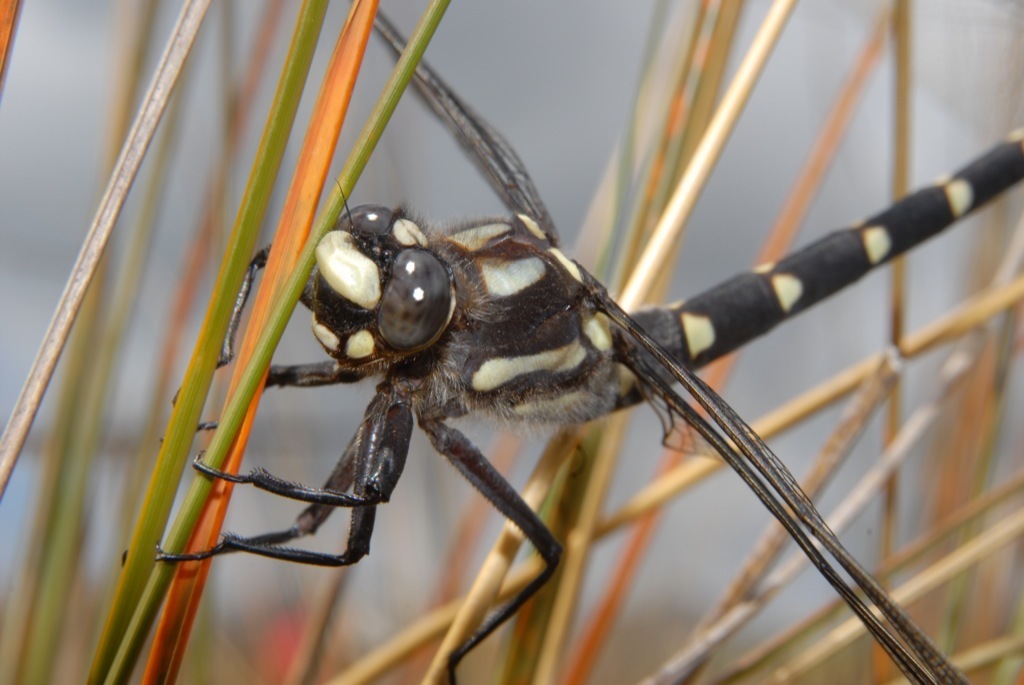
The adult is about 80 mm long with a wingspan near 100 mm. Nymphs live in water-filled burrows in alpine swamp soils, while adults fly around forest edges and swamps. It is found only in upland and sub-alpine parts of New Zealand’s South Island.
Source: Wikipedia
How to recognize it
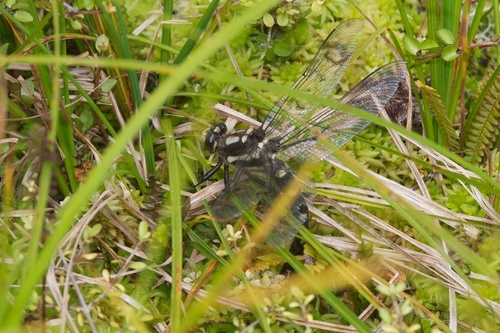
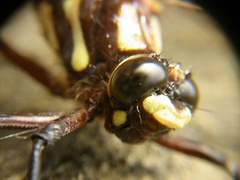
It has large pale spots on the labrum and black femur segments, unlike the all-black labrum and brownish femurs of U. carovei.
Source: Wikipedia
Size
Body length is about 80 mm and the wingspan is roughly 100 mm.
Source: Wikipedia
Where it lives
Nymphs tunnel into soft earth around alpine swamps or seepages in tussock grassland. Adults hunt near forest margins and swampland.
Source: Wikipedia
Life cycle
Larvae live in a half-filled water chamber for about five to six years before emerging at night to hunt near the burrow entrance. When dug out, the larvae are docile, unlike the aggressive larvae of U. carovei.
Source: Wikipedia
When you see it
Adults are active hunting around forest margins and swampland.
Source: Wikipedia
Lookalikes
It can be told apart from U. carovei by the pale labrum blotches and black femur legs.
Source: Wikipedia
More photos
Questions people ask
How can I tell Chilton's Giant Dragonfly apart from similar species?
Look for large pale spots on the labrum and black femur segments; the similar U. carovei has a completely black labrum and brownish femurs.
Source: Wikipedia
Where does Chilton's Giant Dragonfly live?
It is native to the upland and sub-alpine regions of New Zealand’s South Island.
Source: Wikipedia
How big is Chilton's Giant Dragonfly?
Adults are about 80 mm long with a wingspan of roughly 100 mm.
Source: Wikipedia
What habitats do the nymphs use?
Nymphs tunnel into soft earth around alpine swamps or seepage areas in tussock grassland.
Source: Wikipedia
Same family (Petaluridae)

Sources
- Wikipedia: https://en.wikipedia.org/wiki/Uropetala_chiltoni
Look it up elsewhere: GBIF · iNaturalist · BugGuide · Wikipedia
Text written 2026-10-23 from the sources above and checked sentence by sentence against them. Data fetched 2026-10-23.