 Bug FAQ
Cereal Leaf Beetle
Oulema melanopus · Order: Coleoptera · Family: Chrysomelidae
Source: Wikipedia
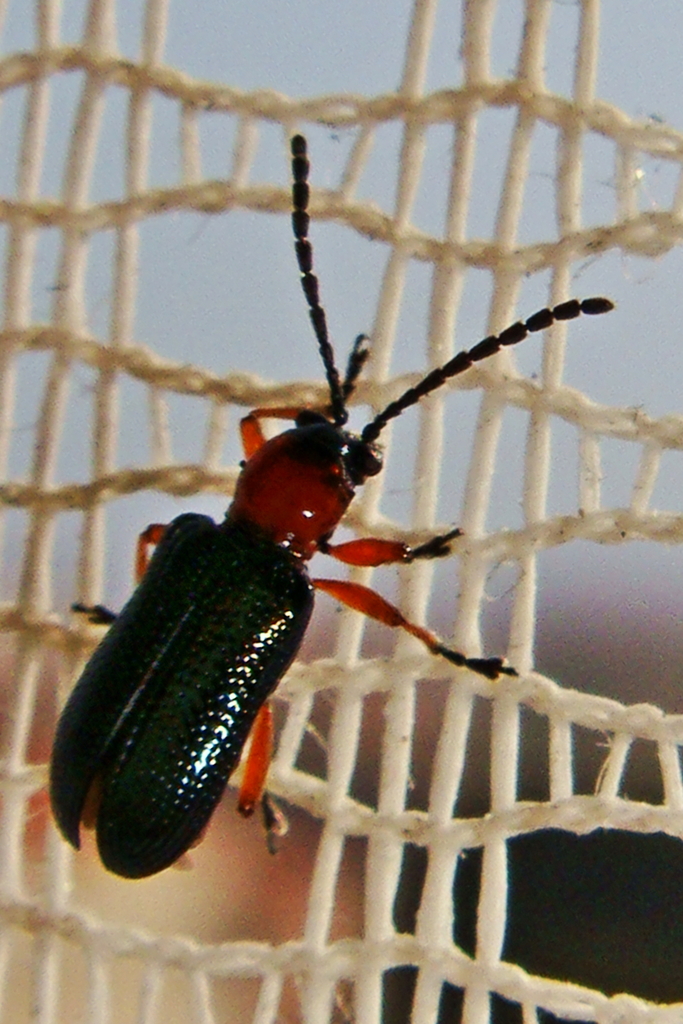
The black-headed beetle Oulema melanopus is a small beetle about 5 mm long, with dark-blue wing covers and red legs as an adult, while its larvae are white or yellow, hump-backed, and have a black head with six tiny legs. It feeds on most cereal crops, especially wheat, oats, barley and rye, and its larvae chew the surface of leaves, reducing photosynthesis and harming the plants. One generation occurs each year; adults mate when temperatures rise above about 10 °C and females lay eggs over a 45 to 60-day period, with overwintering adults sheltering in crop stubble, windrows or bark crevices.
Source: Wikipedia
How to recognize it
Larvae are white or yellow, hump-backed, with a black head and six small legs.
Source: Wikipedia
Size
Adults are about 5 mm long. Pupae are also about 5 mm long, start yellow and darken with age.
Source: Wikipedia
How to get rid of it
- Laboratory tests show certain nematodes (Steinernema feltiae B30, S. carpocapsae C101, Heterorhabditis bacteriophora D54) can suppress the beetle.
- Applying sprays while adults are laying eggs is also an effective control method.
Source: Wikipedia
Where it lives
The beetle is native to Europe and Asia but is now common worldwide. In North America it was first recorded in Berrien County, Michigan, in 1962.
Source: Wikipedia
What it eats
It eats almost all cereal crops, preferring oats, barley, rye and especially wheat. Larvae damage crops by chewing the leaf surface, lowering photosynthetic ability.
Source: Wikipedia
Life cycle
One generation is produced each year. Adults mate when temperatures exceed about 10 °C and females lay eggs over a 45 to 60-day period.
Source: Wikipedia
When you see it
Adults feed before winter and spend the winter in protected spots like windrows, crop stubble, or bark crevices. Spraying is most effective when roughly half of the eggs have hatched.
Source: Wikipedia
Where it comes from
It originates from Europe and Asia. It entered North America with the first U.S. record in Michigan in 1962.
Source: Wikipedia
Where it is found in the US
Recorded in 25 of 51 states and DC. Most records: Pennsylvania, Michigan, Idaho, Oregon, Ohio, Maryland, Virginia, Iowa.
Darker = more records. Counts are museum and citizen-science records, not population size.
Source: GBIF
Months it is reported in the US
Source: GBIF
More photos
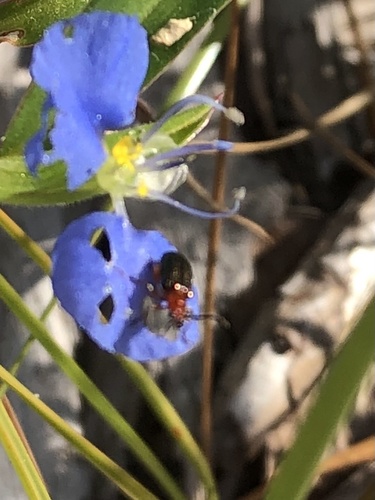
Questions people ask
How does Oulema melanopus damage crops?
Both adults and larvae feed on cereal crops, with larvae chewing the leaf surface and reducing photosynthesis.
Source: Wikipedia
What natural enemies can help control this beetle?
Certain entomopathogenic nematodes, such as Steinernema feltiae B30, S. carpocapsae C101, and Heterorhabditis bacteriophora D54, have shown success in laboratory studies.
Source: Wikipedia
Where was Oulema melanopus first found in North America?
It was first recorded in Berrien County, Michigan, in 1962.
Source: Wikipedia
Same family (Chrysomelidae)
 Spotted Cucumber BeetleDiabrotica undecimpunctataDamages trees, gardens or crops
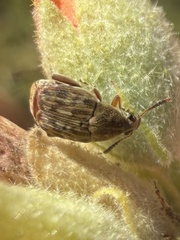 Bean WeevilAcanthoscelides obtectusDamages trees, gardens or crops
 Cowpea WeevilCallosobruchus maculatusDamages trees, gardens or crops
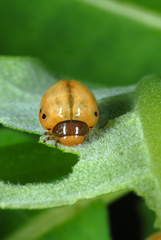 Swamp Milkweed Leaf BeetleLabidomera clivicollisDamages trees, gardens or crops
 Alder Leaf BeetleAgelastica alniDamages trees, gardens or crops
 Dogbane Leaf BeetleChrysochus auratus
Sources
- Wikipedia: https://en.wikipedia.org/wiki/Cereal_leaf_beetle
Look it up elsewhere: GBIF · iNaturalist · BugGuide · ITIS · Wikipedia
Text written 2026-10-27 from the sources above and checked sentence by sentence against them. Data fetched 2026-10-27.