 Bug FAQ
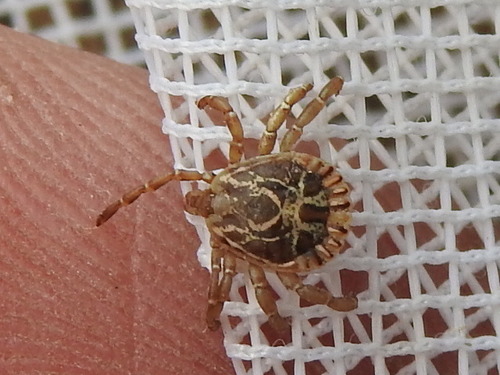
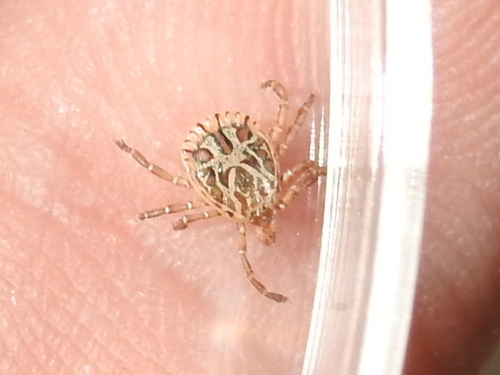
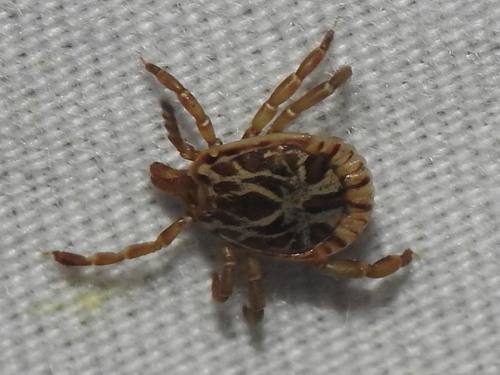
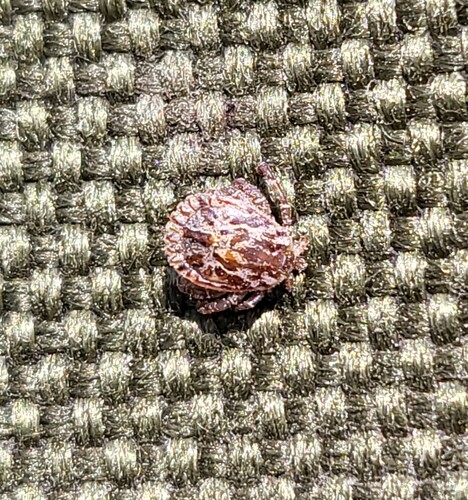
Cayenne Tick
Amblyomma cajennense · Order: Ixodida · Family: Ixodidae
Source: Wikipedia

The Cayenne tick lives in a wide range of environments and can adapt to many conditions. It is found from the southern United States down through Central America to northern Argentina, including parts of the Caribbean. It can transmit Rocky Mountain spotted fever to humans and domestic cattle.
Source: Wikipedia
Does it bite or sting?
It can transmit Rocky Mountain spotted fever to people.
Source: Wikipedia
Where it lives
It can survive in many different environmental conditions.
Source: Wikipedia
Where it comes from
Its range extends from the southern United States through Central America to northern Argentina and some Caribbean islands.
Source: Wikipedia
Lookalikes
Molecular studies show it is actually a complex of closely related species.
Source: Wikipedia
Where it is found in the US
Recorded in 4 of 51 states and DC. Most records: Texas, Missouri, Louisiana, Arkansas.
Darker = more records. Counts are museum and citizen-science records, not population size.
Source: GBIF
Status: native in North America. Source: iNaturalist
Months it is reported in the US
Source: GBIF
More photos
Questions people ask
Can Cayenne ticks spread disease to humans?
Yes, they can transmit Rocky Mountain spotted fever to people.
Source: Wikipedia
Where are Cayenne ticks found?
They occur from the southern United States down to northern Argentina, including Central America and parts of the Caribbean.
Source: Wikipedia
Do Cayenne ticks affect livestock?
They affect domestic cattle and can spread disease to them.
Source: Wikipedia
Same family (Ixodidae)
 American Dog TickDermacentor variabilisCan spread germs or disease
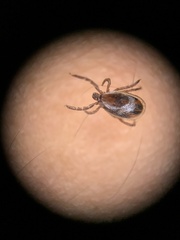 Eastern Black-legged TickIxodes scapularisCan spread germs or disease
 Lone Star TickAmblyomma americanumCan spread germs or disease
 Gulf Coast TickAmblyomma maculatumCan spread germs or disease
 Western Black-legged TickIxodes pacificusCan spread germs or disease
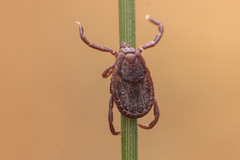 Brown Dog TickRhipicephalus sanguineusCan spread germs or disease
Sources
- Wikipedia: https://en.wikipedia.org/wiki/Amblyomma_cajennense
Look it up elsewhere: GBIF · iNaturalist · BugGuide · ITIS · Wikipedia
Text written 2026-10-23 from the sources above and checked sentence by sentence against them. Data fetched 2026-10-23.