 Bug FAQ
Catalpa Sphinx
Ceratomia catalpae · Order: Lepidoptera · Family: Sphingidae
Also called: Catalpa Caterpillar, Catalpa Hornworm, Catalpa Sphinx Moth, Catalpa Worm
Source: Wikipedia
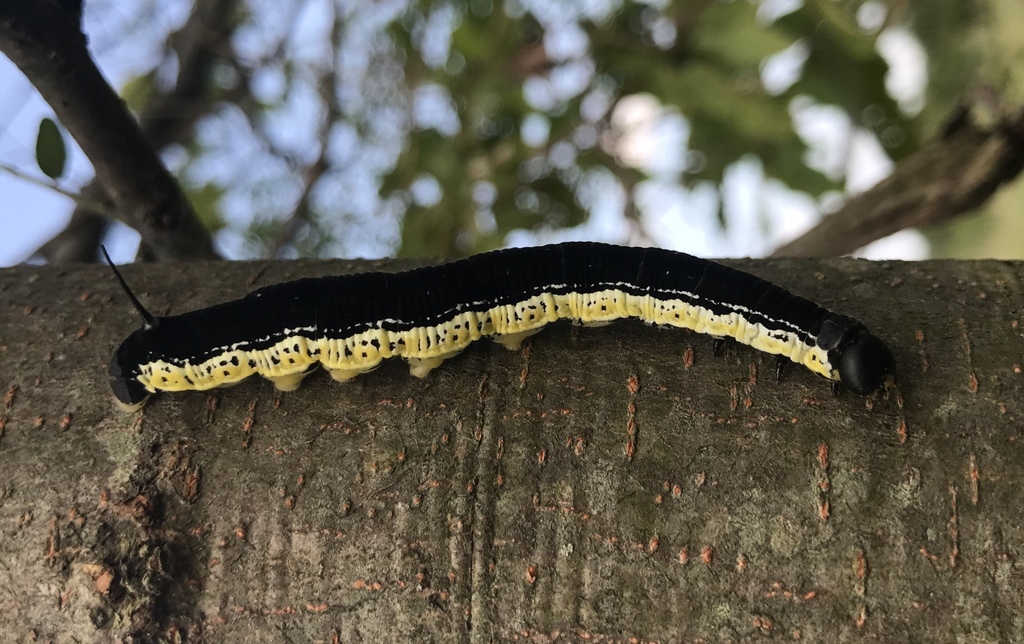
Adult catalpa sphinx moths are a dull brown about 30 mm long with a wingspan of 65 to 95 mm. The moth is brown with a dark circular band around the thorax and each forewing shows a small dark spot and a white dot. Caterpillars can harm catalpa trees when they appear in large numbers, and aerial spraying has been tried to control them.
Source: Wikipedia
How to recognize it
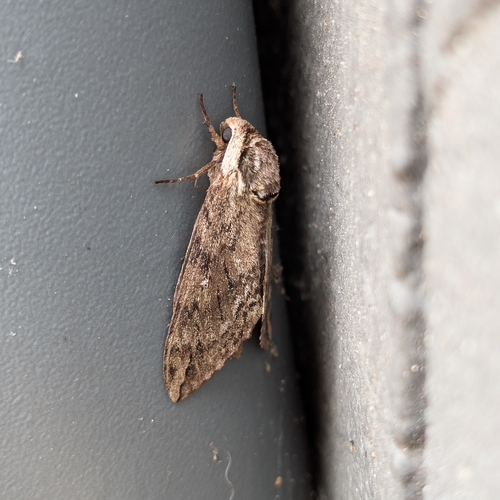
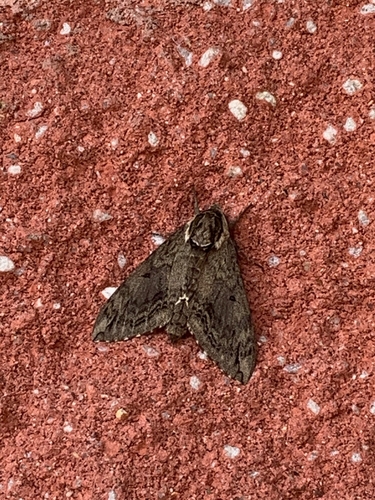
The adult has a brown body with a dark ring around its thorax. Each forewing bears a small dark mark near the middle and a white dot in the cell.
Source: Wikipedia
Size
The body length is about 30 mm. Wingspan ranges from 65 to 95 mm.
Source: Wikipedia
Is it a pest in the house?
Large outbreaks can be harmful to catalpa trees. Aerial crop-dusting was tried as a control method.
Source: Wikipedia
How to get rid of it
The first aerial crop-dusting trial aimed to manage the species. More recent studies suggest the caterpillars may not be as damaging as once thought.
Source: Wikipedia
Where it lives
After the final larval stage, the caterpillar burrows underground to pupate.
Source: Wikipedia
What it eats
Caterpillars are used as bait for catching bass, bream, and catfish.
Source: Wikipedia
Life cycle
From egg laying to pupation takes roughly four weeks. When multiple generations occur, pupae can emerge in about two weeks if conditions allow.
Source: Wikipedia
When you see it
Adults lack the bright colors of their larvae and are a plain brown.
Source: Wikipedia
Where it comes from
It is native to the southeastern United States.
Source: Wikipedia
Where it is found in the US
Recorded in 32 of 51 states and DC. Most records: Pennsylvania, Ohio, Maryland, Virginia, North Carolina, New Jersey, Missouri, Oklahoma.
Darker = more records. Counts are museum and citizen-science records, not population size.
Source: GBIF
Months it is reported in the US
Source: GBIF
More photos

Questions people ask
How big is the catalpa sphinx?
The body is about 30 mm long and the wingspan ranges from 65 to 95 mm.
Source: Wikipedia
What do the caterpillars eat?
They are commonly used as bait for catching bass, bream, and catfish.
Source: Wikipedia
How can I control a catalpa sphinx outbreak?
Aerial crop-dusting has been tried, though newer research questions how harmful the caterpillars really are.
Source: Wikipedia
Same family (Sphingidae)
 White-lined SphinxHyles lineataDamages trees, gardens or crops
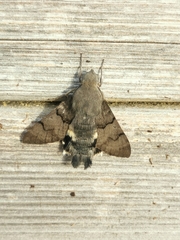 Eurasian Hummingbird HawkmothMacroglossum stellatarum
 Snowberry ClearwingHemaris diffinis
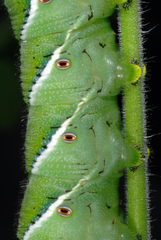 Carolina SphinxManduca sextaDamages trees, gardens or crops
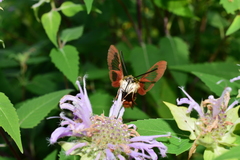 Hummingbird ClearwingHemaris thysbeDamages trees, gardens or crops
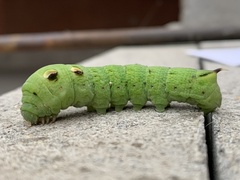 Elephant HawkmothDeilephila elpenor
Sources
- Wikipedia: https://en.wikipedia.org/wiki/Ceratomia_catalpae
Look it up elsewhere: GBIF · iNaturalist · BugGuide · ITIS · Wikipedia
Text written 2026-10-23 from the sources above and checked sentence by sentence against them. Data fetched 2026-10-23.