 Bug FAQ
Caryomyia echinata
Caryomyia echinata · Order: Diptera · Family: Cecidomyiidae
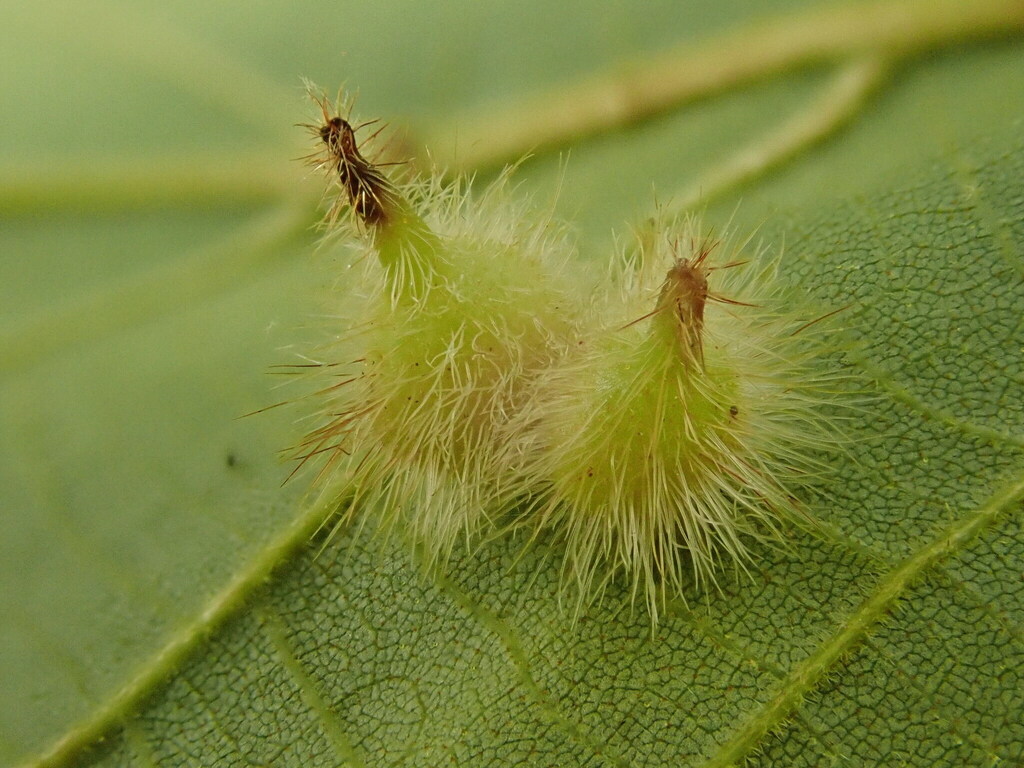
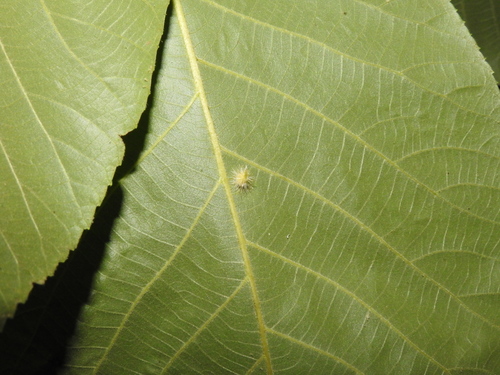
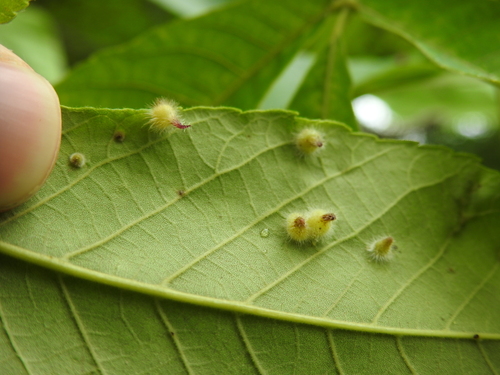
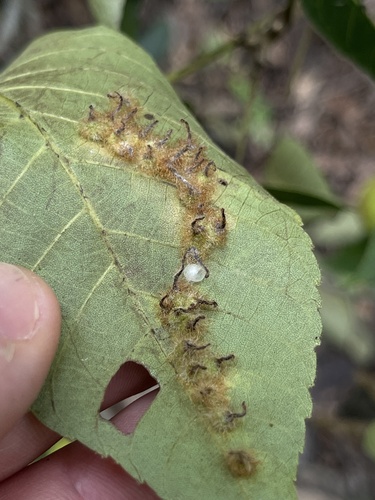
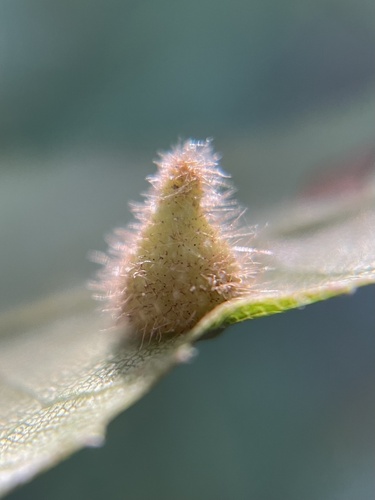
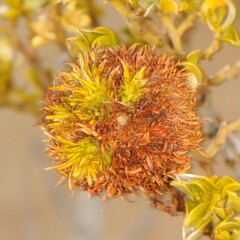
The gall made by Caryomyia echinata is the only woody gall of its genus that is covered in long, stiff hairs and grows between leaf veins. Its larvae form these galls on hickory leaves in eastern North America, and the pupae leave the gall in late summer through a side opening near the base.
Source: Wikipedia
How to recognize it
This species creates a woody gall with very long, stiff hairs that appears between leaf veins rather than on them.
Source: Wikipedia
Where it lives
It is found in eastern parts of North America.
Source: Wikipedia
Life cycle
Pupae emerge in late summer, exiting the gall through a side opening near the base.
Source: Wikipedia
Where it comes from
Its native range is eastern North America.
Source: Wikipedia
Where it is found in the US
Recorded in 10 of 51 states and DC. Most records: Ohio, Illinois, Kansas, Wisconsin, New York, Georgia, Kentucky, Michigan.
Darker = more records. Counts are museum and citizen-science records, not population size.
Source: GBIF
Status: endemic in North America; native in United States. Source: iNaturalist
Months it is reported in the US
Source: GBIF
More photos
Questions people ask
What plant does Caryomyia echinata affect?
Its larvae form galls on hickory tree leaves.
Source: Wikipedia
When do the pupae leave the gall?
They emerge in late summer through a side opening near the gall’s base.
Source: Wikipedia
Same family (Cecidomyiidae)


Sources
- Wikipedia: https://en.wikipedia.org/wiki/Caryomyia_echinata
Look it up elsewhere: GBIF · iNaturalist · BugGuide · Wikipedia
Text written 2026-10-28 from the sources above and checked sentence by sentence against them. Data fetched 2026-10-28.