 Bug FAQ
Carrhotus viduus
Carrhotus viduus · Order: Araneae · Family: Salticidae
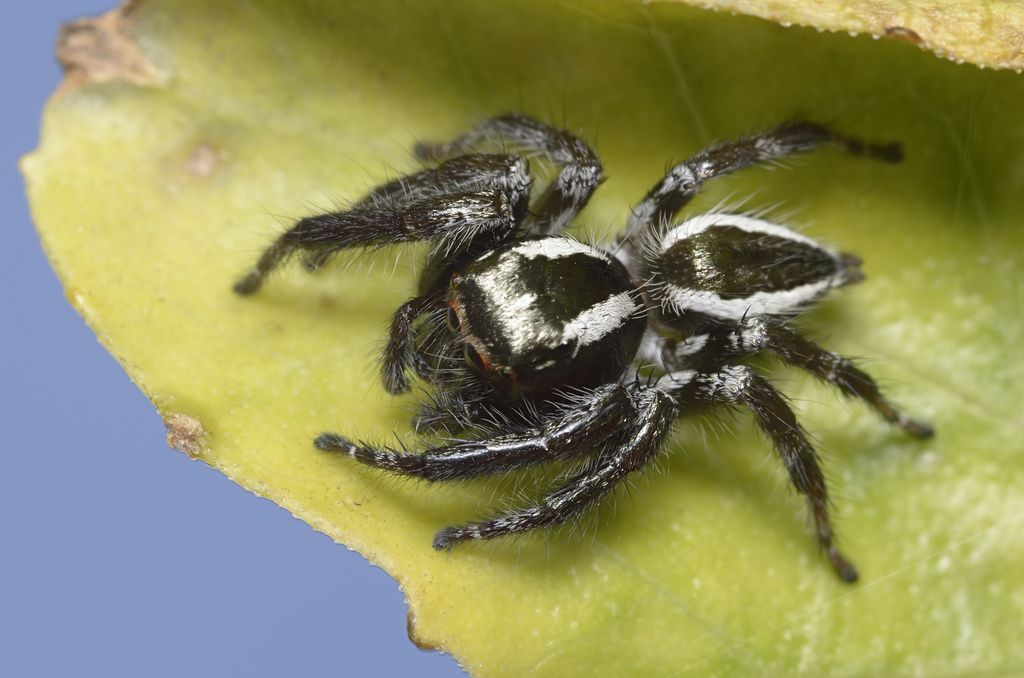
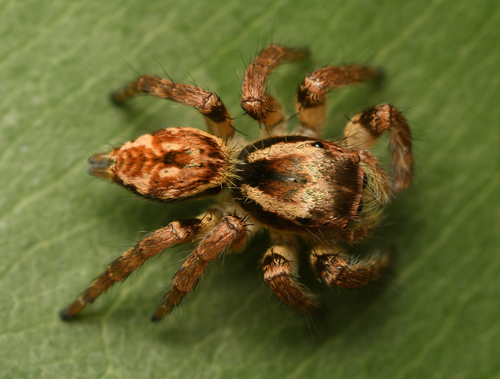
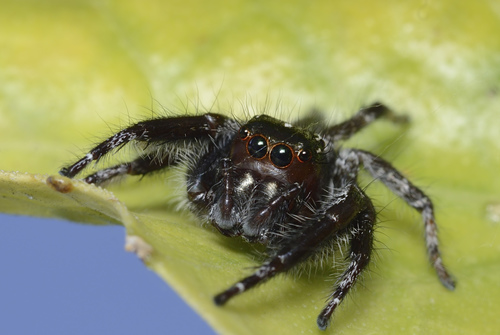
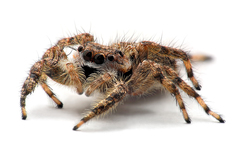
The male Carrhotus viduus is black with distinct white stripes on the head and abdomen, a maroon-tinged face, and orange-bordered eyes. Females are overall orange with yellow and orange markings, a red-brown cephalothorax with white streaks, and have black leg hairs and white abdominal hairs.
Source: Wikipedia
How to recognize it
Males are black with two thick white stripes on each side of the head and two more on the abdomen that do not meet at the tip. Males also have a slightly iridescent maroon face, a small white spot on the forehead, and eyes edged in orange. Females are orange overall with various yellow and orange markings on the abdomen. Both sexes have black hairs on the legs and white hairs on the abdomen.
Source: Wikipedia
Size
The head and cephalothorax are longer than they are wide in both males and females. The abdomen is broad near the base and tapers inward to a cone shape.
Source: Wikipedia
Where it lives
It lives in tropical and subtropical woodlands, including gardens, favoring dense foliage of short trees and shrubs.
Source: Wikipedia
Where it comes from
Its range extends from Sri Lanka and India eastward to China, Myanmar, and Vietnam, with unconfirmed reports from Japan and the Sundas.
Source: Wikipedia
More photos
Same family (Salticidae)



Sources
- Wikipedia: https://en.wikipedia.org/wiki/Carrhotus_viduus
Look it up elsewhere: GBIF · iNaturalist · BugGuide · ITIS · Wikipedia
Text written 2026-10-22 from the sources above and checked sentence by sentence against them. Data fetched 2026-10-22.