 Bug FAQ
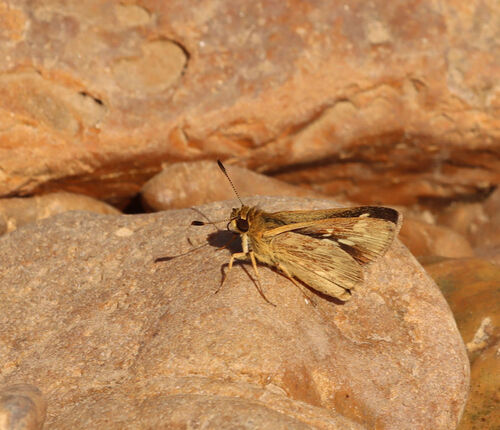
Carolina Roadside-Skipper
Mastor carolina · Order: Lepidoptera · Family: Hesperiidae
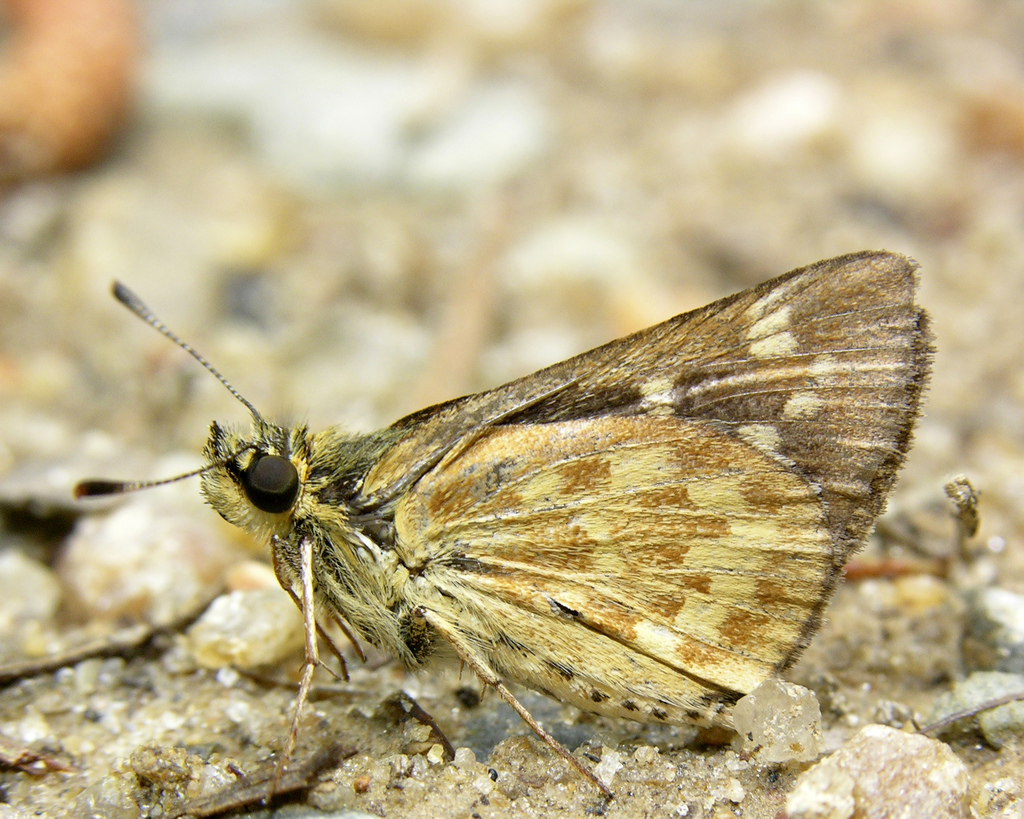
The Carolina roadside-skipper has a wingspan of roughly 29 to 37 mm. Adults feed on nectar from flowers such as sweet pepperbush and swamp milkweed, while the larvae probably eat Arundinaria tecta. It flies from April to September and produces three generations each year.
Source: Wikipedia
How to recognize it
The Carolina roadside-skipper is a butterfly in the family Hesperiidae.
Source: Wikipedia
Size
Its wingspan ranges from about 29 to 37 mm.
Source: Wikipedia
What it eats
Larvae probably feed on the bamboo species Arundinaria tecta.
Source: Wikipedia
Life cycle
Adults are on the wing from April through September and there are three generations each year.
Source: Wikipedia
When you see it
You can see them flying between April and September.
Source: Wikipedia
Where it comes from
Its native range covers the same southeastern United States area described for its habitat.
Source: Wikipedia
Where it is found in the US
Recorded in 15 of 51 states and DC. Most records: North Carolina, Virginia, South Carolina, Georgia, Alabama, Arkansas, Florida, Pennsylvania.
Darker = more records. Counts are museum and citizen-science records, not population size.
Source: GBIF
Months it is reported in the US
Source: GBIF
More photos
Questions people ask
When are Carolina roadside-skippers active?
They are on the wing from April to September.
Source: Wikipedia
Same family (Hesperiidae)




Sources
- Wikipedia: https://en.wikipedia.org/wiki/Amblyscirtes_carolina
Look it up elsewhere: GBIF · iNaturalist · BugGuide · ITIS · Wikipedia
Text written 2026-10-25 from the sources above and checked sentence by sentence against them. Data fetched 2026-10-25.