 Bug FAQ
Caribbean Giant Centipede
Scolopendra alternans · Order: Scolopendromorpha · Family: Scolopendridae
Also called: Florida Keys Centipede, Haitian Giant Centipede
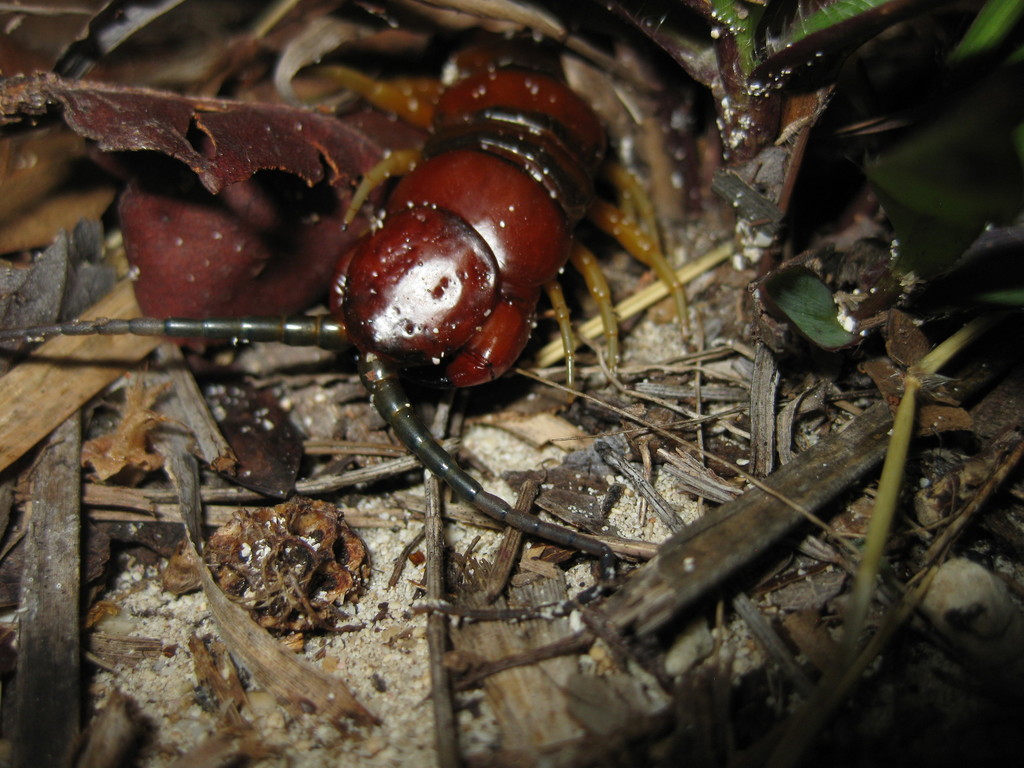
The Caribbean giant centipede can reach about 17 to 19 cm in length. Its body colour ranges from brownish or reddish to yellow-orange depending on where it lives. It occurs throughout the Caribbean, northern South America, and has been reported as far north as Georgia.
Source: Wikipedia
How to recognize it
Colouration is generally brownish or reddish, but some individuals are yellow to orange.
Source: Wikipedia
Size
Adults can grow to a length of 17 to 19 cm.
Source: Wikipedia
Where it lives
It has also been reported as far north as the U.S. state of Georgia.
Source: Wikipedia
Where it comes from
Its native range includes the Caribbean and northern South America. Records show it occurs as far north as Georgia in the United States.
Source: Wikipedia
Where it is found in the US
Recorded in 2 of 51 states and DC. Most records: Florida, Georgia.
Darker = more records. Counts are museum and citizen-science records, not population size.
Source: GBIF
Status: native in North America. Source: iNaturalist
Months it is reported in the US
Source: GBIF
More photos
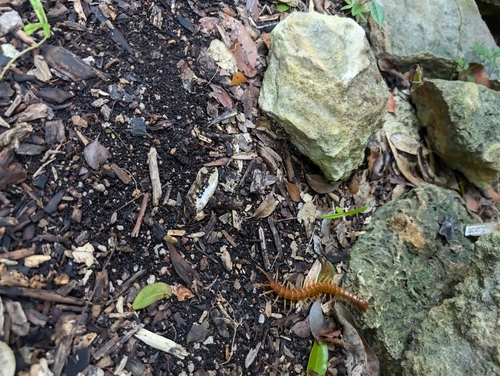
Questions people ask
Where is the Caribbean giant centipede found?
It lives throughout the Caribbean, northern South America, and has been reported in Georgia, USA.
Source: Wikipedia
How big does this centipede get?
Adults can reach about 17 to 19 centimeters in length.
Source: Wikipedia
What does this centipede look like?
Its colour varies from brownish or reddish to yellow-orange depending on the location.
Source: Wikipedia
Same family (Scolopendridae)
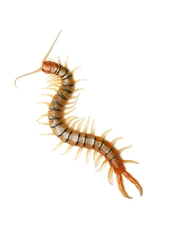 Common Desert CentipedeScolopendra polymorphaCan bite
 Giant Desert CentipedeScolopendra herosCan bite
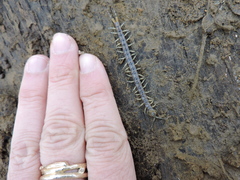 Eastern Bark CentipedeHemiscolopendra marginata
 Mediterranean Banded CentipedeScolopendra cingulataCan bite
 Chinese Red-headed CentipedeScolopendra mutilansCan bite
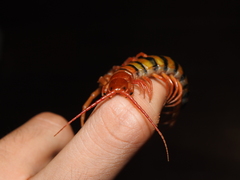 Red-headed CentipedeScolopendra morsitansCan bite
Sources
- Wikipedia: https://en.wikipedia.org/wiki/Scolopendra_alternans
Look it up elsewhere: GBIF · iNaturalist · BugGuide · ITIS · Wikipedia
Text written 2026-10-29 from the sources above and checked sentence by sentence against them. Data fetched 2026-10-29.