 Bug FAQ
Cardinal Jumper
Phidippus cardinalis · Order: Araneae · Family: Salticidae
Also called: Four-spotted Red Jumper, Cardinal Jumping Spider
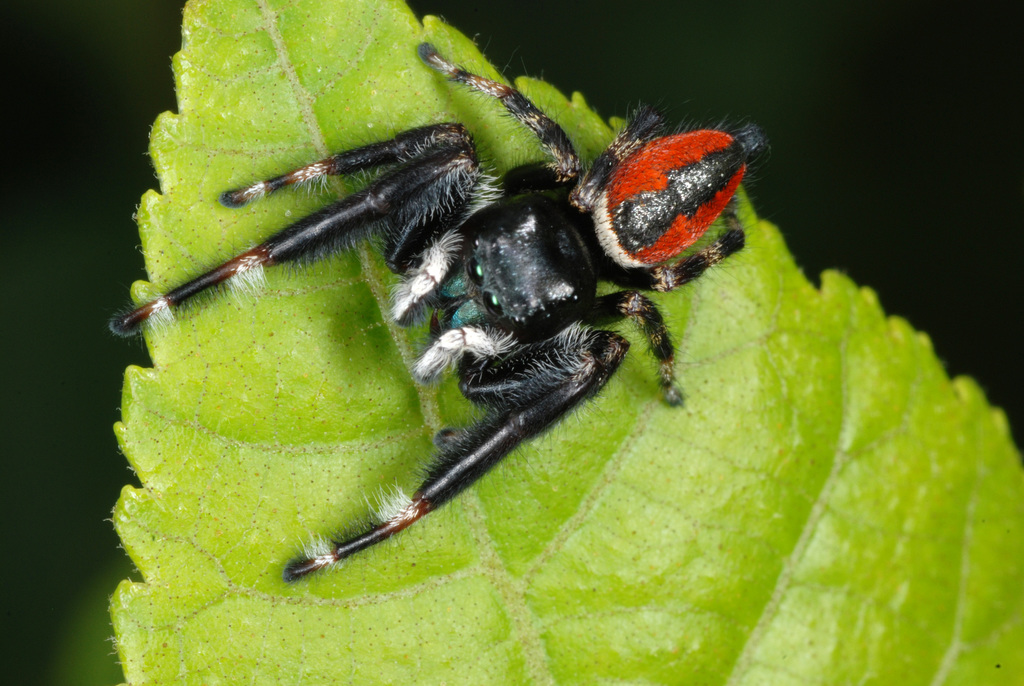
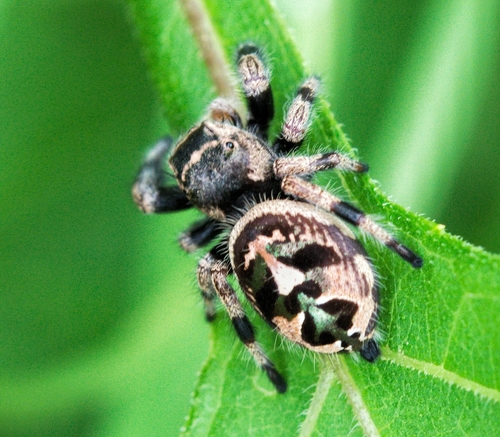
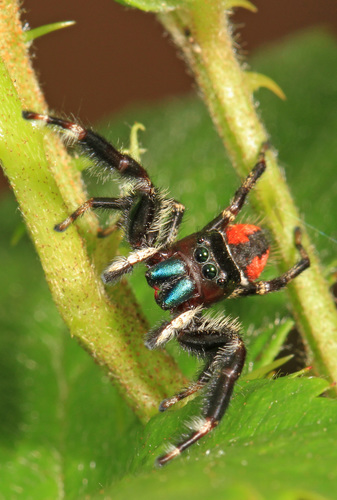
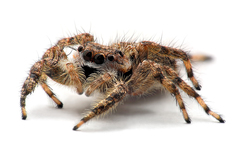
Phidippus cardinalis is a jumping spider that mimics the appearance of velvet ants, which are wasps with a painful sting. It lives in the southern and eastern United States, Mexico, and parts of Colorado.
Source: Wikipedia
How to recognize it
Its coloration and body shape closely resemble mutillid wasps, a classic case of mimicry.
Source: Wikipedia
Size
The spider is about the same size as the velvet ants it imitates.
Source: Wikipedia
Does it bite or sting?
The wasps it mimics have a very painful sting.
Source: Wikipedia
Where it lives
It is found across the southern and eastern United States, Mexico, and has been recorded in western, central, and northern Colorado.
Source: Wikipedia
Where it comes from
Its range includes the United States and Mexico, with possible presence in Panama.
Source: Wikipedia
Lookalikes
It can be mistaken for velvet ants (mutillid wasps) because of similar size and coloration.
Source: Wikipedia
Where it is found in the US
Recorded in 28 of 51 states and DC. Most records: Texas, Oklahoma, Arkansas, Florida, Tennessee, Missouri, Massachusetts, Pennsylvania.
Darker = more records. Counts are museum and citizen-science records, not population size.
Source: GBIF
Months it is reported in the US
Source: GBIF
More photos


Questions people ask
Why does Phidippus cardinalis look like a velvet ant?
It mimics the appearance of mutillid wasps, which likely helps deter predators.
Source: Wikipedia
Same family (Salticidae)



Sources
- Wikipedia: https://en.wikipedia.org/wiki/Phidippus_cardinalis
Look it up elsewhere: GBIF · iNaturalist · BugGuide · ITIS · Wikipedia
Text written 2026-10-23 from the sources above and checked sentence by sentence against them. Data fetched 2026-10-23.