 Bug FAQ
Canopy jumping spider
Phidippus otiosus · Order: Araneae · Family: Salticidae
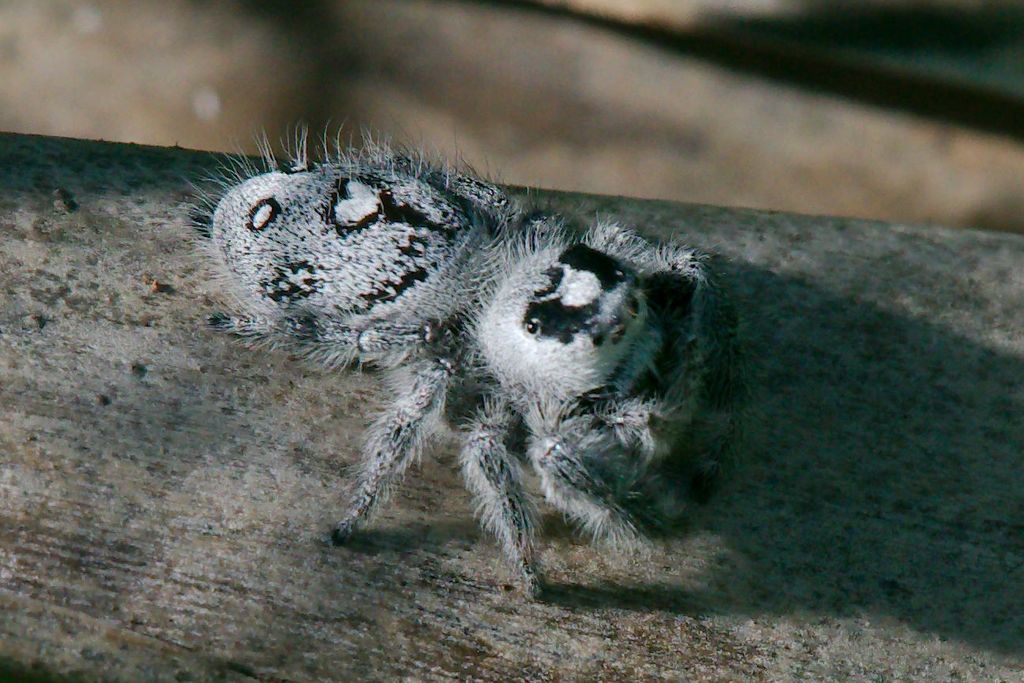
Female Phidippus otiosus grow to about 16 mm long and have iridescent chelicerae that can appear purple or green. Females lay a single egg sac under oak or pine bark in winter to early summer, containing 19 to 150 eggs; spiderlings hatch and disperse in late winter and mature by fall.
Source: Wikipedia
How to recognize it
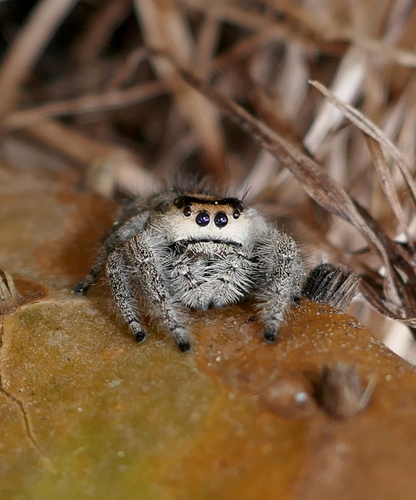
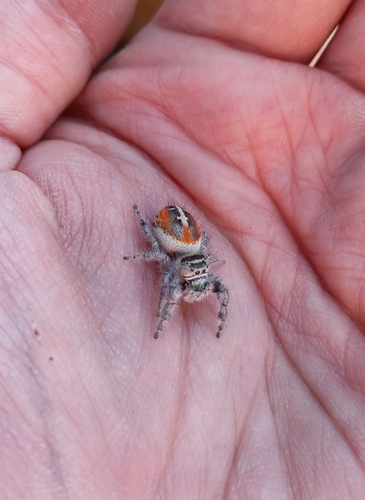
The spider’s chelicerae show an iridescent sheen that can range from purple to green.
Source: Wikipedia
Where it lives
It is primarily a tree-living species.
Source: Wikipedia
Life cycle
Spiderlings mature during the fall.
Source: Wikipedia
When you see it
Egg laying occurs in winter months: December to February in South Carolina and January to June in Florida.
Source: Wikipedia
Where it is found in the US
Recorded in 31 of 51 states and DC. Most records: North Carolina, Virginia, Maryland, Florida, Tennessee, Kentucky, South Carolina, Georgia.
Darker = more records. Counts are museum and citizen-science records, not population size.
Source: GBIF
Months it is reported in the US
Source: GBIF
More photos
Questions people ask
How big do female Phidippus otiosus get?
Females grow to about 16 mm (0.63 in) in body length.
Source: Wikipedia
What do the chelicerae of Phidippus otiosus look like?
Their chelicerae are iridescent and can appear purple to green.
Source: Wikipedia
Same family (Salticidae)



Sources
- Wikipedia: https://en.wikipedia.org/wiki/Phidippus_otiosus
Look it up elsewhere: GBIF · iNaturalist · BugGuide · ITIS · Wikipedia
Text written 2026-10-23 from the sources above and checked sentence by sentence against them. Data fetched 2026-10-23.