 Bug FAQ
Camphorweed Chrysomelid
Zygogramma heterothecae · Order: Coleoptera · Family: Chrysomelidae
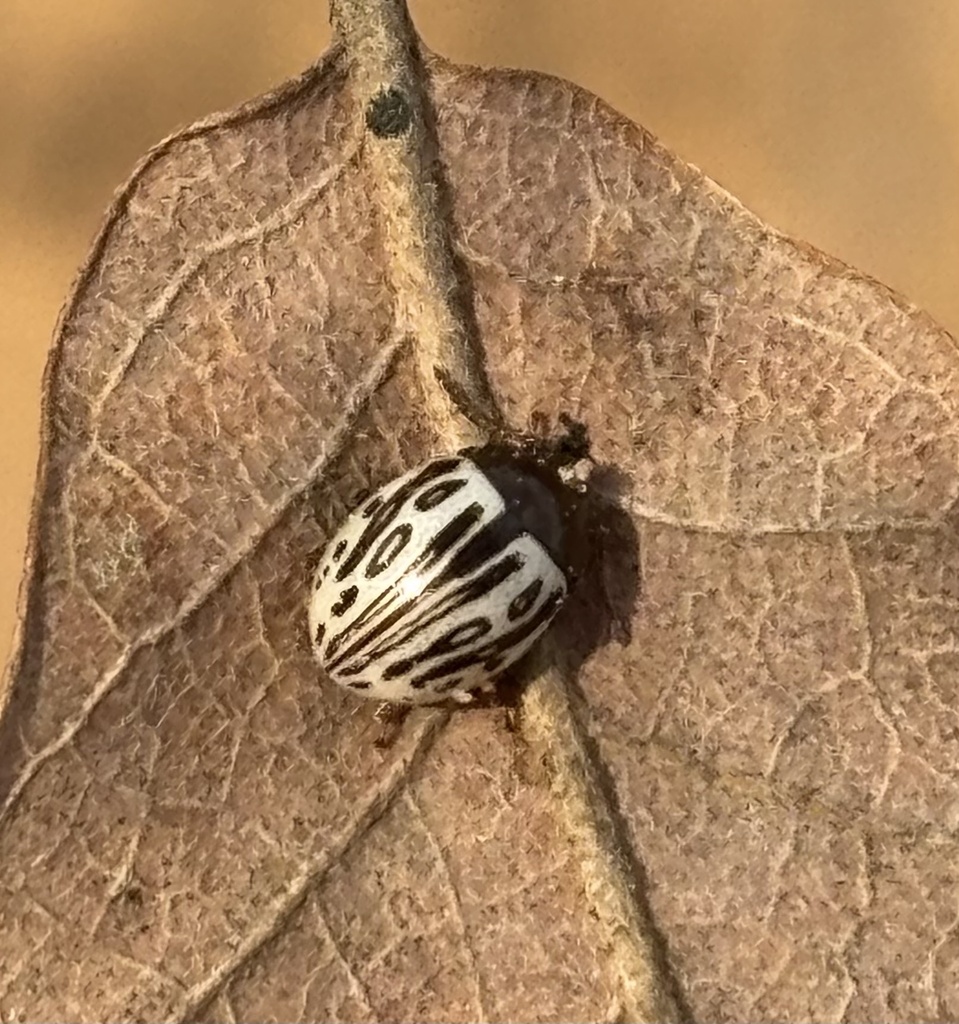
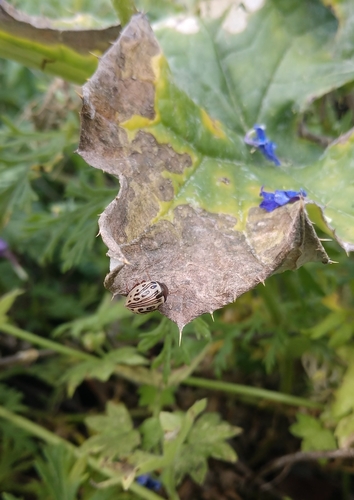
The camphorweed chrysomelid is a tiny leaf beetle with a brown front shield and yellow wing covers marked by long brown stripes. Adults live only on camphorweed plants (Heterotheca subaxillaris). It is native to North America.
Source: Wikipedia
How to recognize it
You can recognize it by its brown pronotum and yellow elytra with elongated brown stripes.
Source: Wikipedia
Size
It is a small beetle, easily overlooked.
Source: Wikipedia
Where it lives
Adults are found exclusively on camphorweed (Heterotheca subaxillaris).
Source: Wikipedia
What it eats
Both larvae and adults feed only on camphorweed (Heterotheca subaxillaris).
Source: Wikipedia
Where it comes from
The species originates from North America.
Source: Wikipedia
Where it is found in the US
Recorded in 8 of 51 states and DC. Most records: Texas, Florida, New Mexico, Colorado, Kansas, Utah, Oklahoma, South Carolina.
Darker = more records. Counts are museum and citizen-science records, not population size.
Source: GBIF
Months it is reported in the US
Source: GBIF
More photos
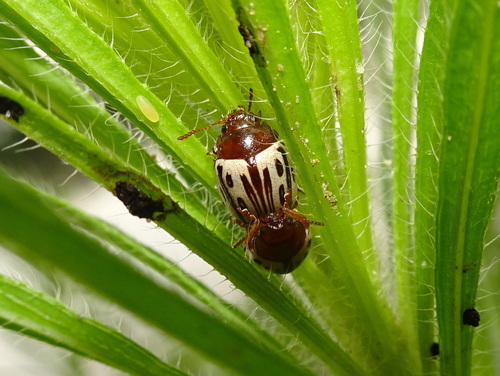
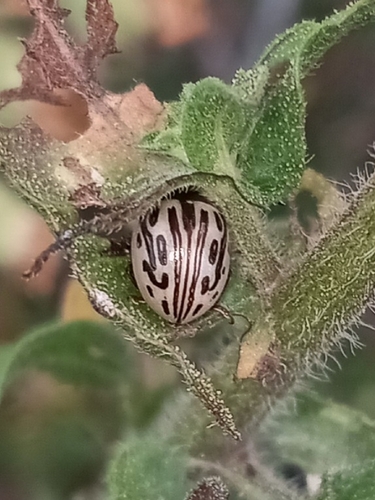
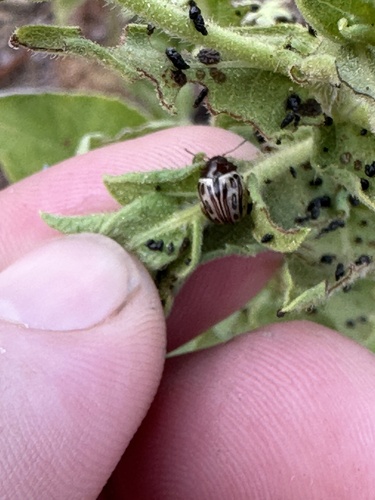
Questions people ask
What does the camphorweed chrysomelid look like?
It has a brown pronotum and yellow wing covers with long brown stripes.
Source: Wikipedia
Same family (Chrysomelidae)
 Spotted Cucumber BeetleDiabrotica undecimpunctataDamages trees, gardens or crops
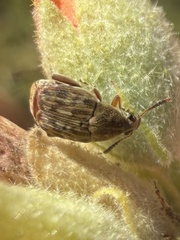 Bean WeevilAcanthoscelides obtectusDamages trees, gardens or crops
 Cowpea WeevilCallosobruchus maculatusDamages trees, gardens or crops
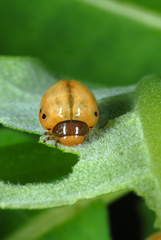 Swamp Milkweed Leaf BeetleLabidomera clivicollisDamages trees, gardens or crops
 Alder Leaf BeetleAgelastica alniDamages trees, gardens or crops
 Dogbane Leaf BeetleChrysochus auratus
Sources
- Wikipedia: https://en.wikipedia.org/wiki/Calligrapha_heterothecae
Look it up elsewhere: GBIF · iNaturalist · BugGuide · ITIS · Wikipedia
Text written 2026-10-29 from the sources above and checked sentence by sentence against them. Data fetched 2026-10-29.