 Bug FAQ
Caliadurgus fasciatellus
Caliadurgus fasciatellus · Order: Hymenoptera · Family: Pompilidae

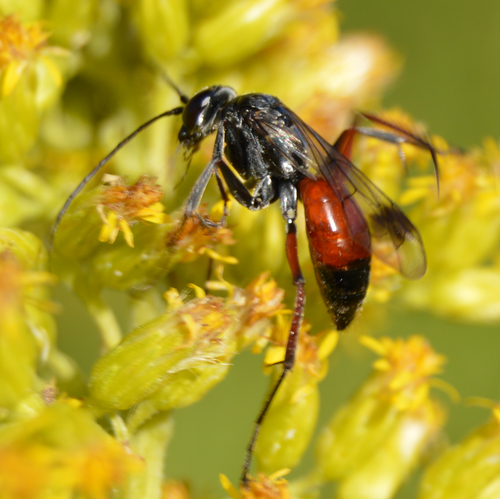
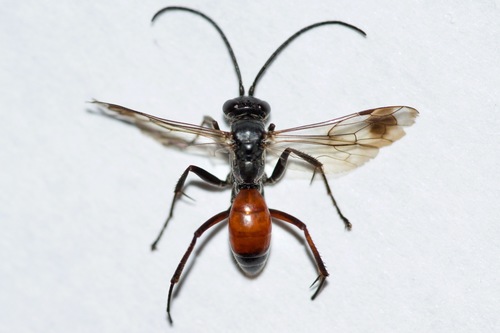
Caliadurgus fasciatellus is a spider wasp about 6 to 10 mm long.
Source: Wikipedia
Size
Adults measure between 6 and 10 mm in length.
Source: Wikipedia
Where it lives
They prefer exposed dry sandy or sandy-clay soils.
Source: Wikipedia
What it eats
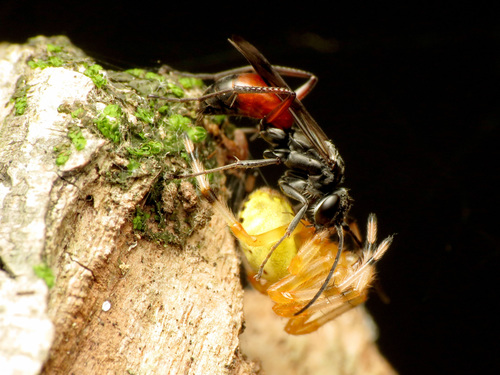
It hunts orb-web spiders belonging to the genera Araneus and Meta. Adults’ nectar sources are not recorded.
Source: Wikipedia
Life cycle
In Britain the flight period runs from June through October, with most activity in July and August.
Source: Wikipedia
When you see it
The species is most commonly seen in the summer months, especially July and August.
Source: Wikipedia
Where it comes from
The species occurs from western Europe across to the far east of Asia.
Source: Wikipedia
Where it is found in the US
Recorded in 25 of 51 states and DC. Most records: Ohio, Tennessee, Pennsylvania, Illinois, West Virginia, North Carolina, Maryland, Florida.
Darker = more records. Counts are museum and citizen-science records, not population size.
Source: GBIF
Months it is reported in the US
Source: GBIF
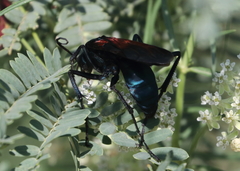
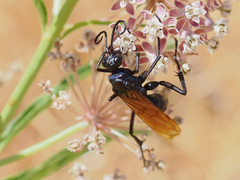
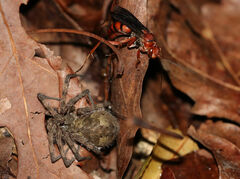
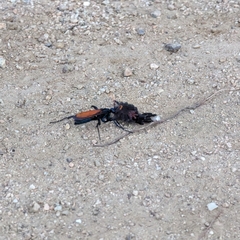
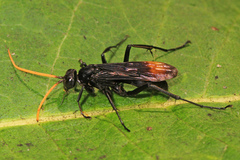
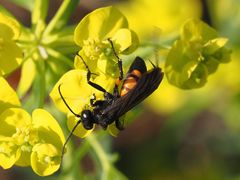
More photos
Questions people ask
When are Caliadurgus fasciatellus active?
They fly from June to October, peaking in July and August in Britain.
Source: Wikipedia
Same family (Pompilidae)
Sources
- Wikipedia: https://en.wikipedia.org/wiki/Caliadurgus_fasciatellus
Look it up elsewhere: GBIF · iNaturalist · BugGuide · Wikipedia
Text written 2026-10-25 from the sources above and checked sentence by sentence against them. Data fetched 2026-10-25.