 Bug FAQ
Buckeye Lace Bug
Corythucha aesculi · Order: Hemiptera · Family: Tingidae
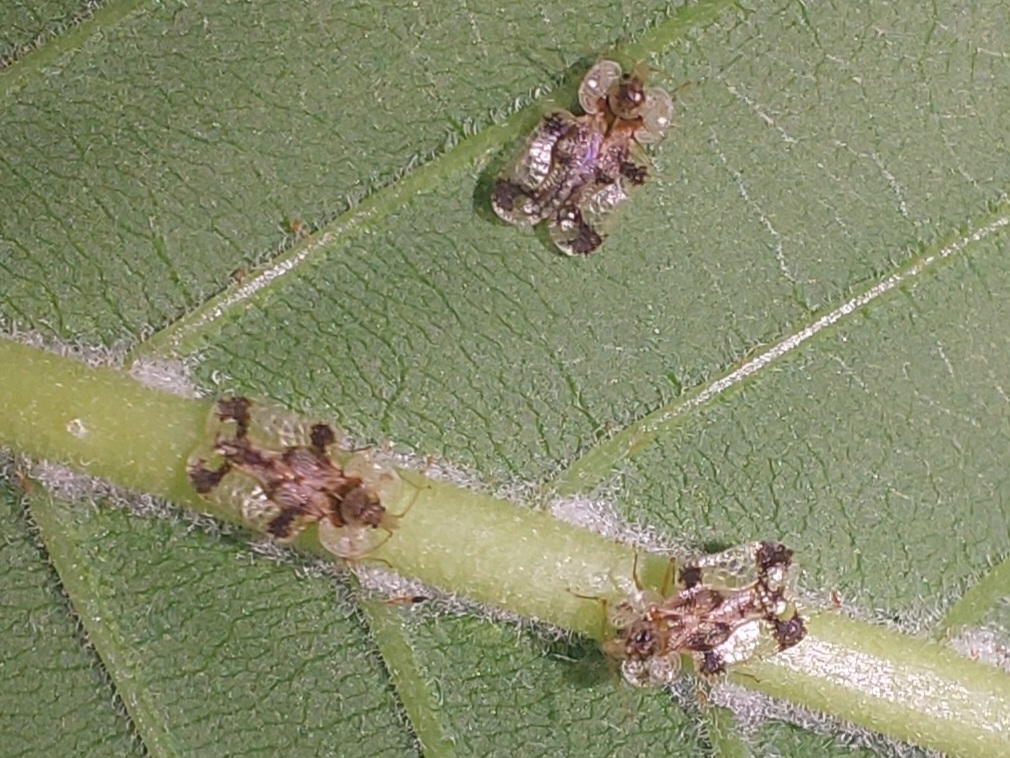
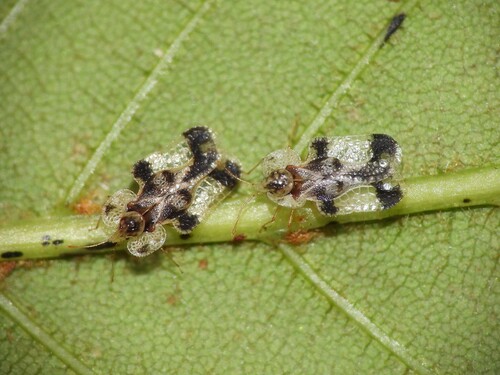
The buckeye lace bug (Corythucha aesculi) is native to North America. It lives on yellow buckeye trees (Aesculus octandra) and can reach very high numbers on that host. Ladybugs are among the most important predators of this lace bug.
Source: Wikipedia
Where it lives
The bug is found on yellow buckeye trees and can occur in very high densities there.
Source: Wikipedia
What it eats
It feeds on the yellow buckeye tree.
Source: Wikipedia
Where it comes from
Corythucha aesculi is native to North America.
Source: Wikipedia
Where it is found in the US
Recorded in 11 of 51 states and DC. Most records: Illinois, Indiana, Ohio, Kentucky, Pennsylvania, Missouri, Iowa, Mississippi.
Darker = more records. Counts are museum and citizen-science records, not population size.
Source: GBIF
Months it is reported in the US
Source: GBIF
More photos
Questions people ask
What tree does the buckeye lace bug live on?
It lives on the yellow buckeye (Aesculus octandra).
Source: Wikipedia
Same family (Tingidae)



Sources
- Wikipedia: https://en.wikipedia.org/wiki/Corythucha_aesculi
Look it up elsewhere: GBIF · iNaturalist · BugGuide · ITIS · Wikipedia
Text written 2026-10-27 from the sources above and checked sentence by sentence against them. Data fetched 2026-10-27.