 Bug FAQ
Andromeda Lace Bug
Stephanitis takeyai · Order: Hemiptera · Family: Tingidae
Also called: Lace bug, Andromeda Lacebug
Source: Wikipedia
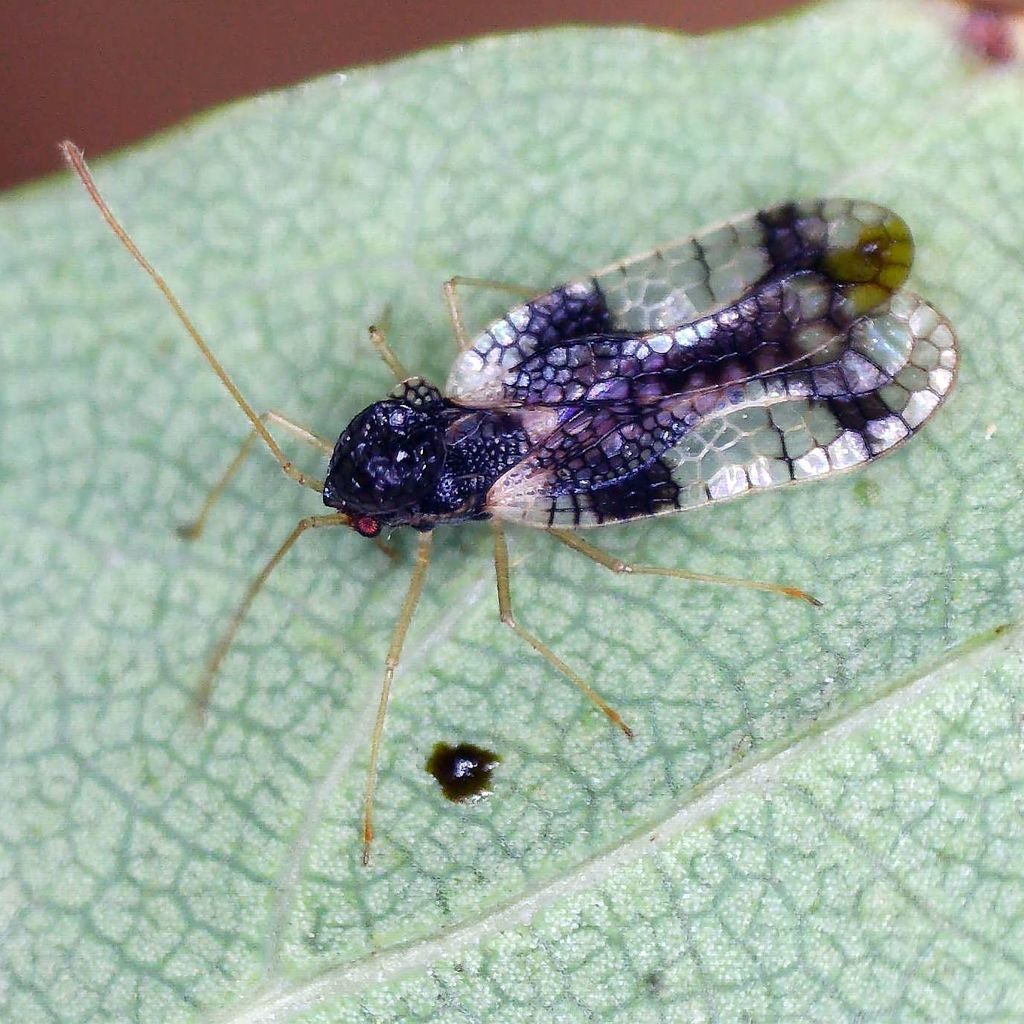
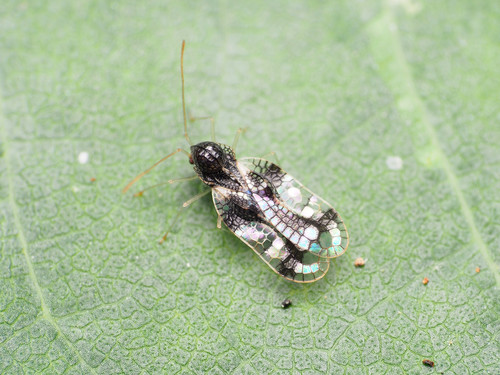
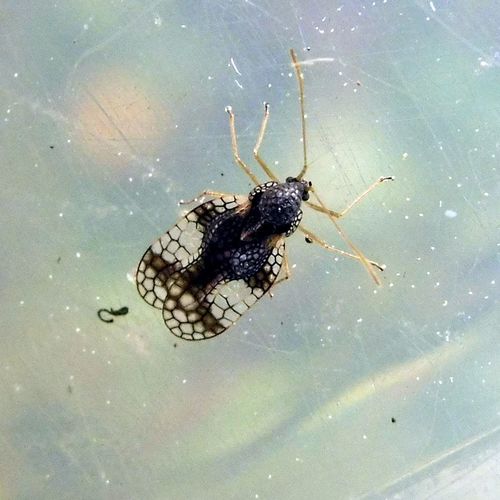
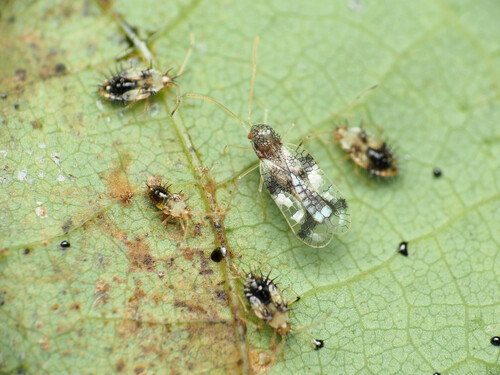
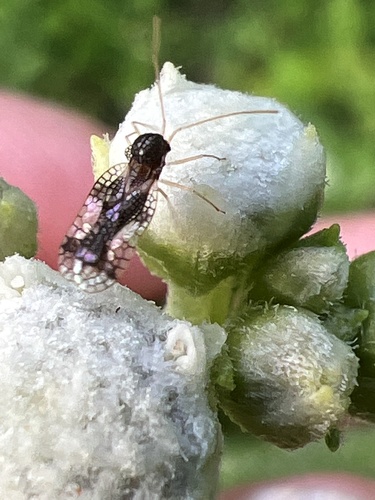
The andromeda lace bug is a tiny insect about 3 mm long with a rounded pronotum and lacy black-white wings highlighted in gold. It originated in Japan with its host Pieris plants, has spread worldwide, and both nymphs and adults pierce leaf tissue to suck juices, causing mottling, leaf drop, and stunted growth. It is a pest of Pieris species, especially Japanese andromeda, leaving dark frass on leaf undersides, while some Pieris like P. floribunda are resistant.
Source: Wikipedia
Size
The bug measures about three millimeters in length.
Source: Wikipedia
What it eats
Both nymphs and adults damage leaves by piercing them to suck out juices.
Source: Wikipedia
Life cycle
Infestations produce mottled leaves, and heavy numbers can cause leaves to drop and stunt plant growth.
Source: Wikipedia
Where it comes from
Its native range is Japan, where it lives on its host plant.
Source: Wikipedia
Where it is found in the US
Recorded in 16 of 51 states and DC. Most records: Massachusetts, New York, Connecticut, New Jersey, Pennsylvania, Maryland, Washington, Maine.
Darker = more records. Counts are museum and citizen-science records, not population size.
Source: GBIF
Months it is reported in the US
Source: GBIF
More photos
Questions people ask
How does the andromeda lace bug damage plants?
Both nymphs and adults pierce leaf tissue to suck juices, which creates mottling, causes dark frass on leaf undersides, and can lead to leaf drop and stunted growth.
Source: Wikipedia
What plants are affected by this bug?
It primarily attacks plants in the genus Pieris, especially Japanese andromeda (Pieris japonica).
Source: Wikipedia
Are there any Pieris species that resist the lace bug?
Yes, Pieris floribunda is known to be resistant to the andromeda lace bug.
Source: Wikipedia
Same family (Tingidae)

Sources
- Wikipedia: https://en.wikipedia.org/wiki/Stephanitis_takeyai
Look it up elsewhere: GBIF · iNaturalist · BugGuide · ITIS · Wikipedia
Text written 2026-10-27 from the sources above and checked sentence by sentence against them. Data fetched 2026-10-27.