 Bug FAQ
Blowfly Chalcid Wasp
Nasonia vitripennis · Order: Hymenoptera · Family: Pteromalidae
Also called: Parasitoid wasp
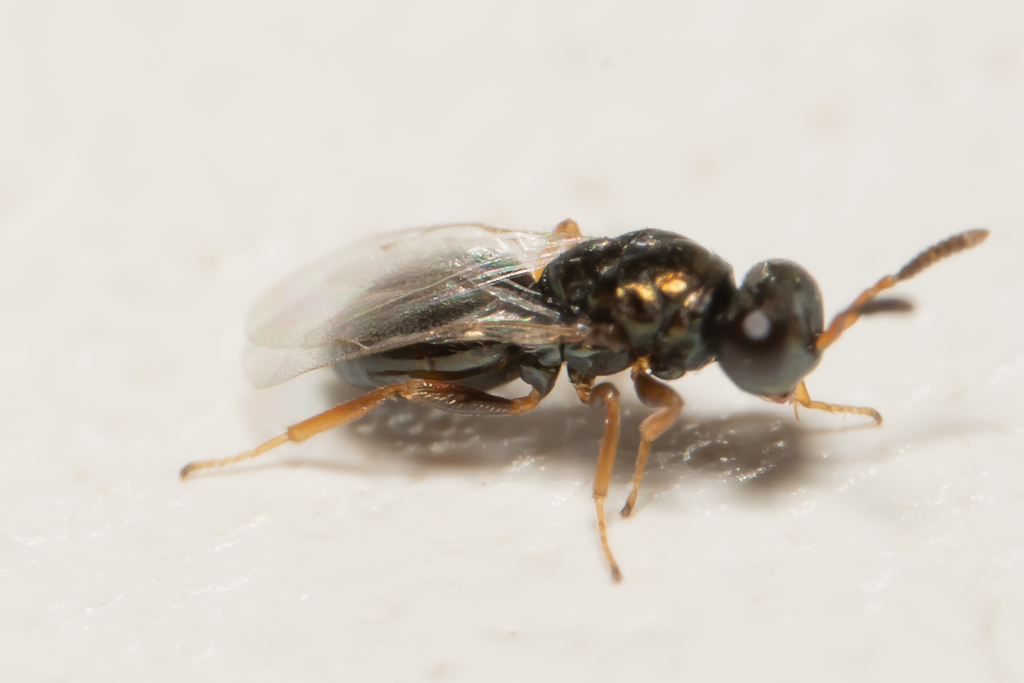
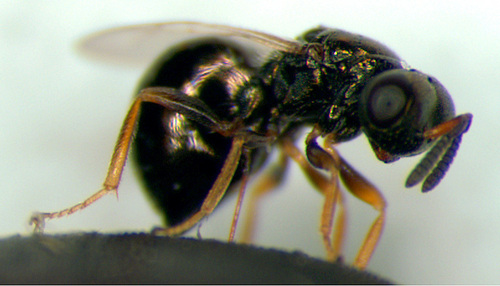
The blowfly chalcid wasp Nasonia vitripennis is a tiny parasitoid wasp about 2 to 3 mm long; females are larger and darker than males. Females lay eggs by drilling into the puparium of blowfly or flesh-fly larvae and depositing their eggs underneath. It reproduces via haplodiploidy, with unfertilized eggs becoming haploid males and fertilized eggs becoming diploid females.
Source: Wikipedia
How to recognize it
Males can be identified by the shape of their antennae and wings. Male antennae have a spindle-shaped scape that is wider in the middle than at the ends.
Source: Wikipedia
Size
Adults measure 2 to 3 mm in length, with females generally larger and darker than males.
Source: Wikipedia
What it eats
These wasps are parasitoids of carrion-associated flies, attacking blowfly and flesh-fly larvae.
Source: Wikipedia
Life cycle
Nasonia vitripennis is haplodiploid: males develop from unfertilized eggs and are haploid, while females develop from fertilized eggs and are diploid.
Source: Wikipedia
Lookalikes
Females have a straight stigmal vein in the forewing, unlike the curved vein of its three sister species. The antennal flagellum of N. vitripennis is shorter and wider than that of its sister species.
Source: Wikipedia
Where it is found in the US
Recorded in 5 of 51 states and DC. Most records: Illinois, Ohio, Arizona, Kansas, South Carolina.
Darker = more records. Counts are museum and citizen-science records, not population size.
Source: GBIF
Status: native in Canada. Source: iNaturalist
Months it is reported in the US
Source: GBIF
More photos
Questions people ask
How do female Nasonia vitripennis lay their eggs?
A mated female drills into the puparium of a fly larva and deposits her eggs underneath.
Source: Wikipedia
What determines the sex of Nasonia vitripennis offspring?
Unfertilized eggs develop into haploid males, while fertilized eggs become diploid females.
Source: Wikipedia
Same family (Pteromalidae)

Sources
- Wikipedia: https://en.wikipedia.org/wiki/Nasonia_vitripennis
Look it up elsewhere: GBIF · iNaturalist · BugGuide · Wikipedia
Text written 2026-10-28 from the sources above and checked sentence by sentence against them. Data fetched 2026-10-28.