 Bug FAQ
White Butterfly Pupal Parasitoid Wasp
Pteromalus puparum · Order: Hymenoptera · Family: Pteromalidae
Also called: Parasitoid wasp, White Butterfly Pupal Parasitoid
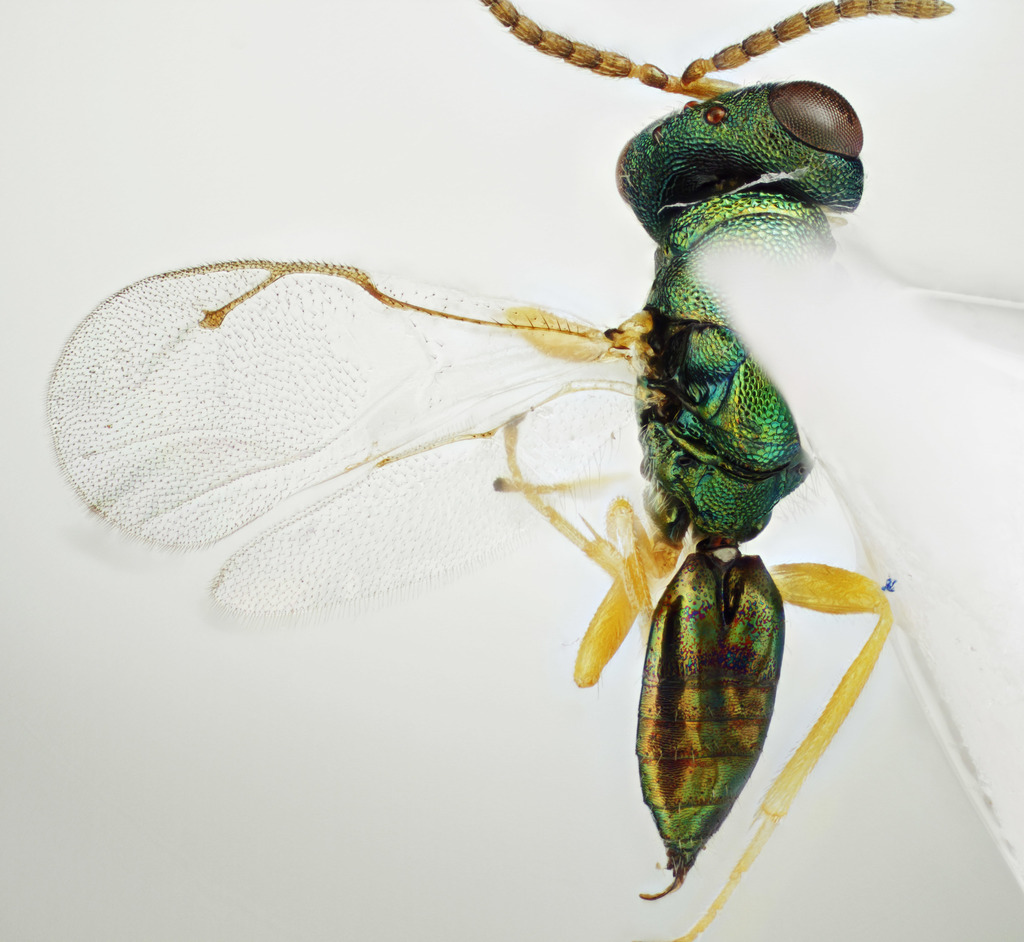
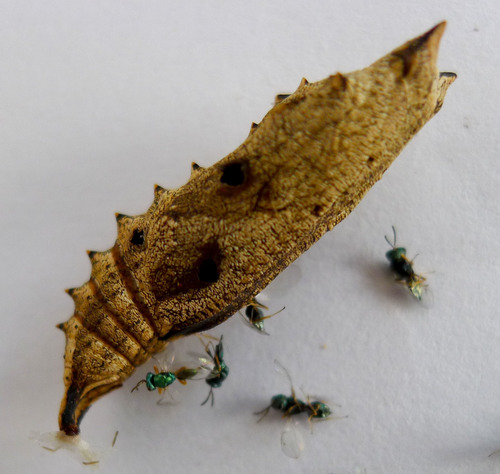
The white butterfly pupal parasitoid wasp is a widely distributed endoparasitic wasp that lays its eggs inside Lepidoptera cocoons, including many swallowtail species. It is used as a biological control agent against the cabbage white butterfly.
Source: Wikipedia
How to recognize it
The insect is known as the white butterfly pupal parasitoid wasp.
Source: Wikipedia
How to get rid of it
The species has been employed to biologically control cabbage white butterflies.
Source: Wikipedia
Where it lives
It occurs in many parts of the world.
Source: Wikipedia
What it eats
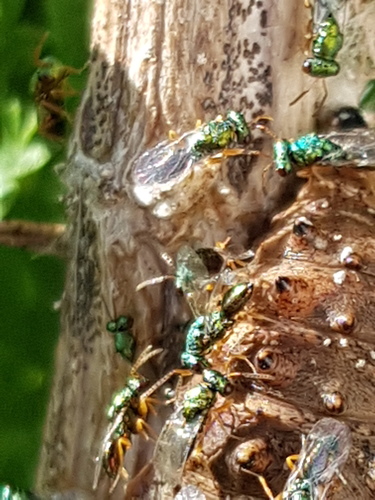
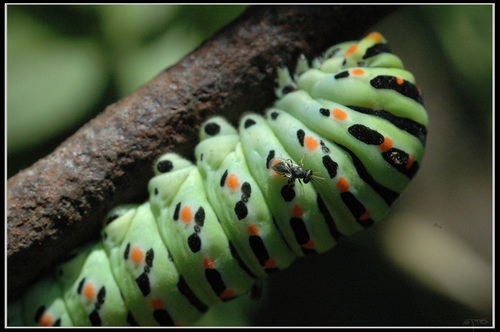
Females insert eggs into butterfly and moth cocoons, where the larvae develop. It parasitizes at least eleven different swallowtail butterfly species.
Source: Wikipedia
Life cycle
It is an endoparasitic wasp that lives inside the host cocoon during development.
Source: Wikipedia
Where it comes from
It is a widely distributed species.
Source: Wikipedia
Where it is found in the US
Recorded in 5 of 51 states and DC. Most records: Illinois, Ohio, California, Hawaii, South Carolina.
Darker = more records. Counts are museum and citizen-science records, not population size.
Source: GBIF
Status: native in North America; native in Canada; native in United States. Source: iNaturalist
Months it is reported in the US
Source: GBIF
More photos
Questions people ask
How is this wasp used in pest control?
It is released to help suppress cabbage white butterfly populations.
Source: Wikipedia
Same family (Pteromalidae)

Sources
- Wikipedia: https://en.wikipedia.org/wiki/Pteromalus_puparum
Look it up elsewhere: GBIF · iNaturalist · BugGuide · Wikipedia
Text written 2026-10-26 from the sources above and checked sentence by sentence against them. Data fetched 2026-10-26.