 Bug FAQ
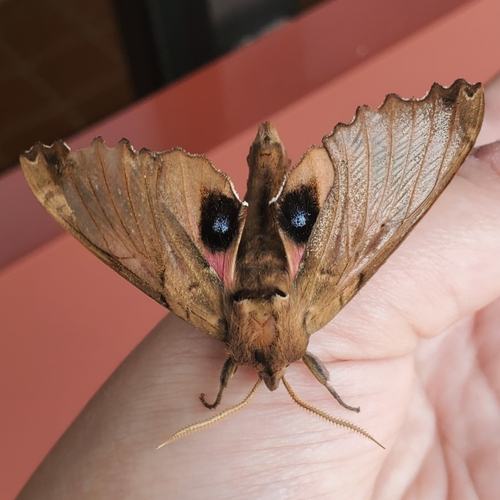
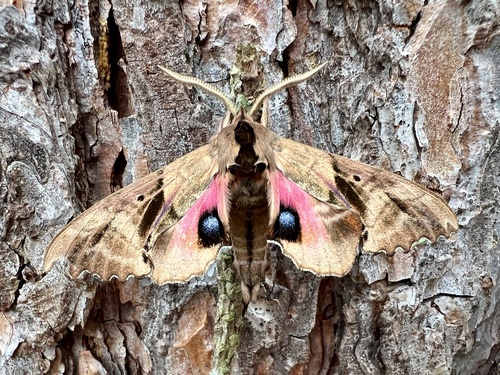
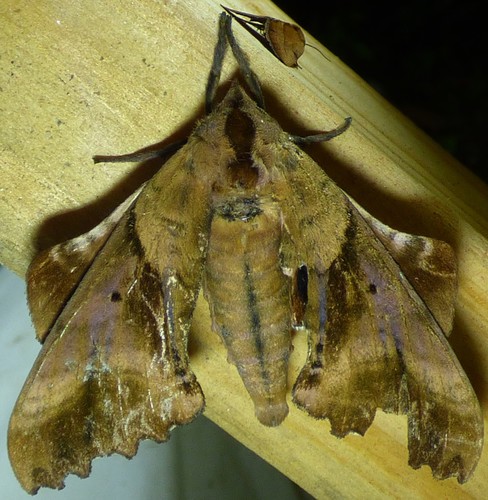
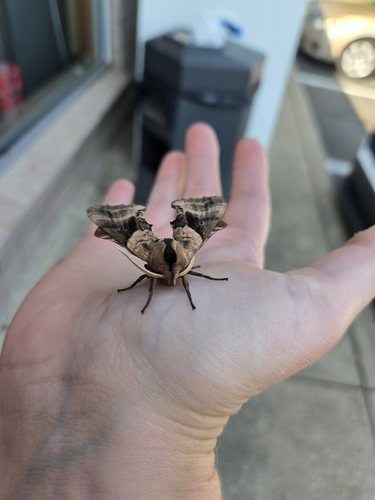
Blinded Sphinx
Paonias excaecata · Order: Lepidoptera · Family: Sphingidae
Also called: Blind-eyed Sphinx, Blindeyed Sphinx
Source: Wikipedia

The blinded sphinx moth has a wingspan of about 6 to 8.5 cm. Its caterpillars feed on willows, birch, cherries, ninebark and roses, while adults do not eat. Adults are active at night, especially in the later hours after dusk.
Source: Wikipedia
How to recognize it
Adults are nocturnal, with a brief activity period just after sunset and then they prefer the later night hours.
Source: Wikipedia
Size
The moth’s wingspan ranges from 60 to 85 mm.
Source: Wikipedia
Where it lives
Like other sphinx moths, they pupate shallowly buried in the soil.
Source: Wikipedia
What it eats
Caterpillars eat leaves of willows, birch, cherries, ninebark and roses. Adult moths do not feed at all.
Source: Wikipedia
Life cycle
Eggs are small and greenish-yellow; they hatch in about eight days. Newly emerged adults mate almost immediately.
Source: Wikipedia
When you see it
Adults are active at night, especially later in the evening after a short period just after dusk.
Source: Wikipedia
Where it comes from
They occur across Canada from Nova Scotia to British Columbia and in the United States from Florida eastward to eastern California and central Texas.
Source: Wikipedia
Where it is found in the US
Recorded in 47 of 51 states and DC. Most records: Massachusetts, Pennsylvania, Vermont, Michigan, New York, North Carolina, Ohio, Minnesota.
Darker = more records. Counts are museum and citizen-science records, not population size.
Source: GBIF
Status: native in North America; native in Canada; native in United States. Source: iNaturalist
Months it is reported in the US
Source: GBIF
More photos
Questions people ask
Do the caterpillars damage garden plants?
Yes, the larvae feed on a variety of trees and shrubs such as willows, birch, cherries, ninebark and roses, which can harm those plants.
Source: Wikipedia
Are adult blinded sphinx moths a nuisance indoors?
Adults do not feed and are only active at night, so they are not considered a household pest.
Source: Wikipedia
Same family (Sphingidae)
 White-lined SphinxHyles lineataDamages trees, gardens or crops
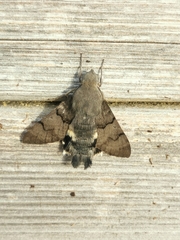 Eurasian Hummingbird HawkmothMacroglossum stellatarum
 Snowberry ClearwingHemaris diffinis
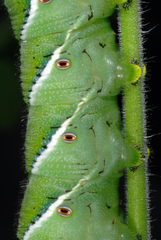 Carolina SphinxManduca sextaDamages trees, gardens or crops
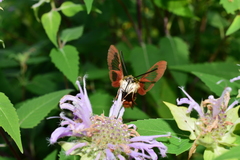 Hummingbird ClearwingHemaris thysbeDamages trees, gardens or crops
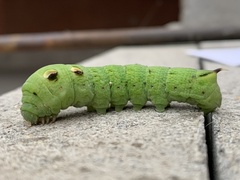 Elephant HawkmothDeilephila elpenor
Sources
- Wikipedia: https://en.wikipedia.org/wiki/Paonias_excaecatus
Look it up elsewhere: GBIF · iNaturalist · BugGuide · ITIS · Wikipedia
Text written 2026-10-22 from the sources above and checked sentence by sentence against them. Data fetched 2026-10-22.